Tag Archives: Skiing

Sliver Couloir – Nez Perce

Location: GTNP, Shadow Peak, Bradley/Taggart Trailhead
Elevation, gain/loss: 11198, 5690’ gain/loss
Distance: 14.5 miles RT
Difficulty: 3+ stars
Time:  6-8hrs

Trip Report:

Date: 12/27/2015
Snow Conditions: Powder, Consolidated Powder, Mild Wind Crust @ 10500′ and some sun affect snow around 10700′

The storm that rolled through Jackson over Christmas was once again a present from Mr. Santa.  Around 100″ fell over a 15 day period and in an instant the winter began.  Over the past couple of weeks, I was able to have some great days in and around JHMR and Teton Pass, but I was yearning to get into the park to poke around a bit.
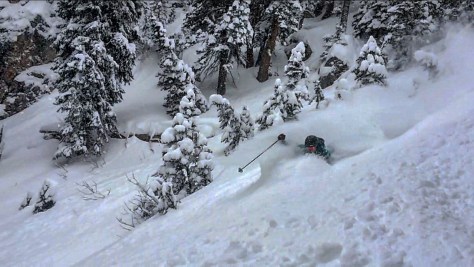
IMG_1772
Skiing the POW around JHMR

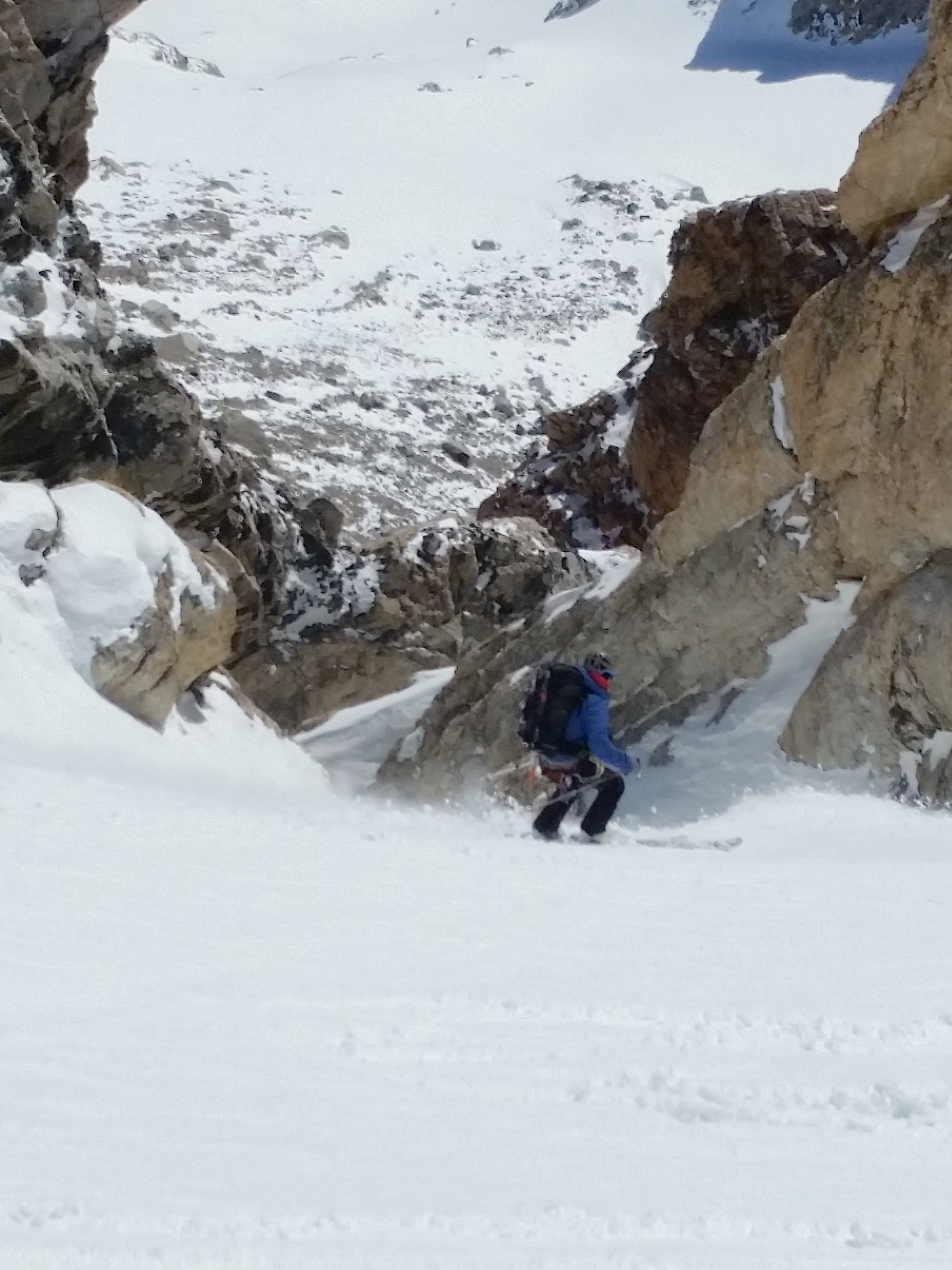
The Bridger-Teton National Forest Avalanche Center has been calling for Considerable to High avalanche danger over much of the past two weeks and yesterday was no different.  With this in mind: Dane, Tristan, Stu and myself set out for Shadow Peak at 8am from Bradley/Taggart trailhead. Our ideal objective was skiing the Sliver Couloir off Nez Perce, then heading down the 4 Hour Couloir to Avalanche Canyon, but we were not sure what we would find.

IMG_9456

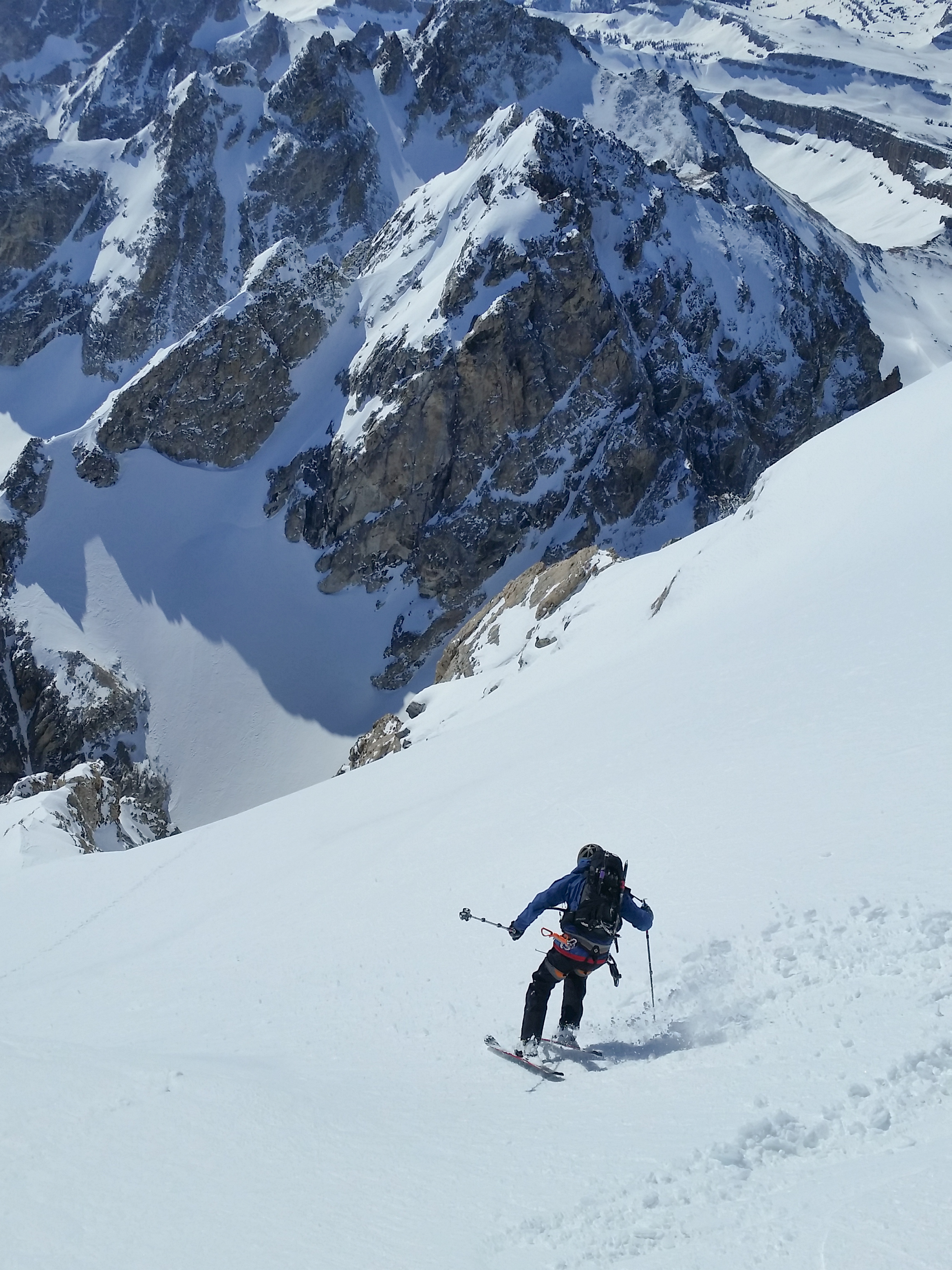
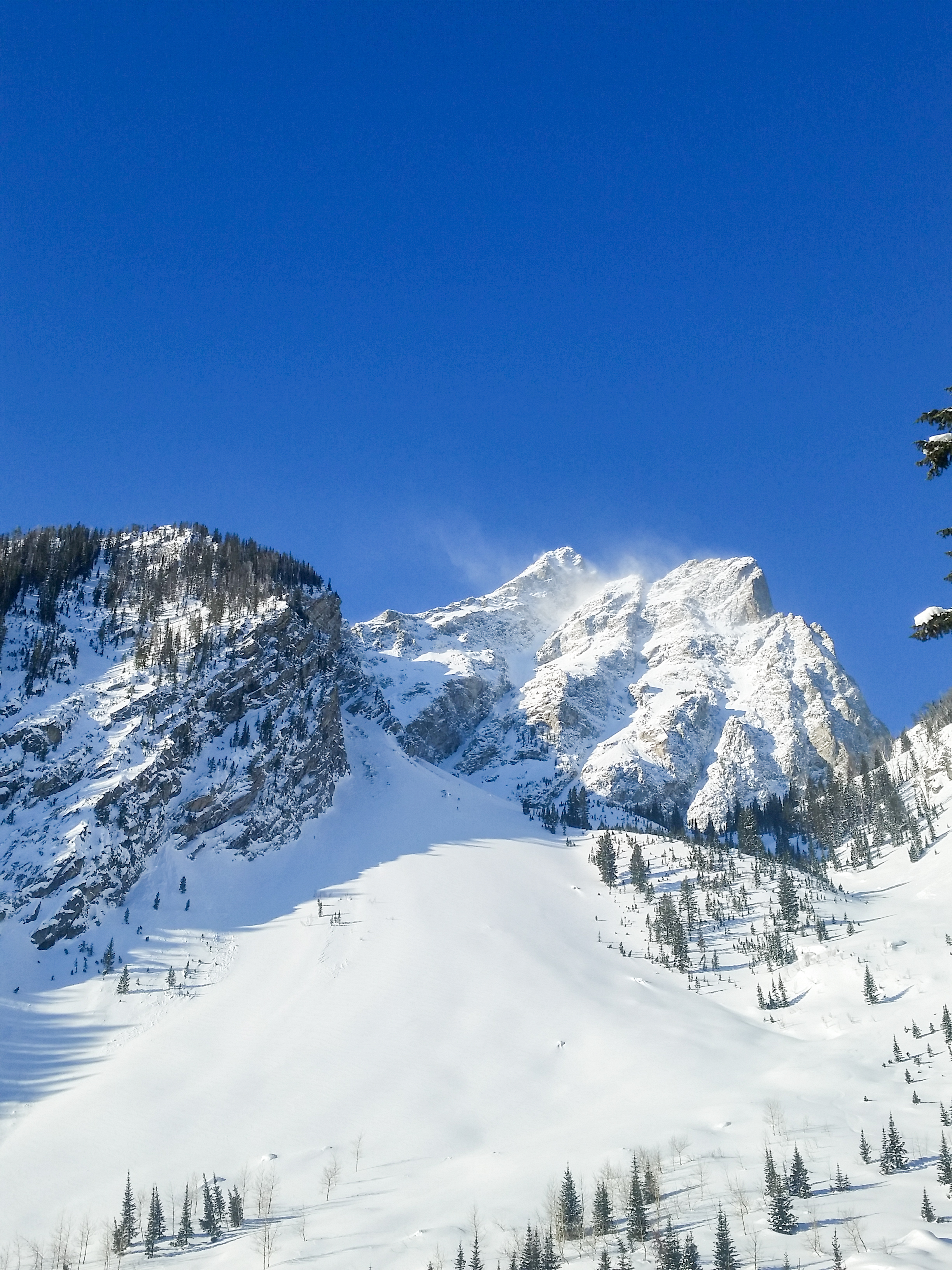
We made good time up to the 4 Hour Couloir entrance (see former post for details) and continued on to the top of the “skiers summit” of Shadow Peak.  Here we had our first good look at the Sliver and we liked what we saw.

IMG_1781

For starters, the couloir looked as if it had flushed a few times during the storm cycle.  Also, we could make out a couple minor crowns on the two larger “snow fields” on the left of the Sliver.  These two signs, along with our observations over the past few weeks lead us to believe it could be skied safely, but we would only know once we got into the line.  We made our way down to the col between the skier summit and true summit of Shadow and got ready to ski the west facing slope that drops down in the cirque of Nez Perce.  Here we dug a few hand pits and found a few areas of concern around 24″ down, but after a couple ski cuts–we decided to rip it.

IMG_1783
West Facing slope, leading to the Nez Perce cirque

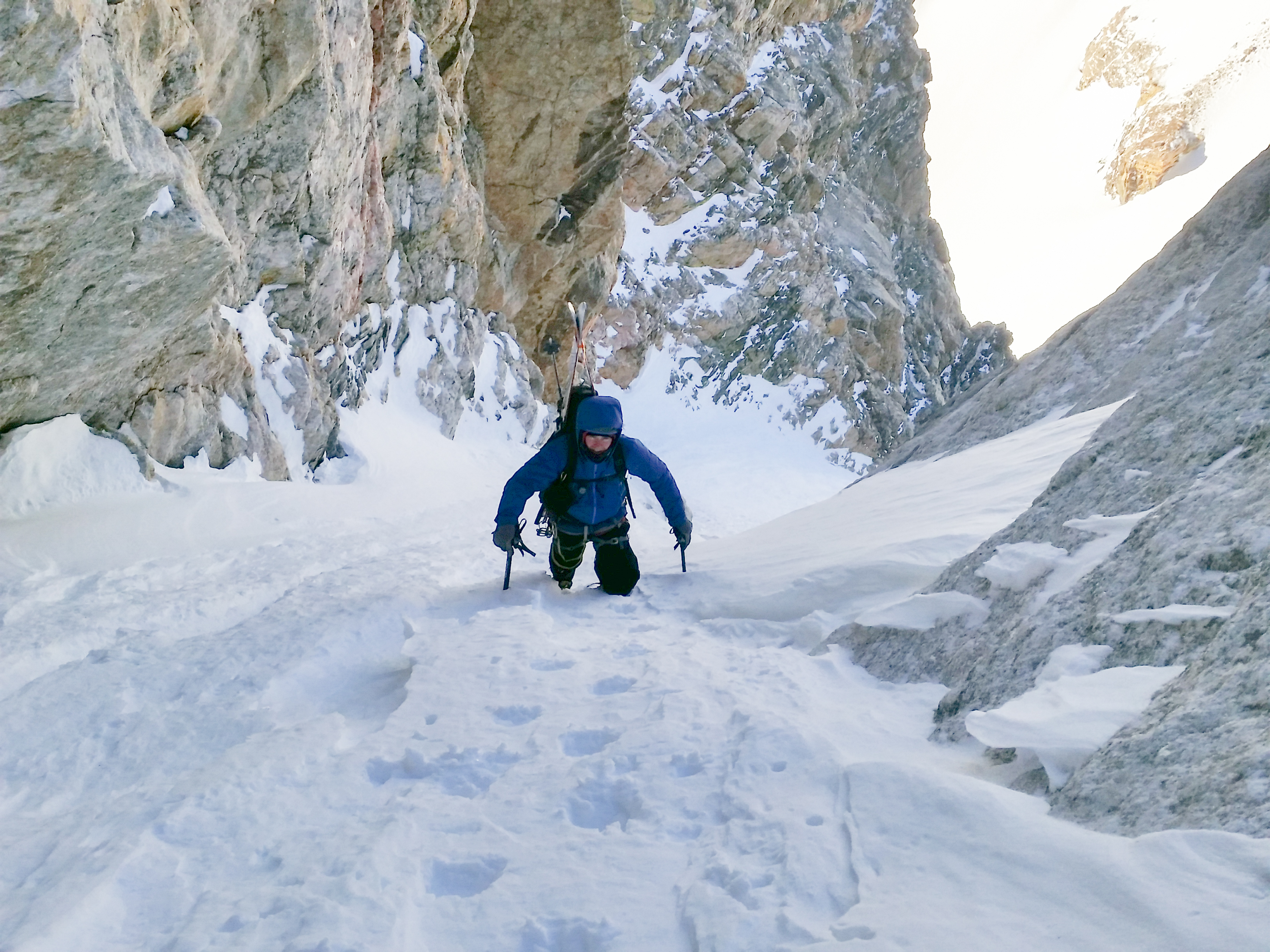
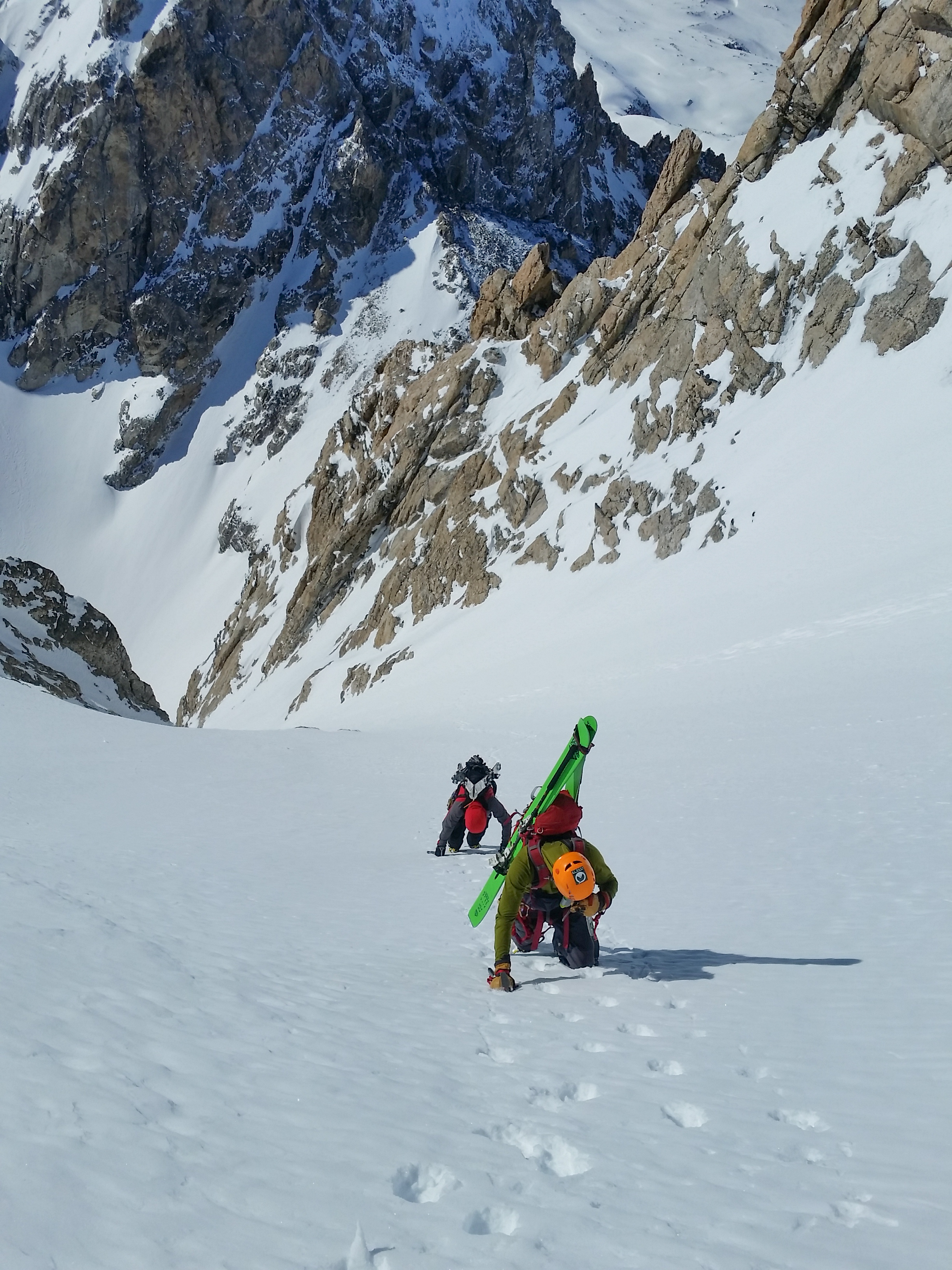
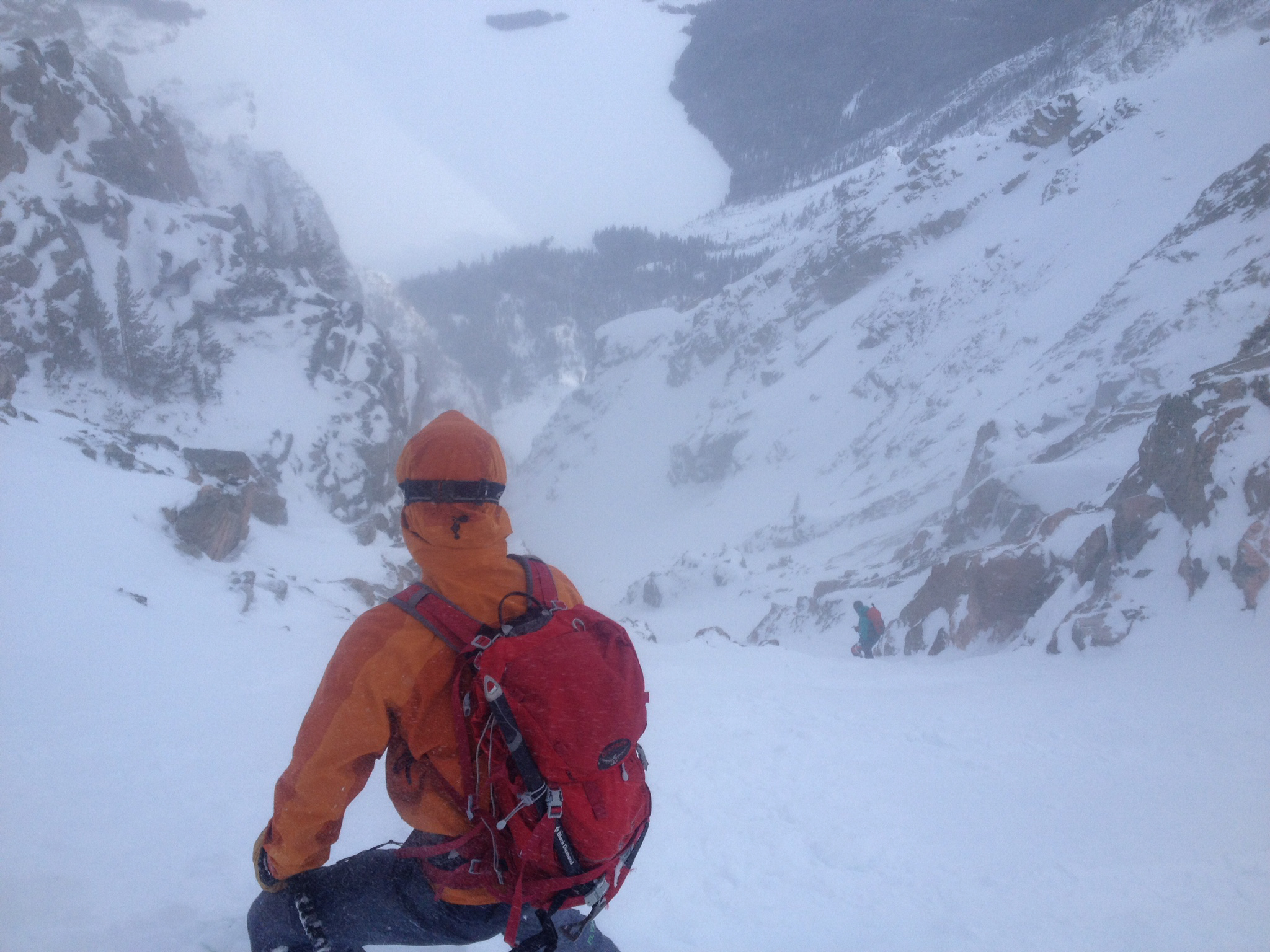
The snow in this zone was deep, stable and very supportive.  We made our way across the cirque and then transitioned to skin mode to make our way to the entrance of the couloir.  We worked our way up to the rock bulge below the Sliver and dropped our skins and some unneeded layers and began our way into the couloir.  We noticed the temperature was rising a bit at this elevation, but the snow didn’t seem to be affect too much at this point.  We worked our way up the couloir for about 500 feet, stopping on occasion to dip a few hand pits and discuss the situation.

IMG_9496
Nearing the top.

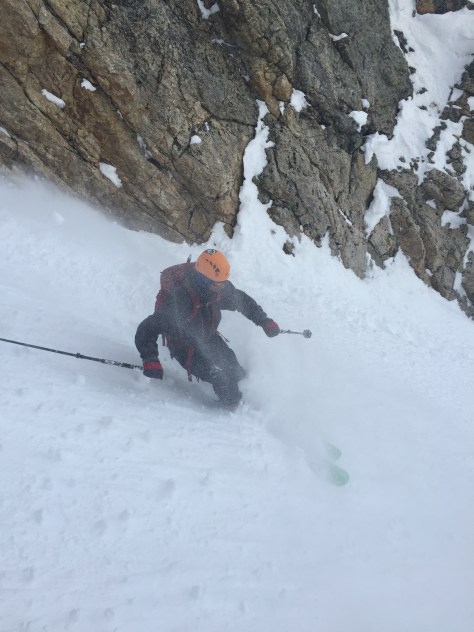
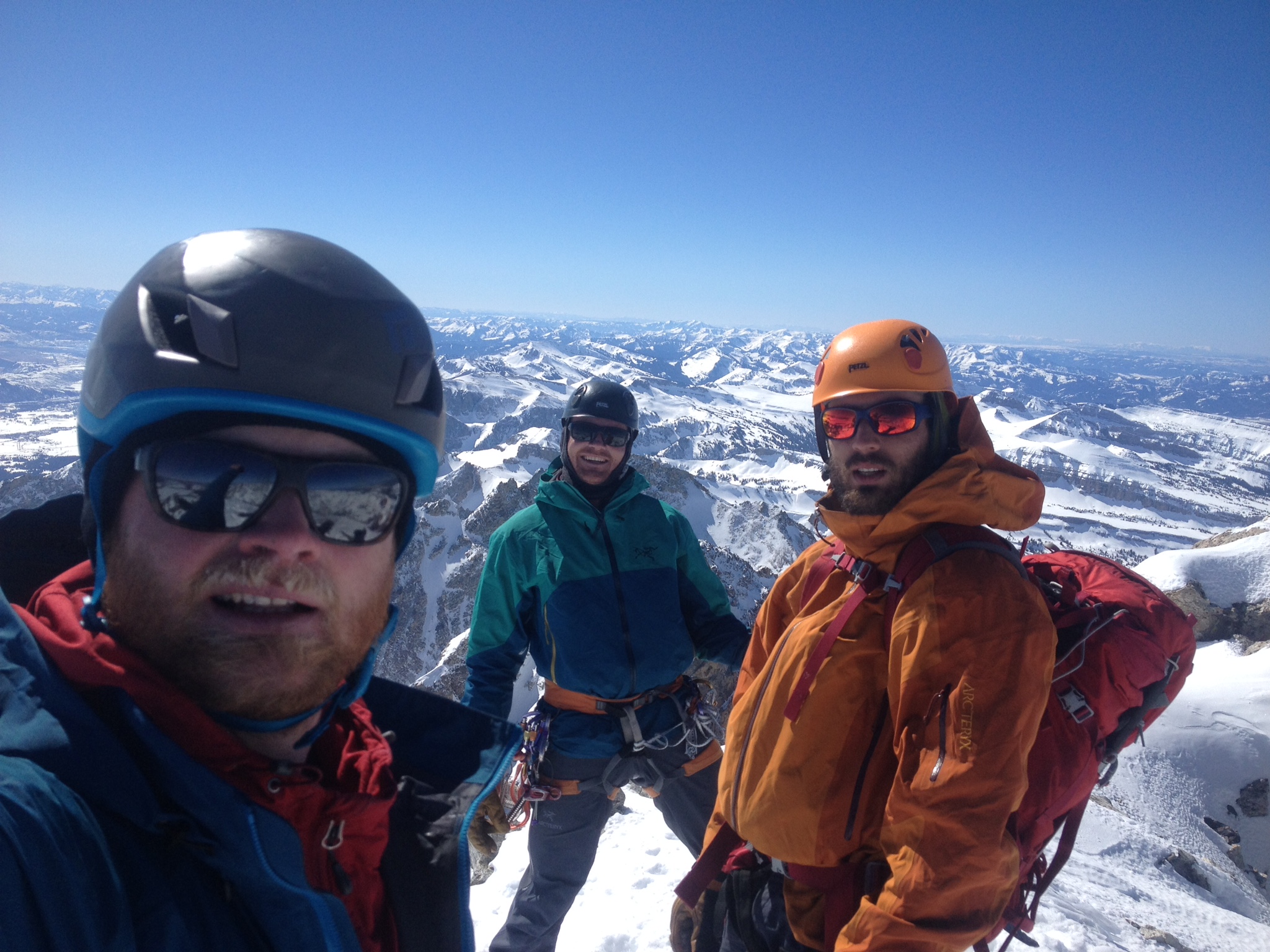
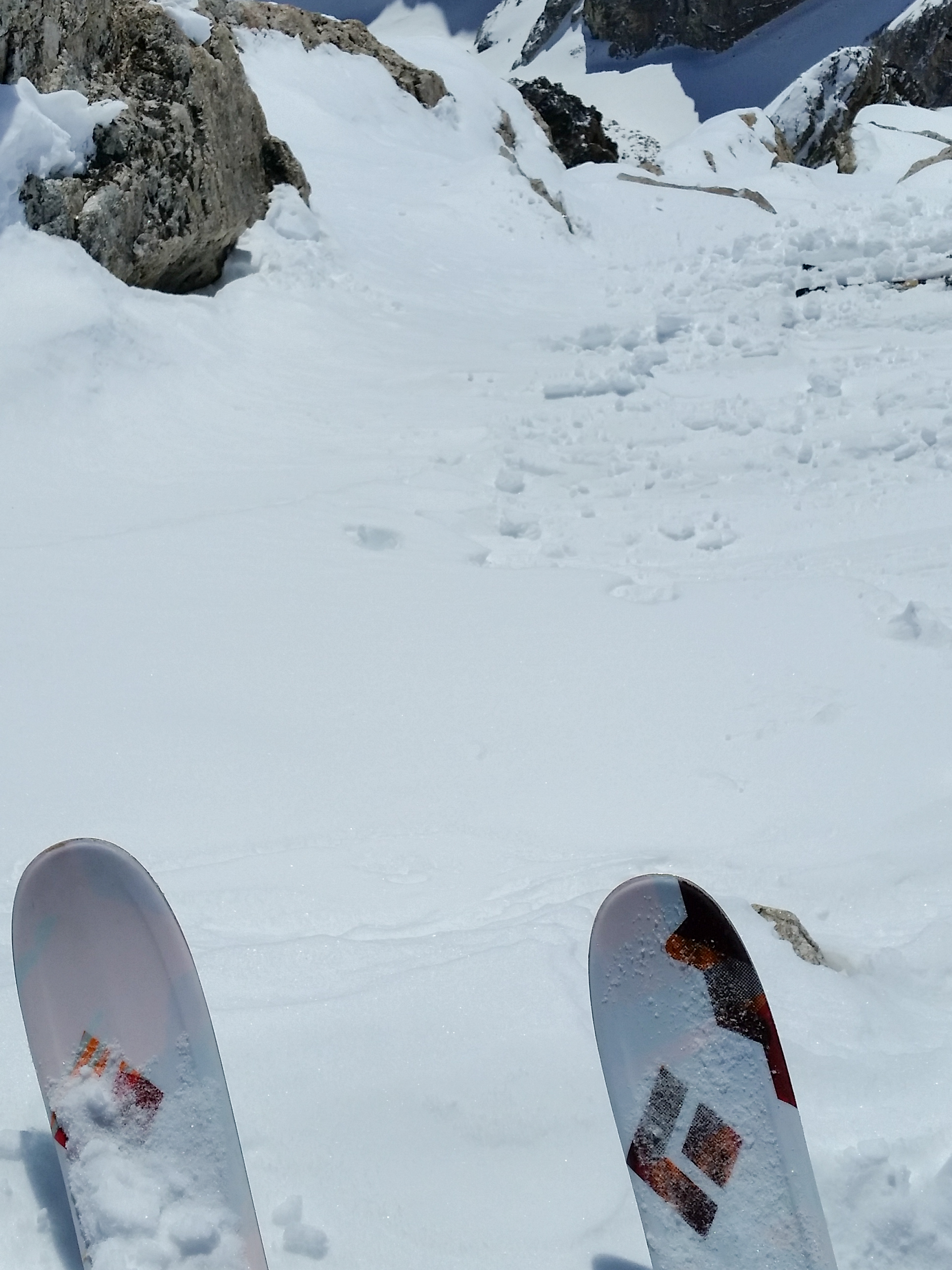
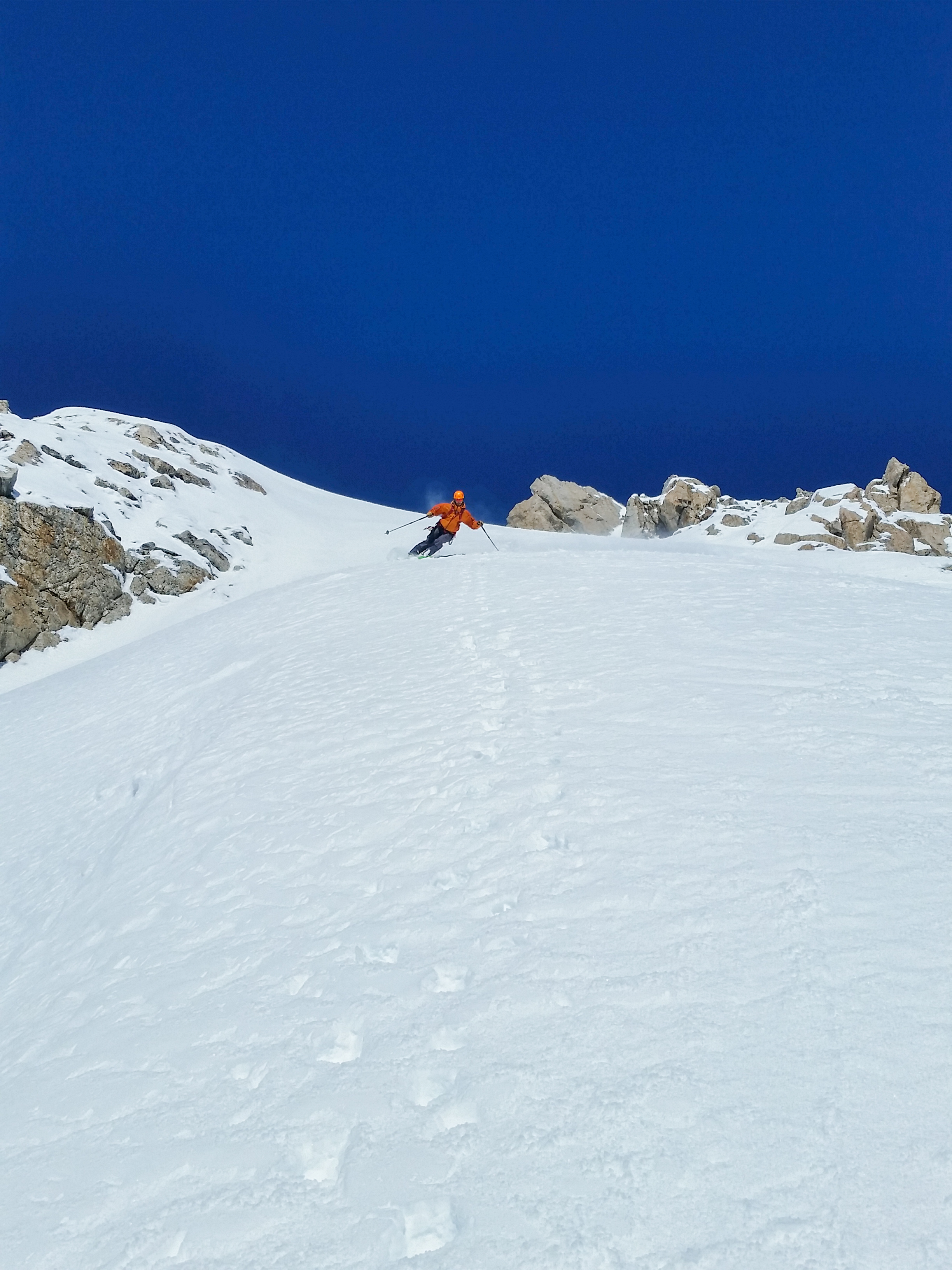
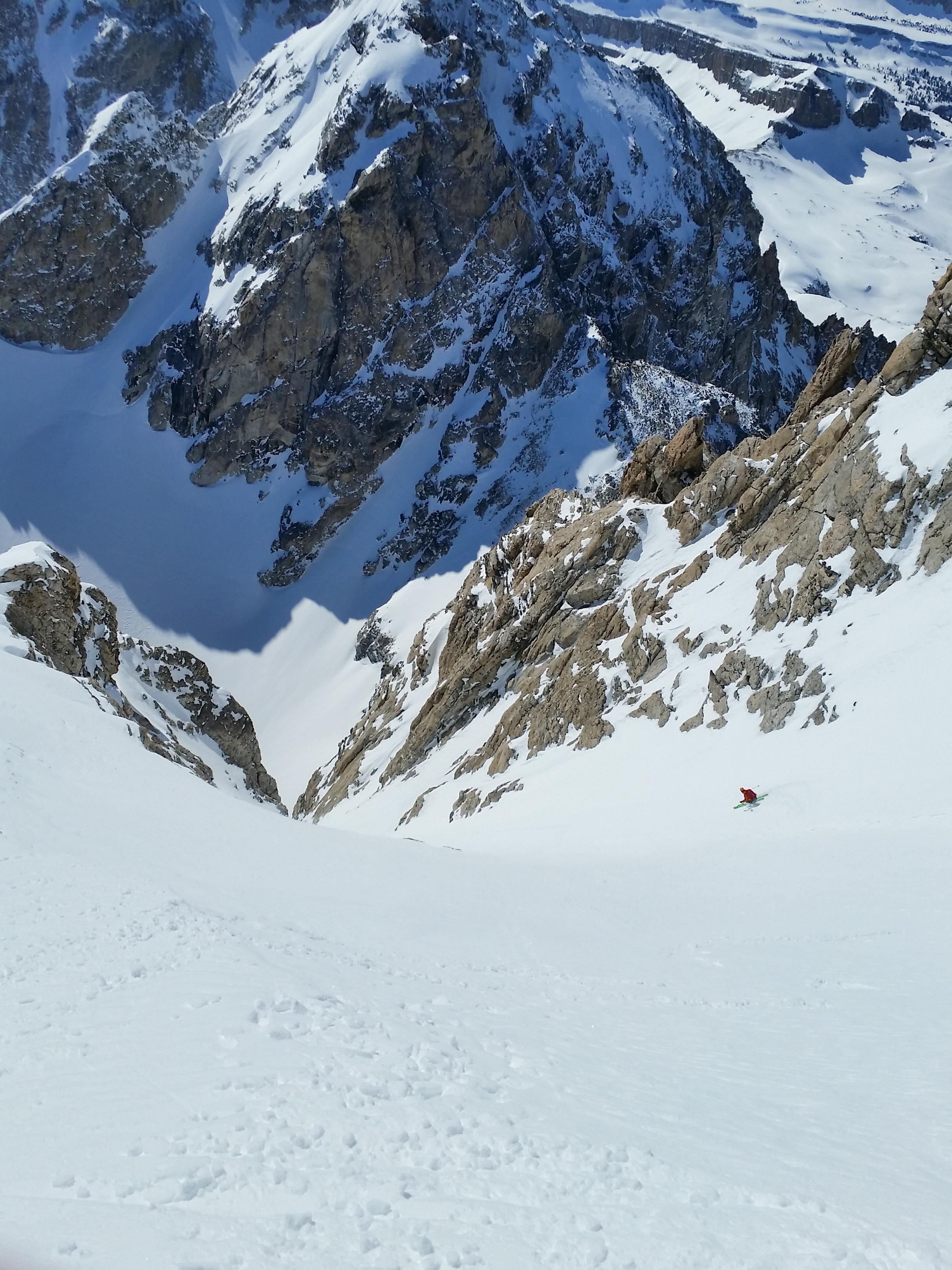
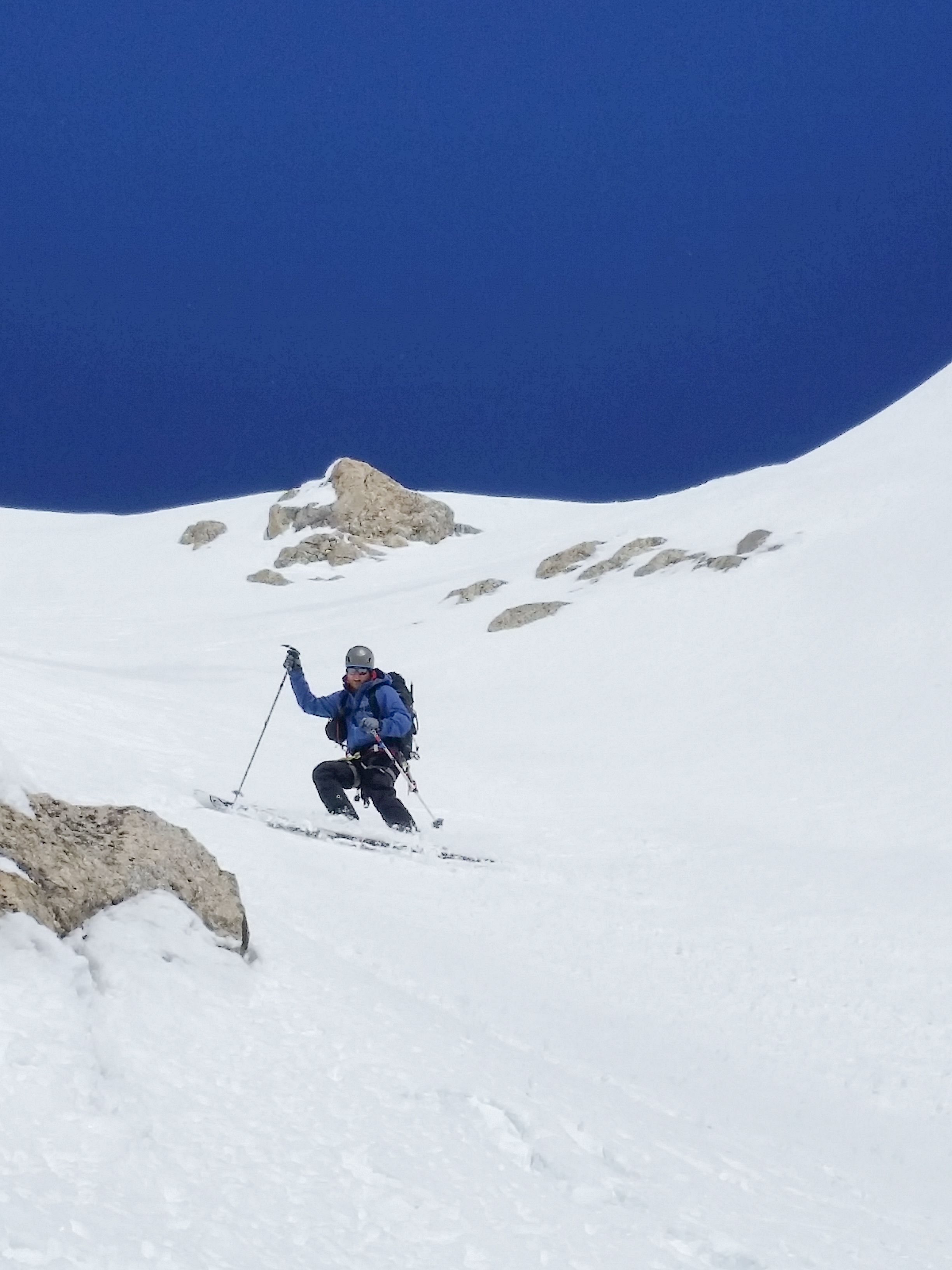
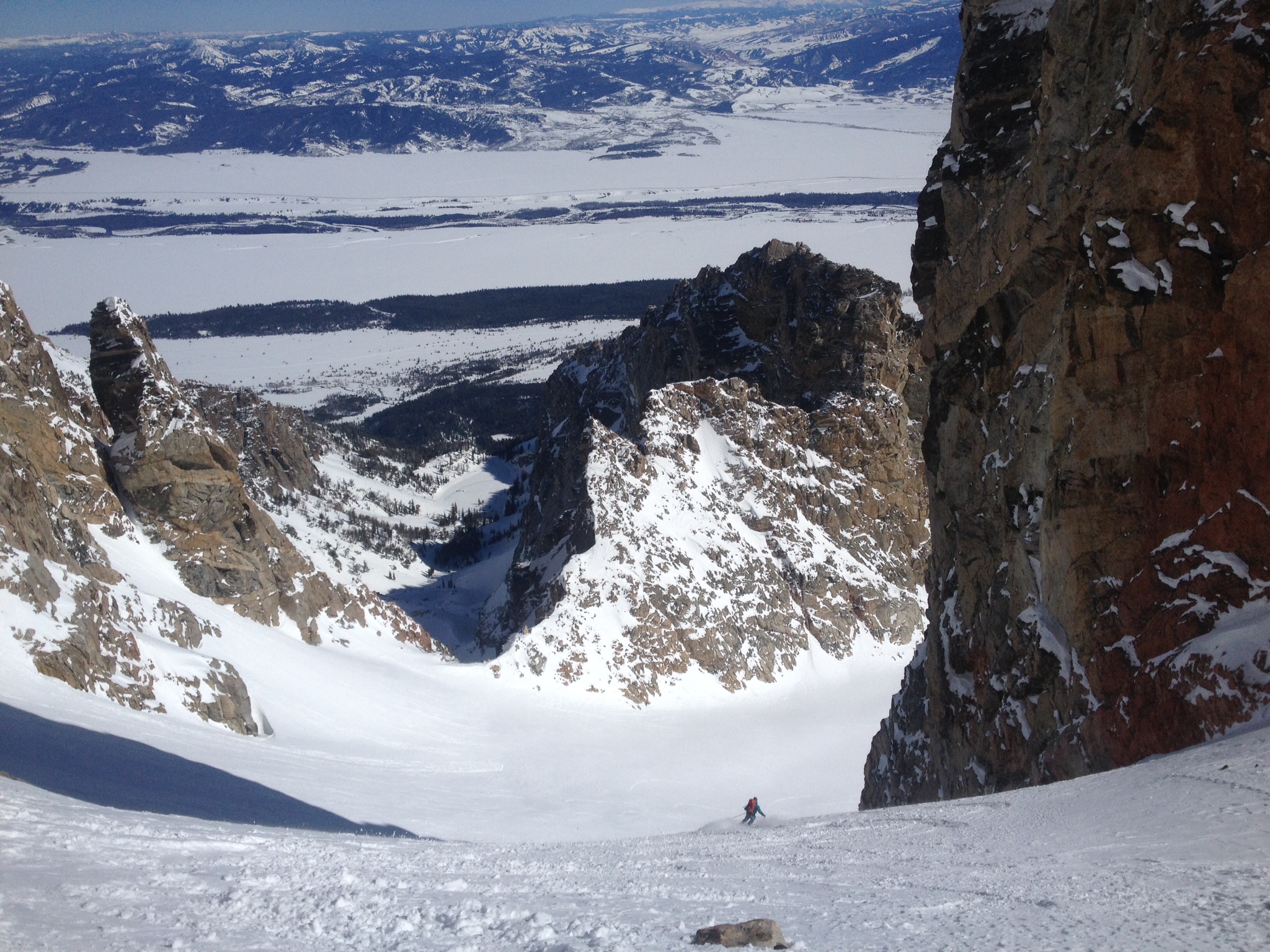
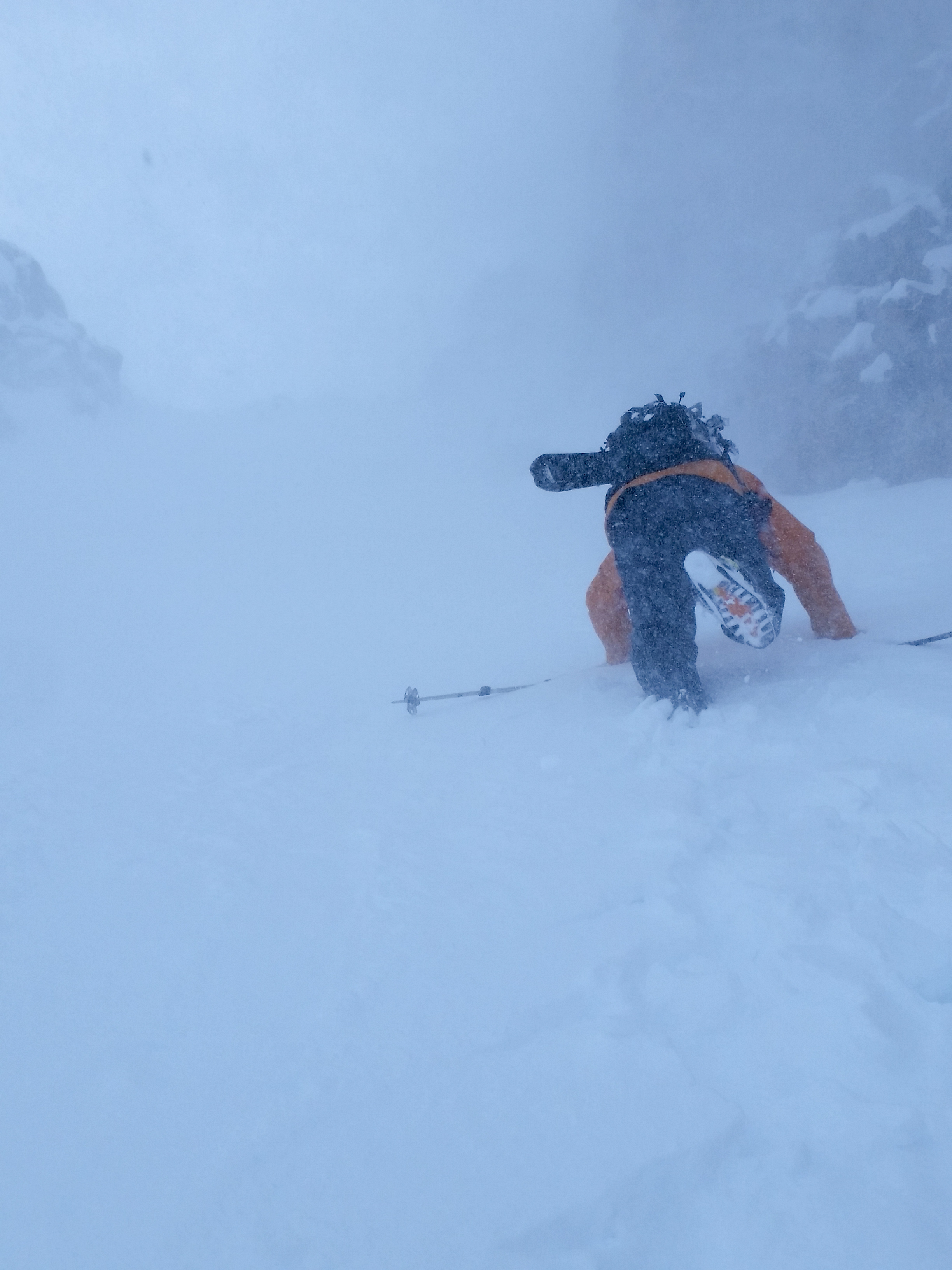
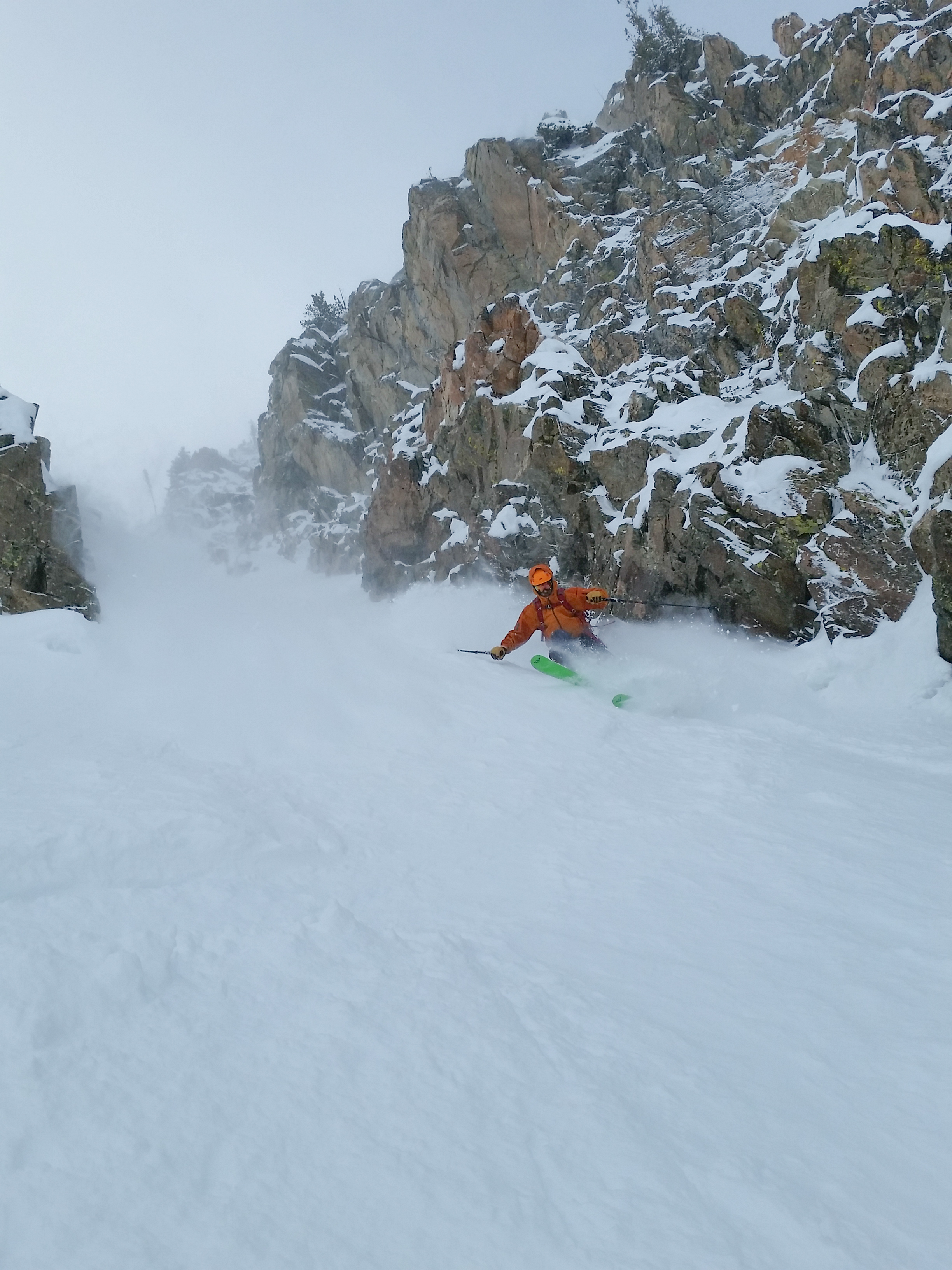
At around 10700 feet, we noticed the snow warming–with the first 2″ noticeably sun affected.  This was a little concerning, but we thought that it was not a major concern, just something to be conscious of on the way down.  The last third of the couloir was waist deep powder with some faceted/surgery snow towards the bottom.  This made the bootpacking difficult, but with four of us, we were able to take turns slogging through the snow until finally we were at the top!  We geared up and talked a little about how we wanted to tackle the line.  We thought that the best move was to be extra cautious and make numerous stops along the way down.  With everyone in agreement, we had ourselves some fun all the way down to the bottom….
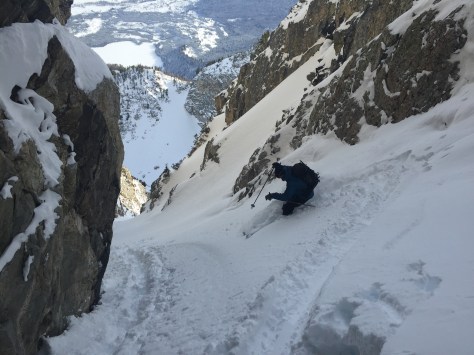
IMG_1792IMG_1793IMG_1794

IMG_1796IMG_1800IMG_1803IMG_1804IMG_9528IMG_9515IMG_1815

After making it down, we gathered our stashed gear and skied the apron down to the west facing slope we had skied down from earlier.  From here, our plan was to skin up to Shadow and then have a look at the 4 Hour Couloir and possibly ski that.

IMG_1819
Skiing the Apron.
IMG_9547
Skinning up to Shadow col.

We made quick work of the up and had a break in the sun at the “skiers summit” of Shadow to eat some much needed food and transition to ski mode.  After about 15 minutes, we skied down the fun upper face of Shadow and made our way into the 4 Hour Couloir.  We were a little concerned with the south facing aspect, considering all the warming we had witnessed in the Sliver.  We dug around for a bit, finding numerous areas of concern within the snowpack and after some discussion, decided to bail and ski the north facing trees of Shadow down to the bench.  There were too many concerns for us to feel like we could safely ski the line and figured, the season is just beginning….
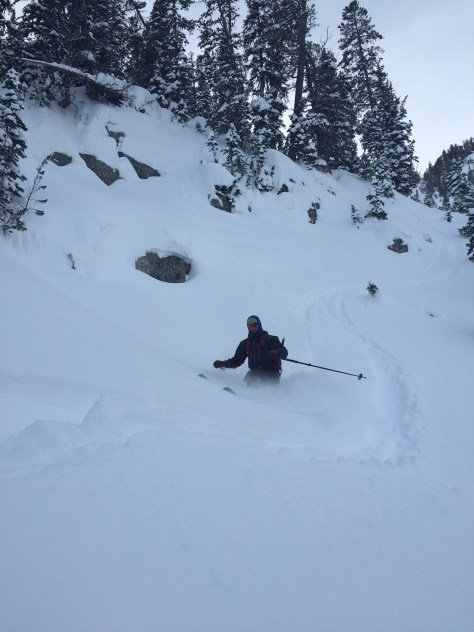
IMG_1822

The snow was great throughout this zone and we milked the turns for as long as possible until traversing right (South) to the skin track up Shadow.  We cruised back after gaining the skin track and pulled into the parking lot at 7hr 36min.  For all our poking around, we felt good about the day and great about our ability to ski a fun couloir safely.  More to come very soon!
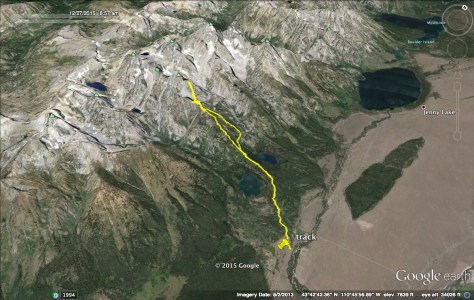
Google Earth Sliver - Nez Perce
GPS


Grand Teton-Ford/Stettner Couloir

Location: GTNP, Garnet Canyon, Grand Teton, Ford-Stettner Couloir, Teepee Glacier
Elevation, gain/loss: 13,770’, 7,487’ gain/loss
Distance: 16 miles RT
Difficulty: 5 stars
Time:  5 hours (Seriously!) – 18 hours

Trip Report:

Date: 3/10/2015
Snow Conditions: Sun affected powder, mild sun/wind crust, “corn” snow down low.

Ever since Bill Briggs became the first person to ski The Grand Teton over 40 years ago, it has been an achievement for any aspiring ski mountaineer.  My brother Dane and I have climbed it a handful of times, a couple in winter conditions, but never felt comfortable with the ice climbing needed to tackle the ski.  With the weather around Jackson continuing to be seasonally warm and the snowpack well bonded after last weeks small storm, we were motivated by Tristan to get out and tackle the “standard” route off the Grand, the Ford/Stettner Couloir.  Tristan reasoned that despite our limited ice skills, all you had to do was, “climb up and ski down”.  This proved to be the push needed and we settled on Tuesday for the attempt.

The weather for the day called for temps around 30 degrees in the mountains, with sunshine and mild wind, so we decided an alpine start was needed.  We were skinning from Bradley/Taggart under moonlight at 1:20am in mild temperatures.  The conditions were firm on the up into Garnet Canyon and once again I was swearing that I have yet to buy ski crampons.  After 2 hours, we were in the Meadows and staring into an eerie canyon dimly lit by the moon.  We decided to boot pack to the left of Spaulding Falls instead of following the “summer trail”, because I think it is faster (but could be wrong).  After climbing above the steep face, we put our skis back on and skinned up, into Teepee Glacier.

Early morning walk.
Early morning walk.
Teepee Glacier in the early morning.
Teepee Glacier in the moonlight.

Here, we saw another party about 500′ above us working their way towards Teepee Col.  I knew the guys in the group, having chatted with them about our plan the day before and so far everything was going as discussed.  They had planned on skiing the Grand before we settled on it and we were going to let them make first turns down if we all made it to the top.  So we worked our way up the steep Teepee Glacier, eventually topping out on Teepee Col as the sun started to rise.

Climbing in the early morning.

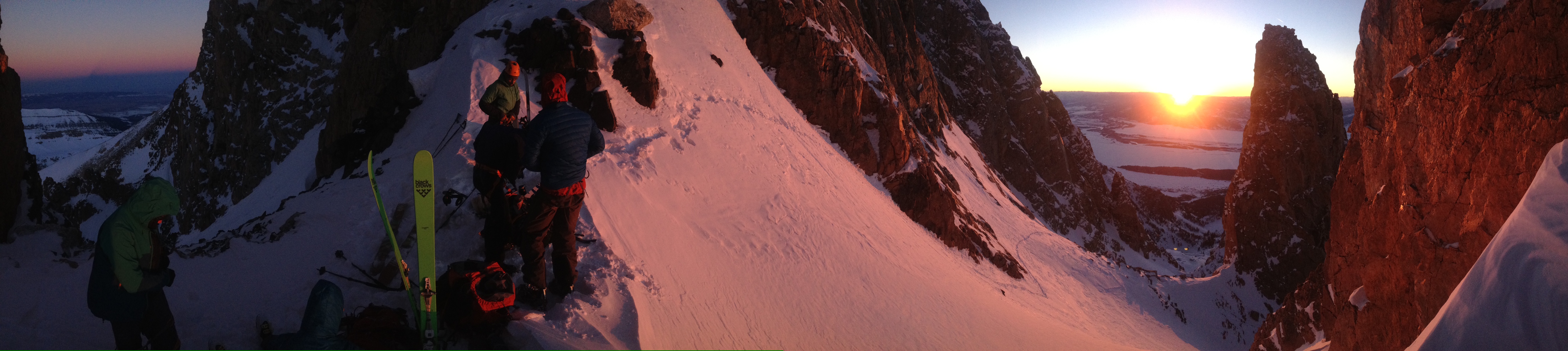
The other group had decided to wait at Glencoe Col for some warming rays and were shouting for us to join them.  We worked our way across the Death Couloir/Couloir to Nowhere that links up Teepee and Glencoe Col and met up with the other party.  The wind was howling here and we immediately regretted not gearing up at Teepee Col as we had planned. Tristan, Dane and I started to get ready as the sun began to rise, hoping it could warm us a little.

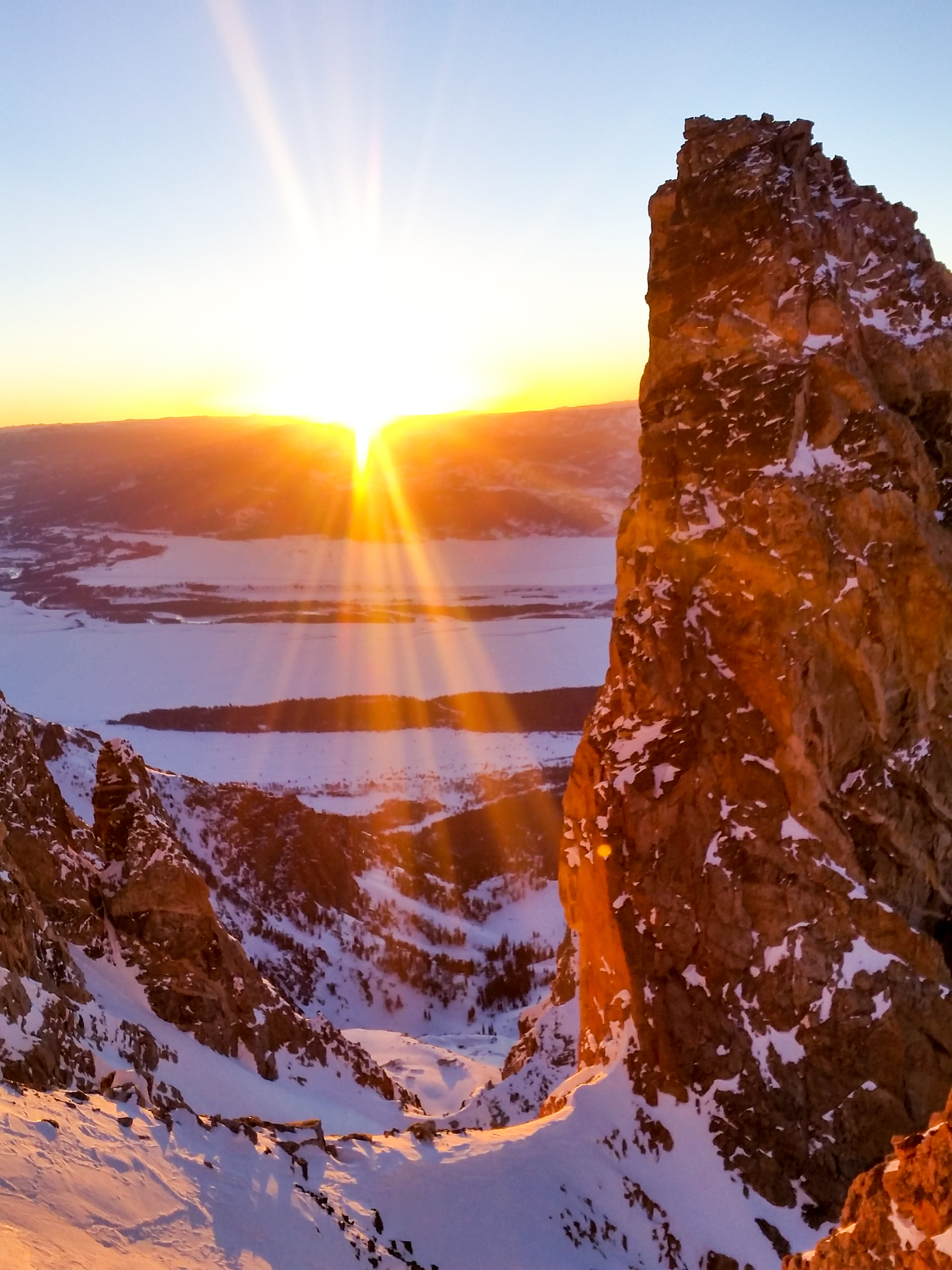
Sunrise behind Teepee Pillar.
Tristan gearing up, with his blackcrows soaking in the sun.
Panorama from Glencoe Col. (photo: Dane Etter-Garrette)

The other group had left for the Stettner by now.  We hydrated a little and tried to give the group a head start.  Eventually, it got too cold to wait any longer and started down from Glencoe Col to the start of the Stettner Couloir.  We worked our way up the couloir and over a mild pinch/ice bulge 100 yards up the Stettner.

Dane working his way up the Stettner.
Up at the pinch in Stettner Couloir. (photo: Dane Etter-Garrette)
Working past the small bulge in the bottom of the Stettner.

After that, we waited at the start of the Chevy (darts up to the left around 200 yards up the Stettner) for the other group to climb through the two bugles.  We waited here for a bit, getting very cold, but ready to begin climbing the moment we could.  Eventually the group cleared out and we worked our way to the belay station to tackle the ice bulges.  We were all interested in taking the lead, but in the end Dane decided to take the sharp-end.  He made quick work of the climbing, placing one nut between the two ice bulges on the right and one 16cm screw in the upper ice bulge.

Dane at the upper ice bulge in the Chevy.
About to make the move up the bulge.

Feeling comfortable with the ice and wanting to make up some time, Tristen and I simul-climbed the pitch as Dane belayed us from above.  We made it up to the anchor and quickly decided to simul-climb out of the Chevy and into the Ford.

Climbing out of the Chevy, in the Ford.
Climbing out of the Chevy.
Simul.
Simul.

We found a nice spot to delayer/drop some gear near an anchor at the bottom of the Ford Couloir and got ready for the last 1000′ of boot packing.  We were a little behind schedule, so set a turnaround time of 1pm and pushed towards the top. Right after beginning the bootpack, we saw the group ahead of us down climbing the Ford.  We worked our way up to them and asked what was up.  They said they didn’t feel 100% comfortable with the conditions and were going to bail.  We were disappointed for them, but didn’t have much time to waste.  The sun was warming the snow a bit and we knew the window was closing on our day if we didn’t hurry.  We cruised up the Ford in no time and quickly found ourselves on the East Face of the Grand, working our way through warm, soft snow.  We finally reached the summit block at 12:35pm, just over 11hrs from leaving the truck.

Working our way up the Ford, near the East Face.
Almost there.
Almost there.
Summit Vibes.
Summit Vibes.
USGS Marker, Grand Teton 13775'
USGS Marker, Grand Teton 13,775′
Summit. (photo: Dane Etter-Garrette)

Not having a bunch of time at the top of the Grand is something I’m used to, but I barely had time to snap a few pictures before we were starting down towards the East Face.  We didn’t want to risk the snow warming anymore than it already had. Unlike other objectives, once done skiing, you are still in harms way until you exit the Stettner after numerous rappels.  With this in mind, we skied down from the summit and worked our way onto the East Face.  We felt good about the snow, but you never really know until you get onto the face.  Dane made a few tentative turns up high and then took it all the way down to the lower entry into the Ford.  The snow was surprisingly good on the East Face, with the sun warming the surface just enough to create some early season “corn”.  We all had a blast skiing the East Face, which is a feeling not many will ever have.

Skiing onto the East Face.
Skiing onto the East Face, looks a little intimidating.
The Black Diamond Carbon Justice skis handled the Grand with ease.
First turns off the Grand.
Tristan, waiting his turn.
Dane, in the distance at the entrance of the Ford.
Dane, in the distance at the entrance of the Ford Couloir.
Grand turns.
Grand turns.
East Face of Grand Teton. (photo: Dane Etter-Garrette)
All smiles for this turd.

The Ford proved to be as much fun as the East Face, if possible, even a little more spicy.  The 50 degree couloir ends in a 1000′ cliff, so each turn was made with care.  We found good snow on the skiers right side of the couloir, some smooth firm snow on the left and made it down safely to the spot we stored our gear earlier.

Tristan, making turns down the Ford.
Making my way down the Ford. (photo: Dane Etter-Garrette)
Dane, navigating down the middle portion of couloir.

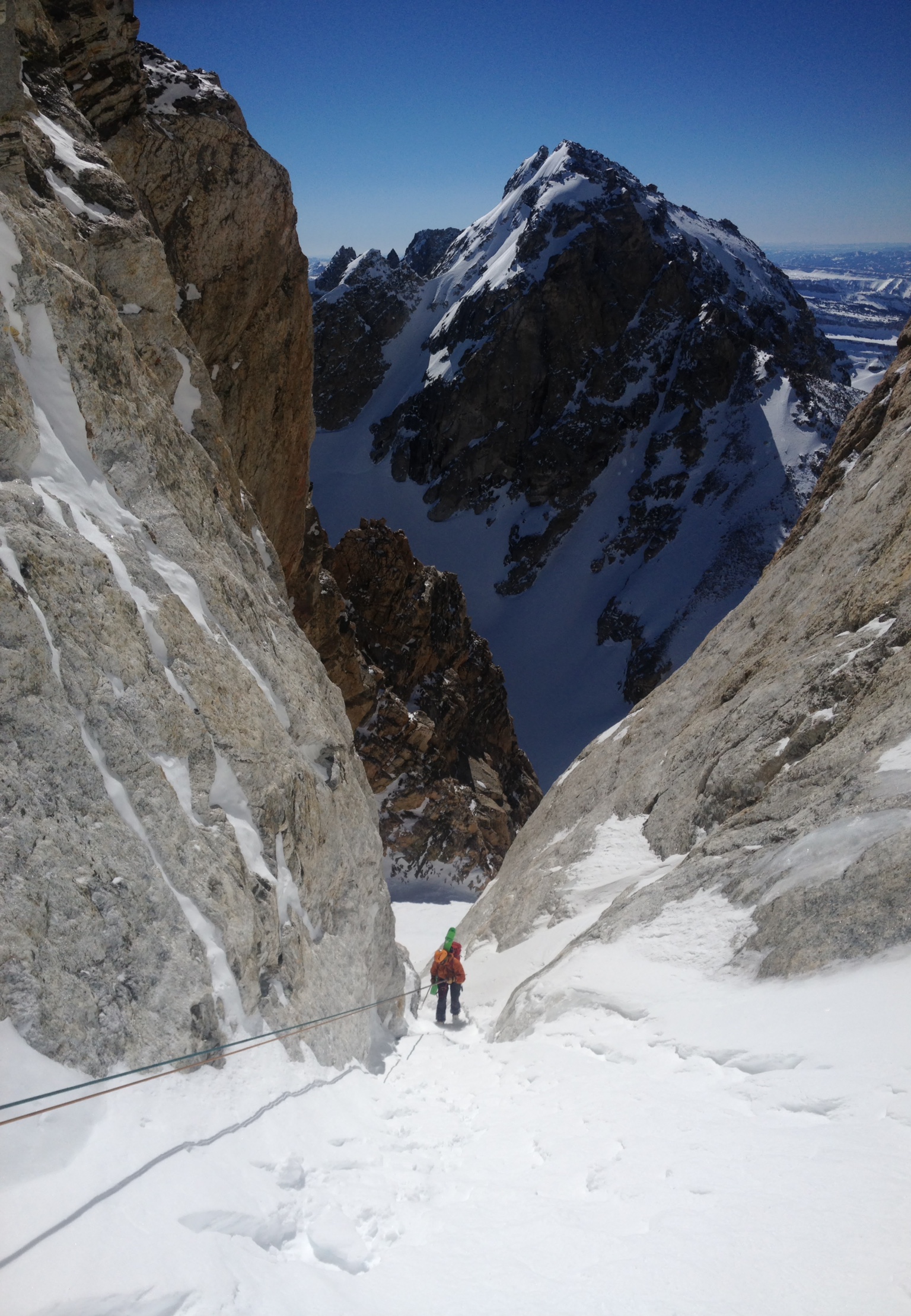
We discussed rappelling into the Chevy from the  anchors on the skiers right, at the bottom of the Ford, but decided to ski down a little lower to the first anchors in the Chevy.  This slope was steep and very exposed, so we skied it gingerly and eventually got to the anchors, quickly getting ready for the rappels through the Chevy and Stettner.  We rappelled twice in the Chevy and dug our an anchor on the lookers right of the Stettner below the entrance of the Chevy for our final rappel (definitely could have down climbed this portion).  We were happy to have brought two 60m ropes for the day, allowing us to get out of harms way as soon as possible.

Dane, working his way into the Chevy towards the anchors on the right.
Rappel #1.
Rappel #1.
Dane was pumped.
Dane was pumped.
Rappel #2.
Rappel #2.
Rappel #3. (photo: Dane Etter-Garrette)
Tristan and Dane coiling the rope below Rappel #3 towards the bottom of the Stettner.

After making it down, we quickly made our way out of the Stettner and over to Glencoe Col.  We gathered our skins, etc and got ready for the 5000′ ski down to the truck.  We worked our way over to Teepee Col and made some fun turns down Teepee Glacier, eventually making our way down Garnet Canyon.

Skiing Teepee Glacier. (photo: Dane Etter-Garrette)
Teepee Glacier.
Teepee Glacier.

At this point we were exhausted, dehydrated and only wanted to make it down safe.  The snow was decent all the way down, but that was just icing on the cake for us.  We made quick work of the out from Bradley Lake and pulled into the Trailhead at 4:25pm, 15 hours after we had started in the moonlight.  We were tired, but all felt great about what we had just accomplished.  We rested our tired feet and had a few sodas, staring up at the Grand and the run we had just skied.  It wasn’t long after that we started hatching plans for the next adventure in the park.

The Grand Teton.
The Grand Teton.

Sickle Couloir Attempt, Mount Moran

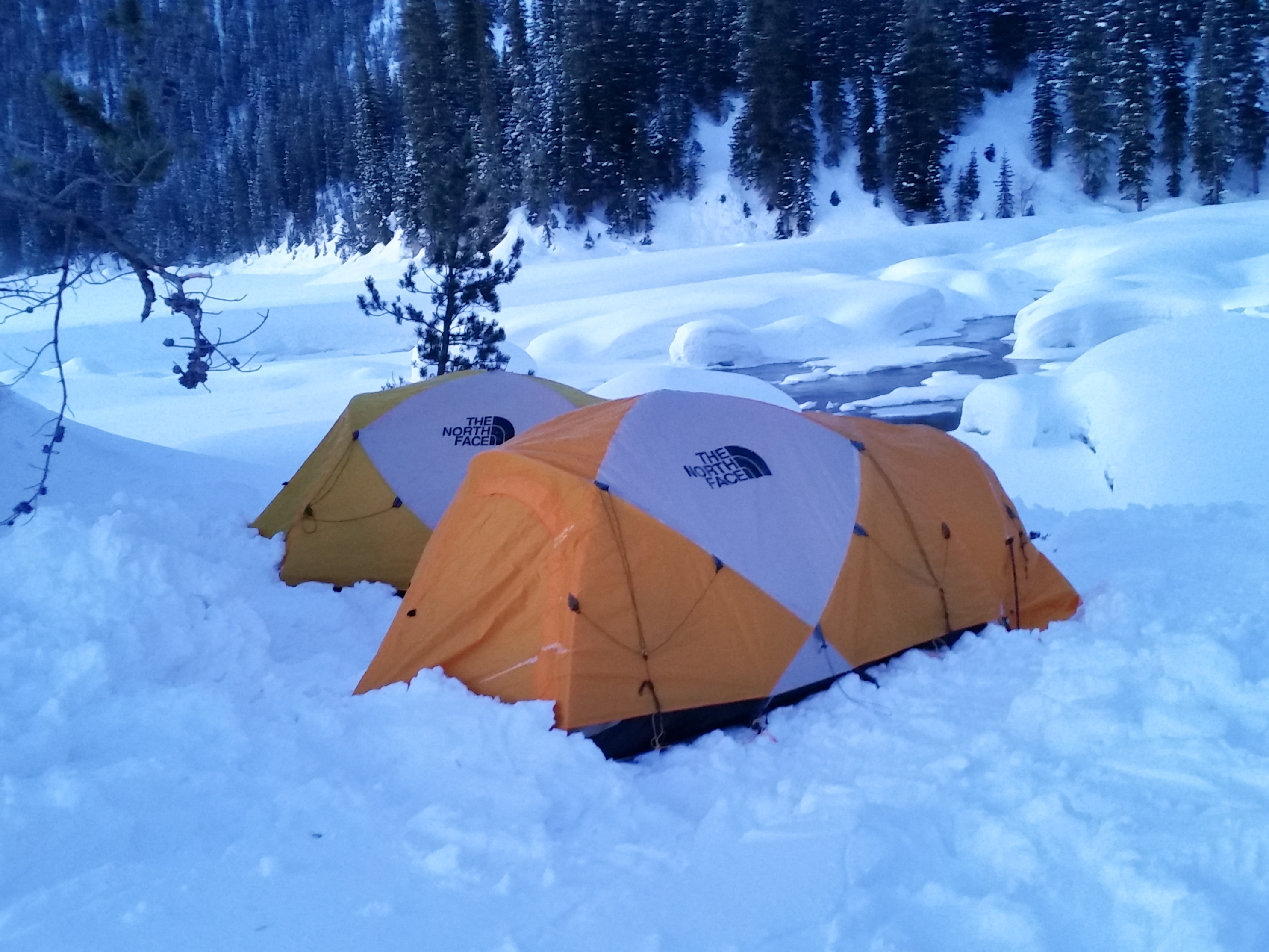
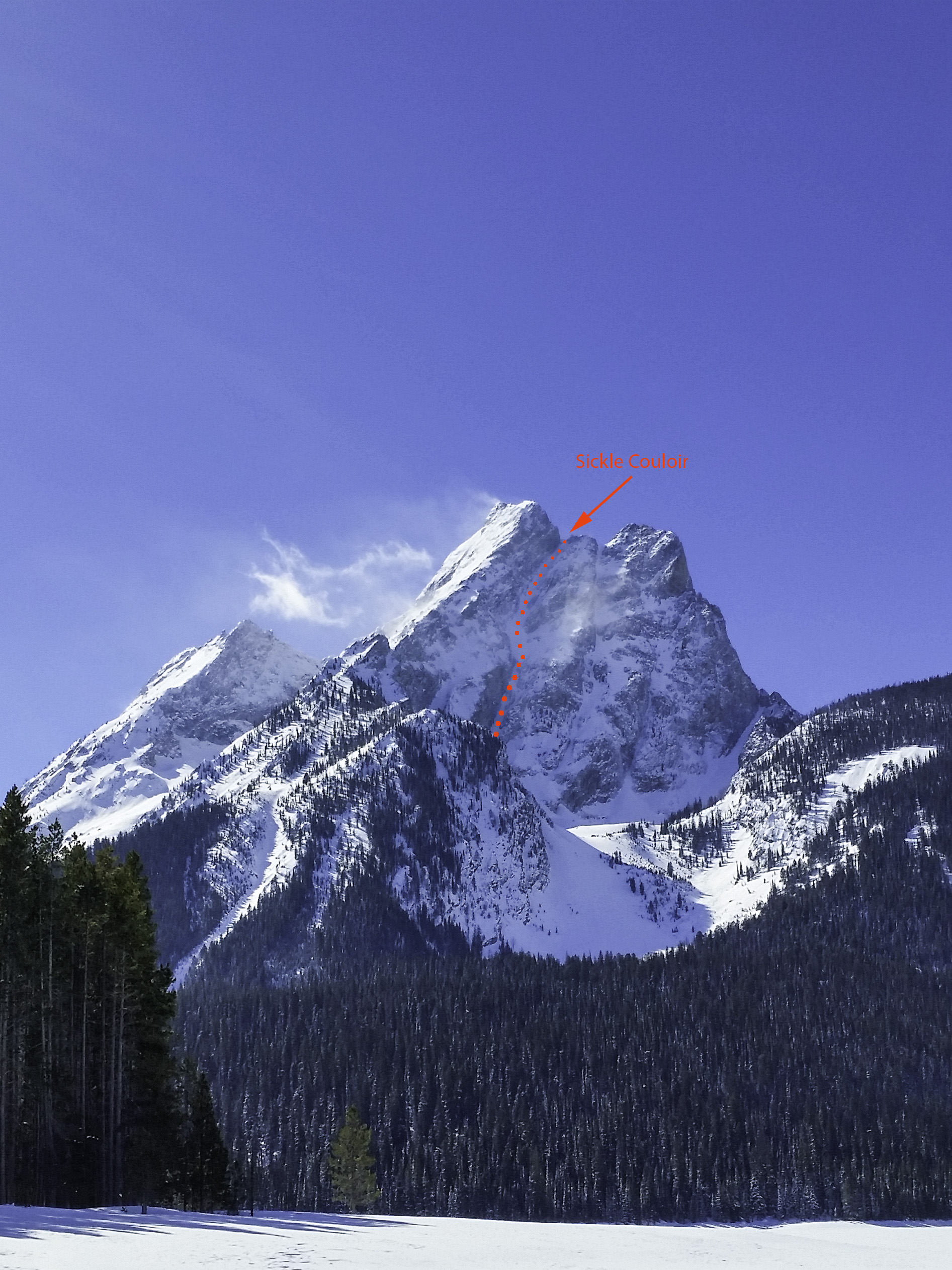
The Sickle Couloir is a major ski line off Mount Moran, with slopes maintaining a consistent 40-50 degree pitch and numerous rock bulges towards the bottom of the run that often require rappels.  It is a line I have been longing to ski for a few years and a definite on the “hit list” for this year.  It tops out around 11,800′ on a north shoulder of Mount Moran and continues down to a cirque at 9000′.  It has hang fire from above, is a “no-fall-zone” and one of the prettiest lines in the park. With all this in mind; Dane, Tristan and I woke up on Wednesday morning (after skiing the Southeast Couloir off Bivouac Peak just the afternoon before) at 5am to give it a go.  In hindsight, 5am was too late.  With the light of the moon and proximity to the run, we should have been moving at 4am, but the -10 degree temperatures gave us second thoughts about an alpine start.  Nevertheless, we awoke and tried to boil some water after a fitful night of sleep.  We moved slowly and before we knew it, we were leaving camp at 6:30am.

Camp.
Camp.
Dane, soaking in the sunrise.

From our camp, the cirque below the entrance to the Sickle Couloir was around 2300′ of elevation gain and 1.5 miles of skinning.  This should have taken around 2hrs, but instead we immediately ran into some problems.  The first and major issue was our skins.  Instead of sleeping with them in our bags, we left them inside the tent thinking they would be fine.  This wasn’t a problem for Dane, who had new skins, but Tristan and I soon found that our glue was too cold to actually stick to our skis about 20 minutes into the skin.  With the sun behind a moraine, our only option was to try and make it work with the skins sliding all around unattached to our skis.  After numerous disastrous switchback, we decided to pull the skins and put them in our jacket to try and warm the glue while we bootpacked up the moraine.  This lasted about 20 minutes, until the constant postholing became too much and we tried to put our skins back on, hoping the glue was “alive” again.  Unfortunately, the skins didn’t stick and we were left in the same spot 4 switchbacks and 20 minutes ago.  The good news was that the slope had mellowed a bit and we could make due with the garbage skins until we found some sunlight to thaw the glue out.  About 1000′ from the cirque, we found some good morning light and were able to let the skins warm in the sun to a point where they would adhere to the skis.  This took around 15 minutes and we were soon hustling to make up all the lost time, calculating that we would be skinning across the lake in the dark if something didn’t change.

View of Moran from our skin warming delay.
View of Moran from our skin warming location in the sun
Dane working his way up into the cirque.

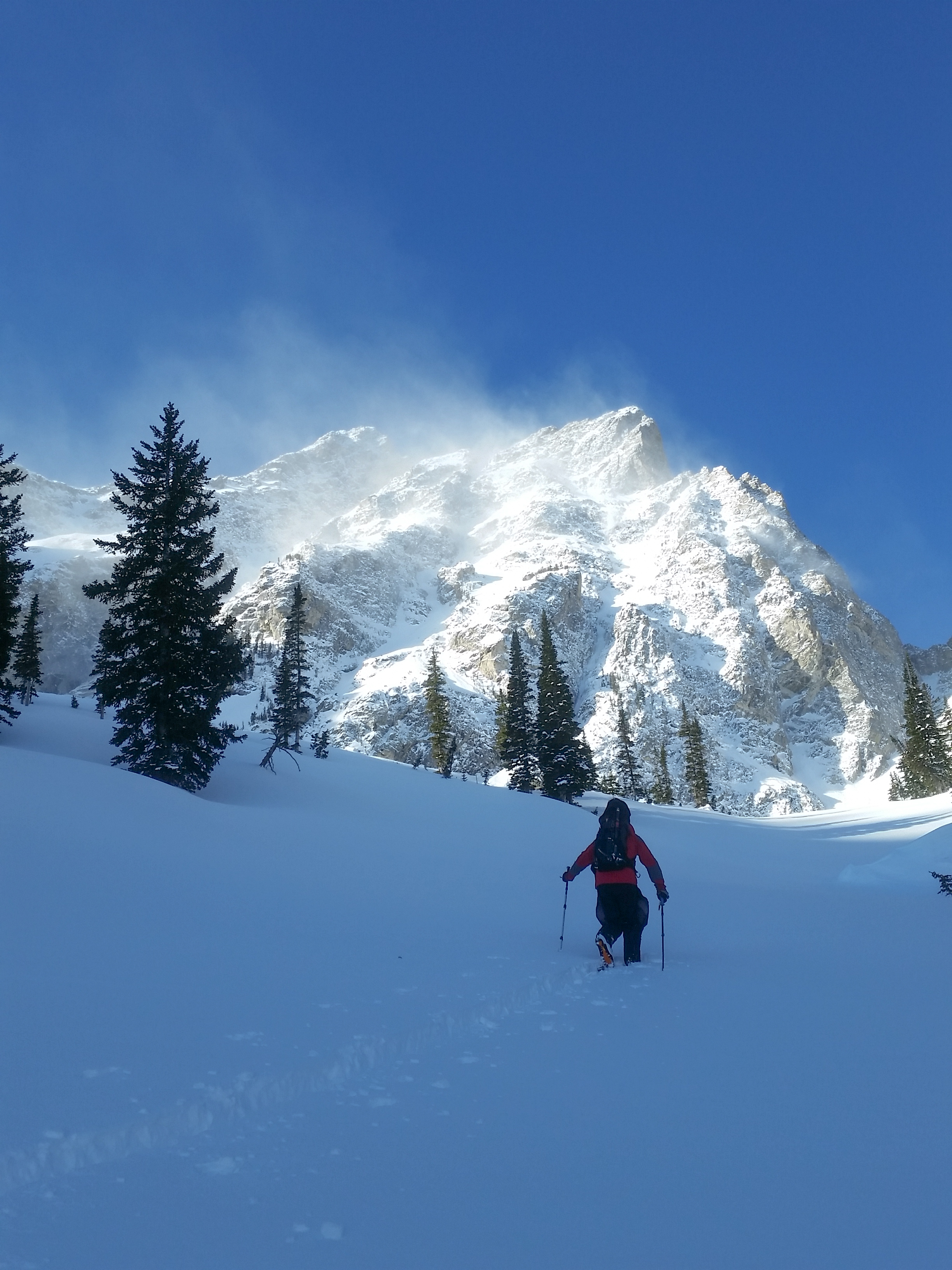
After about 45 minutes, we came into view of the cirque, but I had another problem. My foot had gone numb a while ago (which is normal for me), but now that numb foot was having shooting pains that caused me serious issues.  I thought that I must have some form of frostnip developing and knowing the entire couloir was in the shade, decided to stop in the sun and try and apply some foot warmers before the climb.  This was a first for me, but I would rather not continue on, than get frostbite and have serious issues lingering for the remained of the season, or even worse.  So my stop caused yet another delay and after I was finished, tried to catch up the Dane and Tristan who were working their way up to the start of the climb.  As we came into the cirque, you could see the wind was howling up high.  Mount Moran was alive with spindrift, a large contrail trailed off the summit and all of a sudden BOOM!  A large “sluffalanche” came crashing down into the cirque off a 100′ cliff.  The remnants of this failure kept coming off the cliff for 30 seconds.

Lingering remnants from the "sluffalanche"
Lingering remnants from the “sluffalanche”

Then a massive gust of wind came off the mountain, blowing snow everywhere and creating a near whiteout.  This gust lasted for a bit, but the wind lingered with several other gusts over the next few minutes.

Looking up the Sickle with the wind creating near whiteout conditions.

All the while, Moran was demonstrating her might, releasing “sluffalanches” off all her slopes.  While all this was happening, the three of us had to decide if we wanted to begin the climb up the Sickle Couloir.  We had come so far: skinning across Jackson Lake, spending a night in negative degree temperatures and persevering the delays from earlier in the day.  Our main concerns were: the wind chill, the poor visibility due to the wind gusts and being knocked off the mountain by a “sluffalanche” that we couldn’t see or hear racing towards us.  The decision was easy… all the signs were working against us. Today would not be our day to ski this iconic line.  We discussed this briefly, then changed over and skied some powder down to Jackson Lake and our camp.

This slideshow requires JavaScript.

We were disappointed, but felt good about the decision to bail.  In those situations, only one thing has to go wrong for the day to turn into a disaster – and many things had gone wrong, so when the stars don’t align, you don’t push forward.  We packed up camp slowly and tried to thaw our frozen bodies in the sun.  We took off from camp at around 12:30pm, as the wind continued to whip off Mount Moran.  We made our way out of Moran Bay and took one last look up towards the Sickle Couloir.  A large, new sluff pile was sitting at the base of the couloir.  We felt relived about our decision and that each of us would “live to ski another day”.  We made it back to Signal Mountain Lodge in a blistering 3.5 hours, just in time to grab some happy hour beers in town and reminisce about the past few days.

Working our way home.
Working our way home as the wind hammers Moran.
Reveling in the beauty of the most beautiful mountain range North America has to offer. (photo: Dane Etter-Garrette)
Reveling in the beauty of the most amazing mountain range North America has to offer. (photo: Dane Etter-Garrette)

Adventure Skiing in Northern GTNP

So a few weeks back, Dane, Tristan and I started talking about heading up north for an overnight in GTNP.  We wanted to ski some remote lines and thought the best way to do that was an overnight trip.  After a week of planning (gathering gear from friends, talking over different objectives, etc.), we settled on Tuesday/Wednesday for the trip, despite the fact it was supposed to be in the negatives Wednesday morning.  Ideally, we would have had a few nights to camp and ski, but the scheduling didn’t work out and we only had one night to make it happen.  On Tuesday morning at 5am, Tristan grabbed Dane and I from town and we started our way up to Moran Junction.  It took about 1 hour, because the snow was falling at a good clip and the visibility was quite poor.  At the “gate”, we were surprised to see Ranger Jay checking park passes.  We got ours out and started chatting with him about the option to leave from Signal Mountain Lodge instead of Colter Bay.  He said that it was ok to leave our car there and that he would call the visitor center to let them know the change to our camping permit.  Just a few things on all that….

The first is that you do need a permit to camp in the park during the winter.  It is free, but someone does have to go to the visitor center, give your information, trip itinerary and grab a bear canister.  While this is a pain in the ass, it is free and a necessary evil that can actually help out out if something were to happen

The second note on that is that Signal Mountain Lodge is FURTHER from Moran Bay than Colter Bay.  I am not sure why we thought it was closer, possibly a comment from a post on TetonAT about the distance to Leigh Canyon from Colter, but it is in fact about 1.5 miles further to Moran Bay from Signal Mountain Lodge.  I suppose the thought at that moment was that is was pretty much whiteout conditions and we would have more land masses to follow going from Signal.

So, we got to Signal in a “blizzard” of wind and snow around 6:30am.  We chatted about just going back to town for some breakfast, but all agreed that we might as well continue forward with our plan.  We were on the ice at 6:45am and found Jackson Lake in great shape and the travel to be pretty decent.

View past Donoho Point, at the start of the lake crossing.

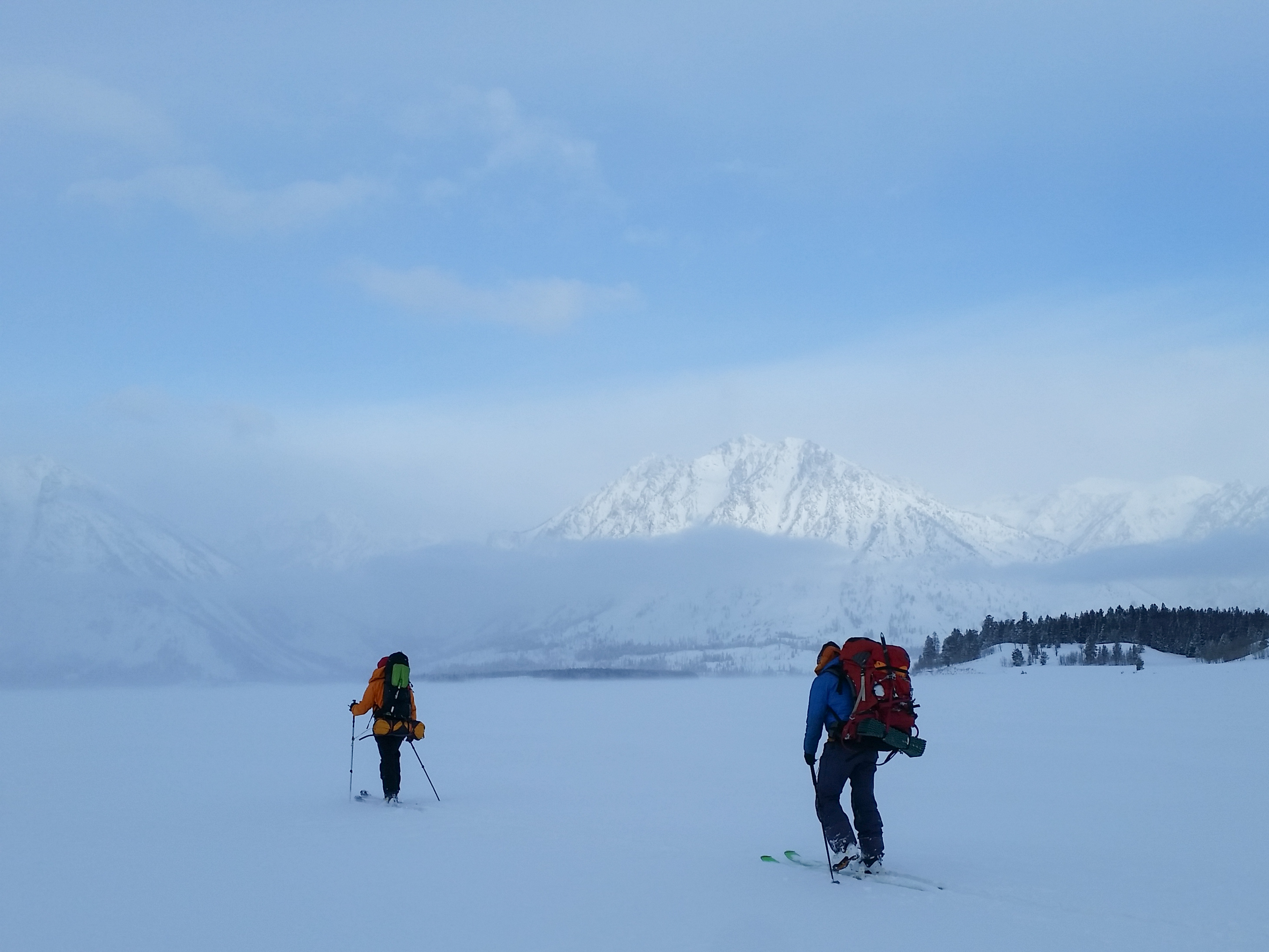
While the visibility was poor, we were able to make out Donoho Point, Marie Island, then Elk Island in succession and made a fairly straight line considering the conditions.  As we worked our way past Elk Island, the wind began to subside and the clouds started to part, opening up the beautiful Northern GTNP to us.

Clouds Lifting...
Clouds Lifting…

We had been moving for around 2 hours at this point and knew we still had a ways to go.  We ate a little grub and made the push to Moran Bay and our camping area.  The last little bit was a slog, with the weight of our packs and the monotony of the skin starting to wear on us.  Luckily, we had some tunes to motivate us for the last push.

Entering Moran Bay.
Entering Moran Bay.

As we entered the bay, we worked towards the delta of Moran Creek, in hopes of finding a decent spot to camp and running water.  We made landfall 3.5 hours from when we left the car, tired and happy to have made it across.  We quickly setup one tent to store our excess gear in and started up towards our first objective, the Southeast Couloir off Bivouac Peak.

The Southeast Couloir, off  Bivouac Peak from just outside our camp.
The Southeast Couloir, off Bivouac Peak from just outside our camp.

Southeast Couloir-Bivouac Peak

Location: GTNP, Bivouac Peak, Moran Canyon, Jackson Lake
Tags: Backcountry Skiing, Ski Mountaineering
Elevation, Gain/Loss: 10,816’, 4,393’ gain/loss
Distance: 17 miles RT (from Colter Bay), 20 miles RT (from Signal)
Difficulty: 4 stars
Time:  10-12 hours

Trip Report:

Date: 3/3/2015
Snow Conditions: Powder (lots of it), some crust up high, low energy wind slabs up high, sun/wind crust down low.

The Southeast Couloir off Bivouac Peak is an aesthetically pleasing and challenging objective in northern GTNP.  It requires a long skin across Jackson Lake from either Colter Bay (7 miles) or Signal Mountain Lodge (8.5 miles) to just get to Moran Canyon.  Once at the canyon, the couloir starts about 800 vertical feet above the lake shore.  We skied this as part of an overnight, but it could be done in a day with the right conditions and early start time.

Dane, Tristan and I had this couloir in mind for the first of two objectives of an overnight trip to Moran Bay.  We started from camp at 11:45am after dropping some gear and made our way up to the base of the couloir.  It was an easy skin up, only taking 45 minutes until we were at the start of the climb.  I imagine even in the dark, or poor visibility this would not be difficult to route find as it is the first major couloir off the south side of Bivouac Peak.  So, we dropped our skins at the entrance to the couloir and began what would be a slog to the top of Southeast Couloir.  The initial part of the couloir is tight and gradually starts to get steeper as the walls close in.

Making our way up the initial pinch in deep snow.

The snow in this section was about 2 feet of powder with a breakable crust below.  At times, the crust would support us, but often we would break through to a sugary, faceted layer a foot below.  This made the climbing challenging and time consuming.  After making it over the “bulge” at the end of the pinch, the couloir opened up into a large mellow middle section.

Just coming out of the pinch in the Southeast Couloir.

The snow in here proved to be more challenging than down low.  It was very deep, in sections chest deep and not very supportive.  We trudged up this middle section for what seemed like an eternity and actually took a break to refuel and get mentally prepared for what seemed would be an epic climb up.

Tristan, taking in the views and getting "stung".
Tristan, taking in the views and getting “stung“.

Eventually we found that the right side of the couloir was a little easier to bootpack up, so we stayed right and worked our way up for a while.  It still was not easy, with the snow being anywhere from boot to thigh deep, but it was supportive and we made decent time through the middle section and up to the upper steep portion of the couloir.

On the up. (photo: Dane Etter-Garrette)
Tristan, doing his best to break trail.

Once we got to the steep portion of the climb, the winds began to whip off the summit and the arctic air mass that was moving in began to take its toll on the group.  Our movements became a labored as our extremities started to freeze.  Despite this, we pushed on for the top of the couloir and the summit of Bivouac Peak.

Dane, breaking trail towards the top as the wind gusts down the couloir.
Tristan trying to stay warm in the -20 Degree windchill.

Eventually we made our way to the top after a few steep tight spots near the summit.  We did notice small wind slabs forming at a rollover near the summit, but felt we could mitigate these with a few ski cuts.  We topped out around 5pm as the sun was setting in the West and the wind howling from the Northwest.  We didn’t have much time to celebrate, as the windchill was probably around -20 and the sun was setting, but it was a special summit and we all felt good about the climb.

Getting geared up in amazing light!
Mount Moran from the northwest.
Mount Moran from the northwest as the wind gusts into the Southeast Couloir.

We quickly got ready to ski as the gusts continued to pound us, covering our gear with snow in a matter of seconds.  We decided to enter the couloir from the right where we could get a good ski cut on the upper slope to test the stability.  With nothing moving, we tentatively made turns down the steep couloir to the first of two tight pinches.

Skiing down to the first pinch after making it down the steep upper "bowl" (photo: Dane Etter-Garrette)
Skiing down to the first pinch after making it down the steep upper “bowl”. (photo: Dane Etter-Garrette)
Tristan coming through the second pinch in style.

After the two constrictions, we only had one thing to do…..ski powder all the way down to the bottom of the run.  We gladly accepted our duty and made some fantastic turns down to through the lower pinch and onto the apron!

This slideshow requires JavaScript.

Southeast Couloir - Bivouac Peak
Southeast Couloir – Bivouac Peak

After making it down to the bottom and out of the couloir safely, we gathered our skins and made our way back to camp.  We felt pretty good, considering the long day we had endured. We quickly setup camp and made some delicious Mountain House meals before climbing into our cold sleeping bags for the evening.  We had one more challenging objective for the trip and needed all the rest we could get.  The next day we were going to make a bid for the Sickle Couloir off Mount Moran.  We went to bed tired, but excited about the great run down the Southeast Couloir and what the next day had in store.

Sickle Couloir, off Mount Moran.