Tag Archives: Skiing

Spoon Couloir – Disappointment Peak

Location: GTNP, Disappointment Peak, Glacier Gulch
Tags: Backcountry Skiing, Ski Mountaineering
Elevation, Gain/Loss: 11,357’, 5,075’ gain/loss
Distance: 11 miles RT
Difficulty: 3 stars
Time: 5-7 hours

Trip Report:

Date: 2/28/2015
Snow Condition: Powder, Mild breakable crust down low (below 7800′), but mainly powder with a slight bottom on SE facing slopes.

Took a little weekend trip up the Spoon Couloir with Zelie to check out the snow and get her into an area she had not skied this past Saturday.  The Spoon Couloir is a nice test piece for those looking to graduate from the smaller lower faces to more committing lines, without really scaring yourself.  It also offers some great views of the surrounding mountains and some pretty fantastic “face skiing”.  I have been up the Spoon a few different times, writing my first trip report about it, and must say I do like skiing this couloir a lot.  It is: relatively easy to get to, the East Face of Disappointment is a blast, the couloir is steep and you have numerous ski options once you get to Amphitheater Lake.  That being said…this was the best skiing I have had in the couloir to date.

We left Bradley/Taggart at a casual 9:45am and cruised over to the Disappointment Peak skin track.  Making it up to Amphitheater in a little over 3 hours (the skin track was pretty awful), we could see two groups of 2 going up the couloir.  Now, it’s always a bummer to not get first tracks, but considering the time we left and that it was the weekend, I couldn’t really be disappointed.

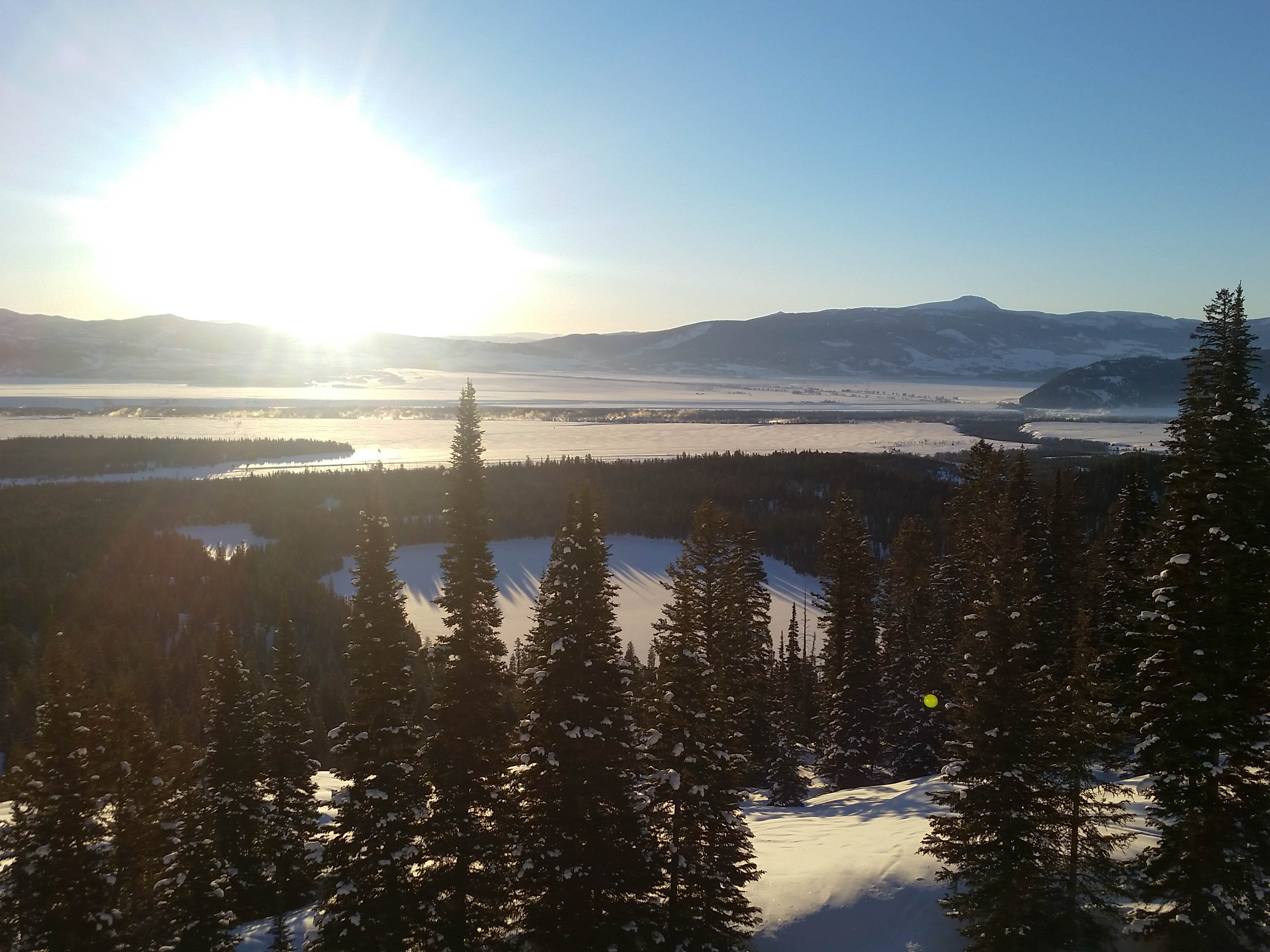
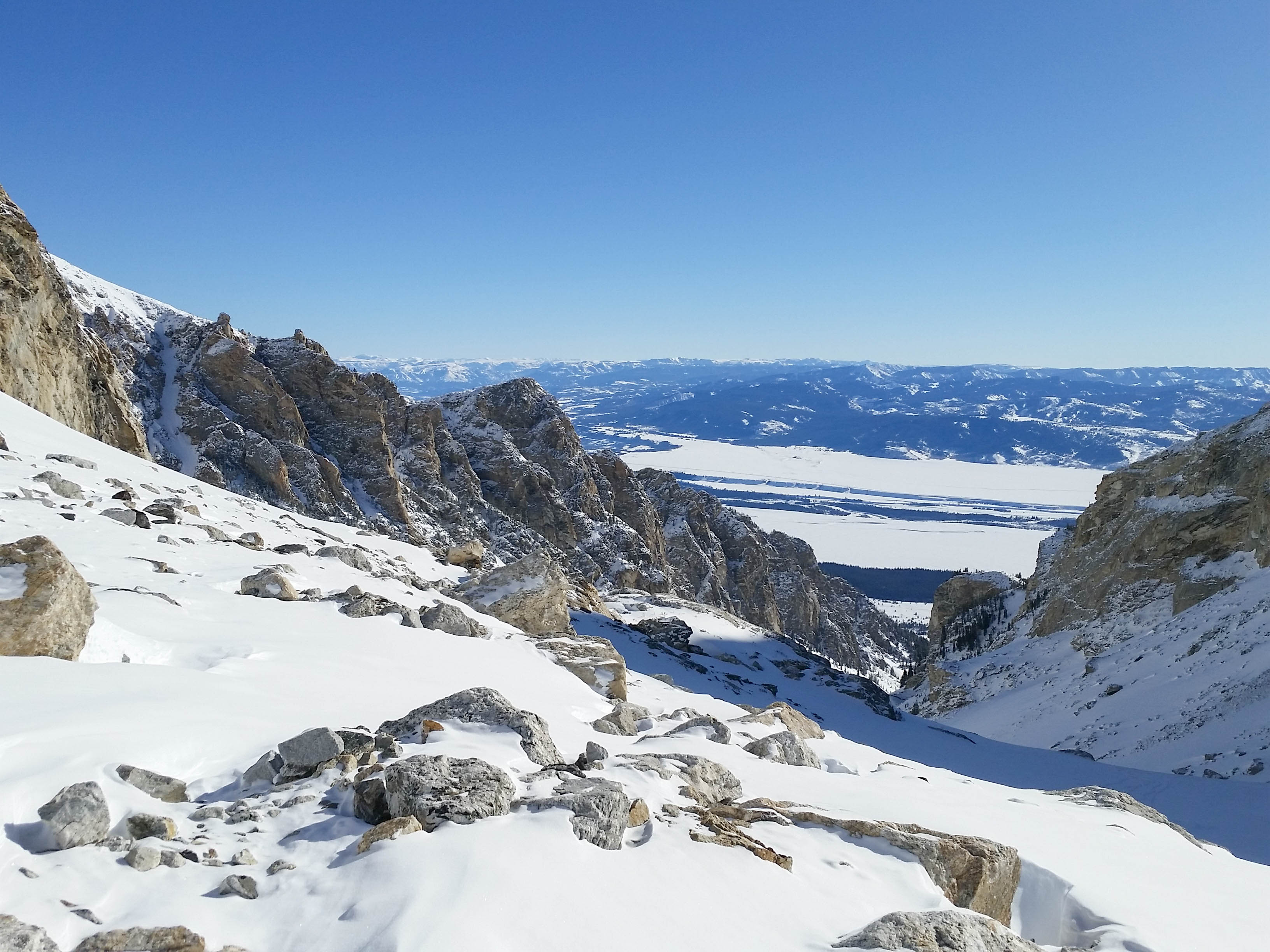
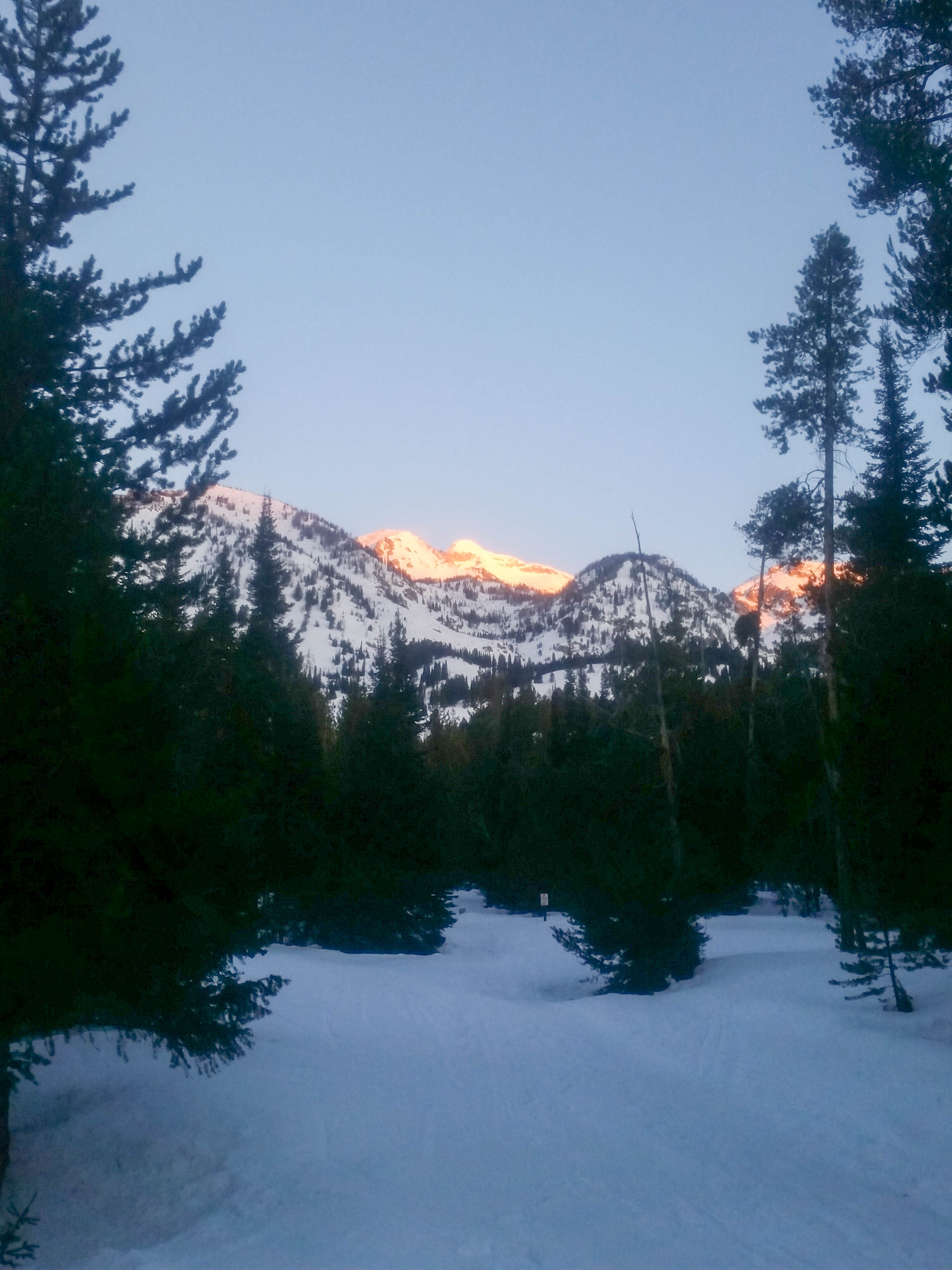
Morning sun from above Bradley Lake.
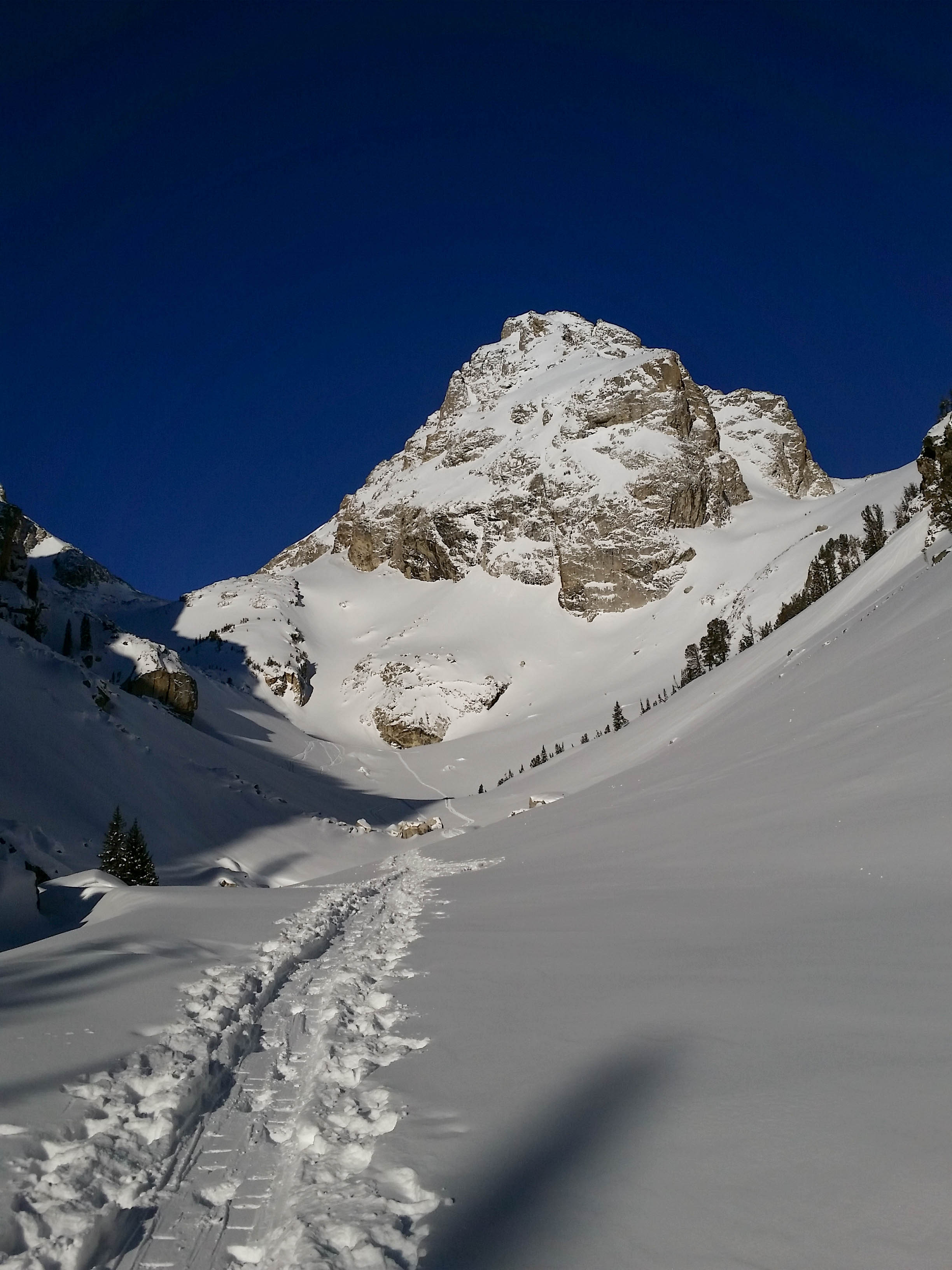
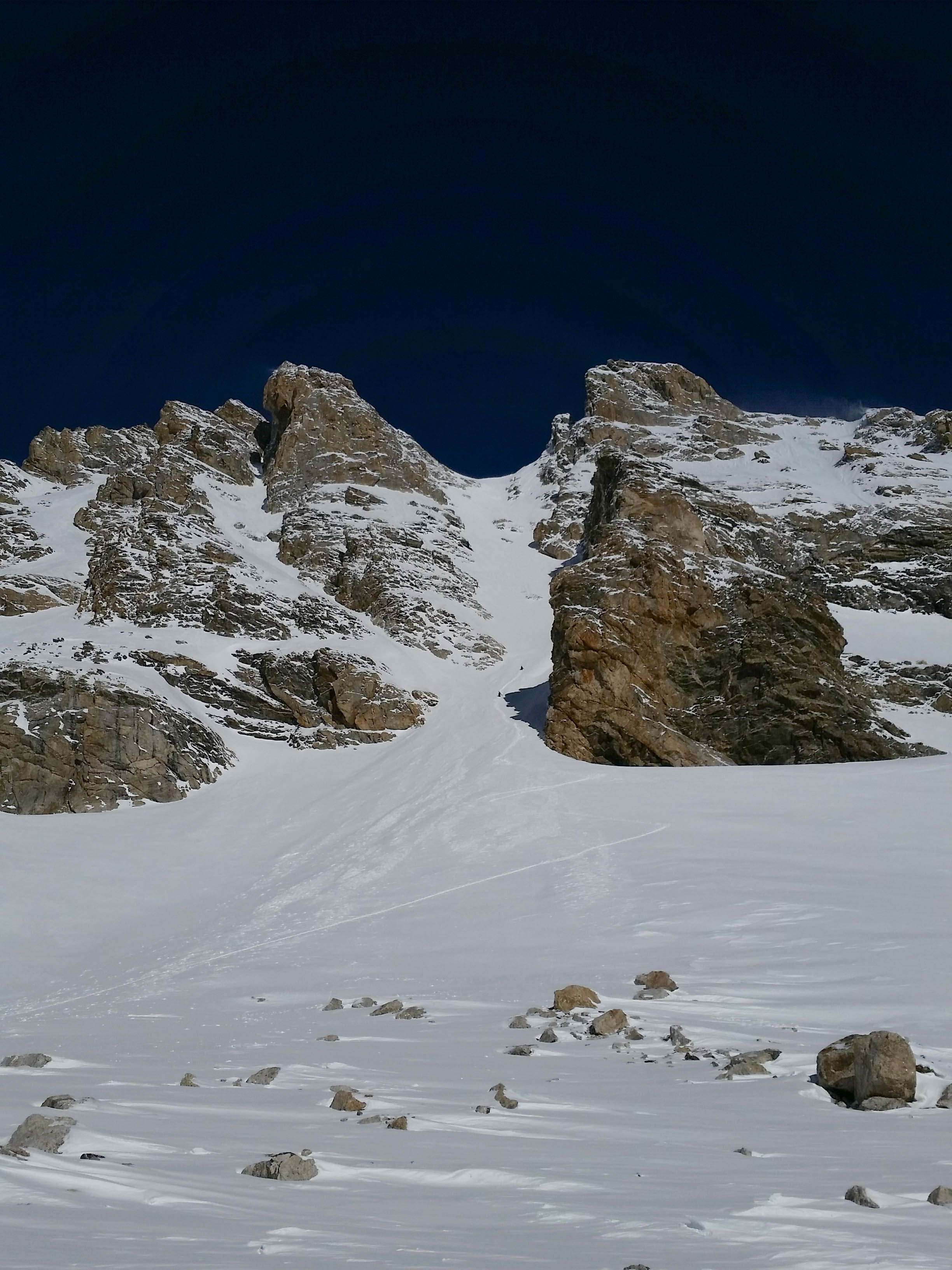
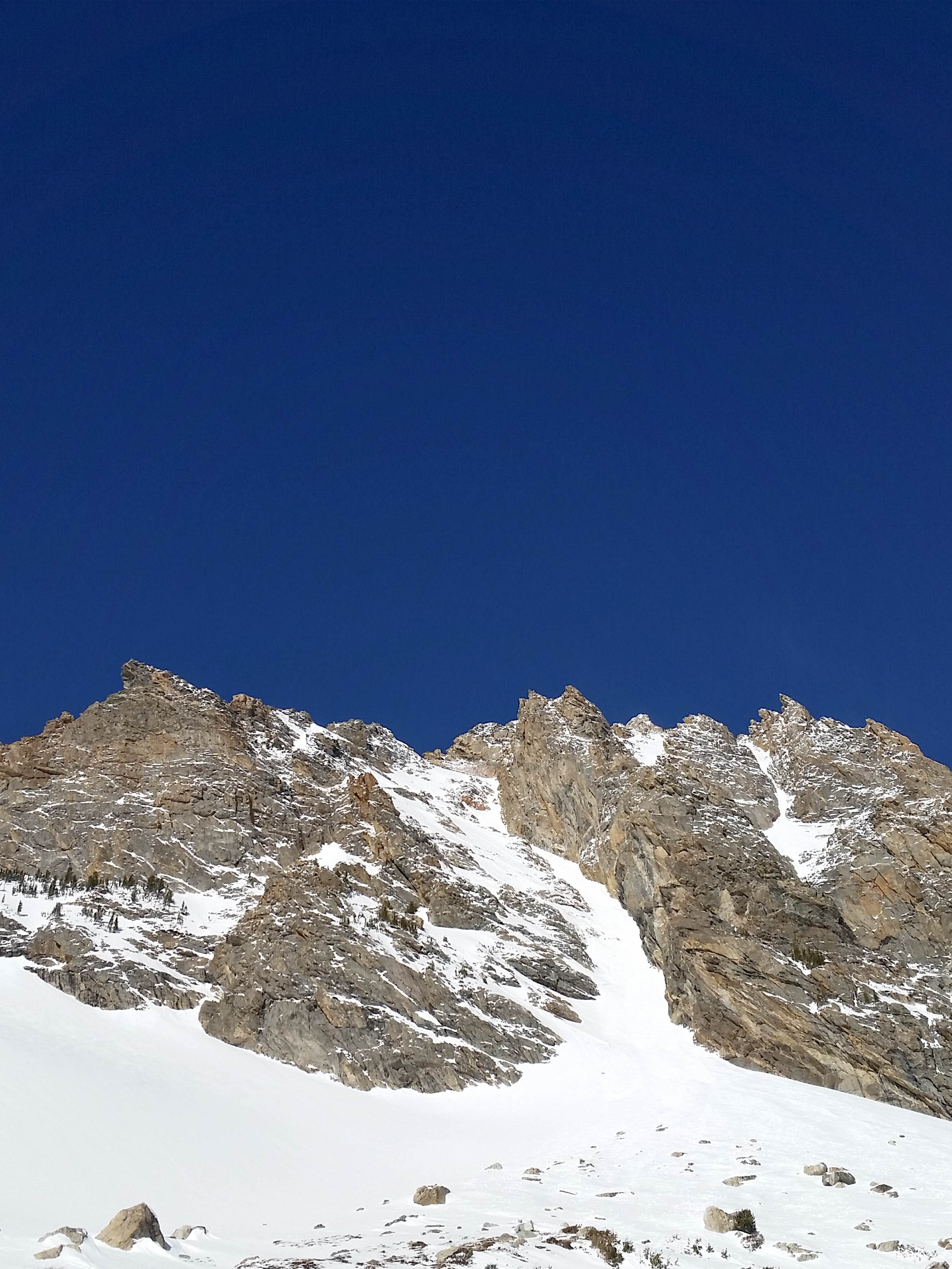
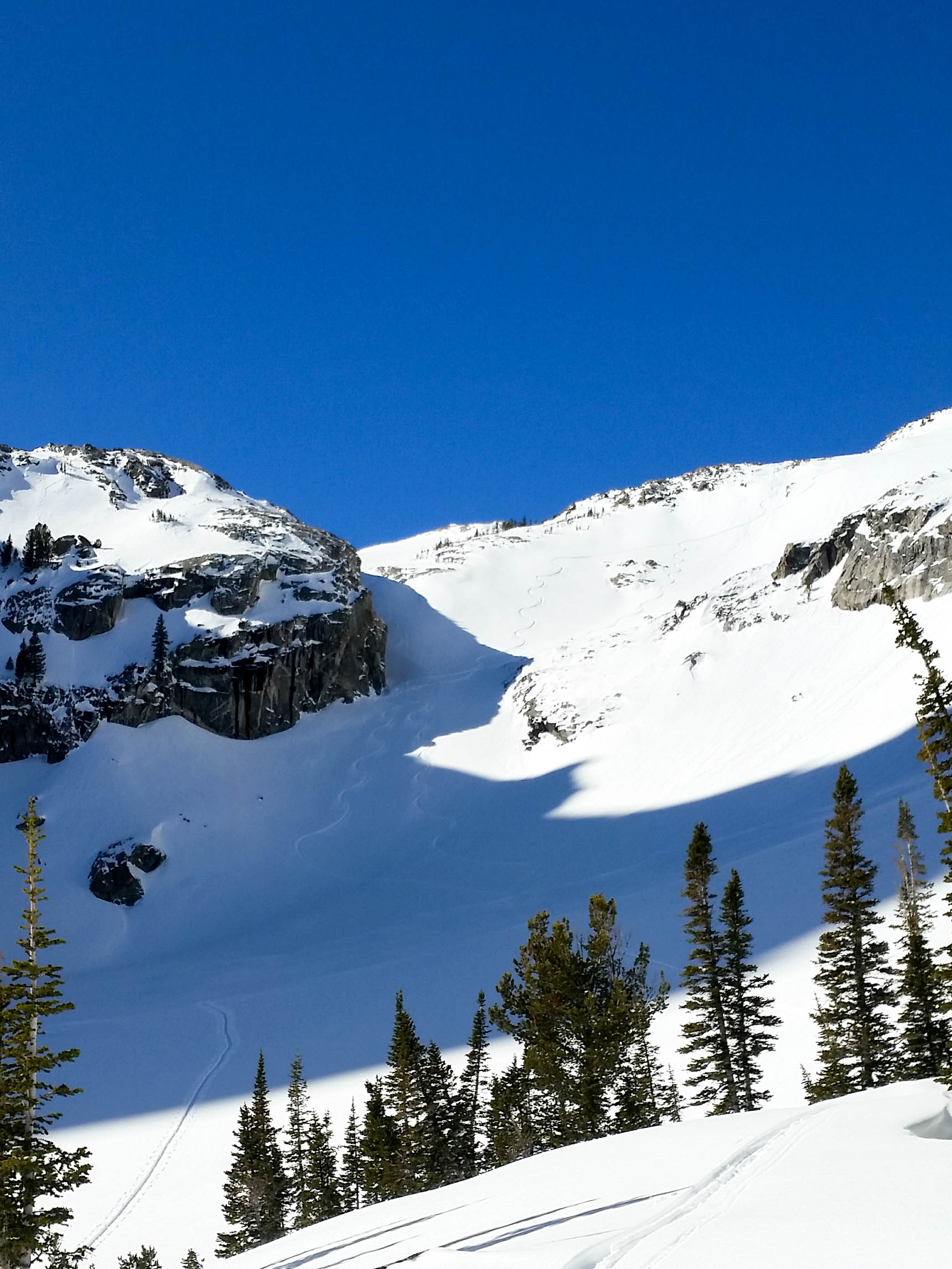
The Spoon from Amphitheater Lake.
The Spoon from Amphitheater Lake, with the last group of two topping out.

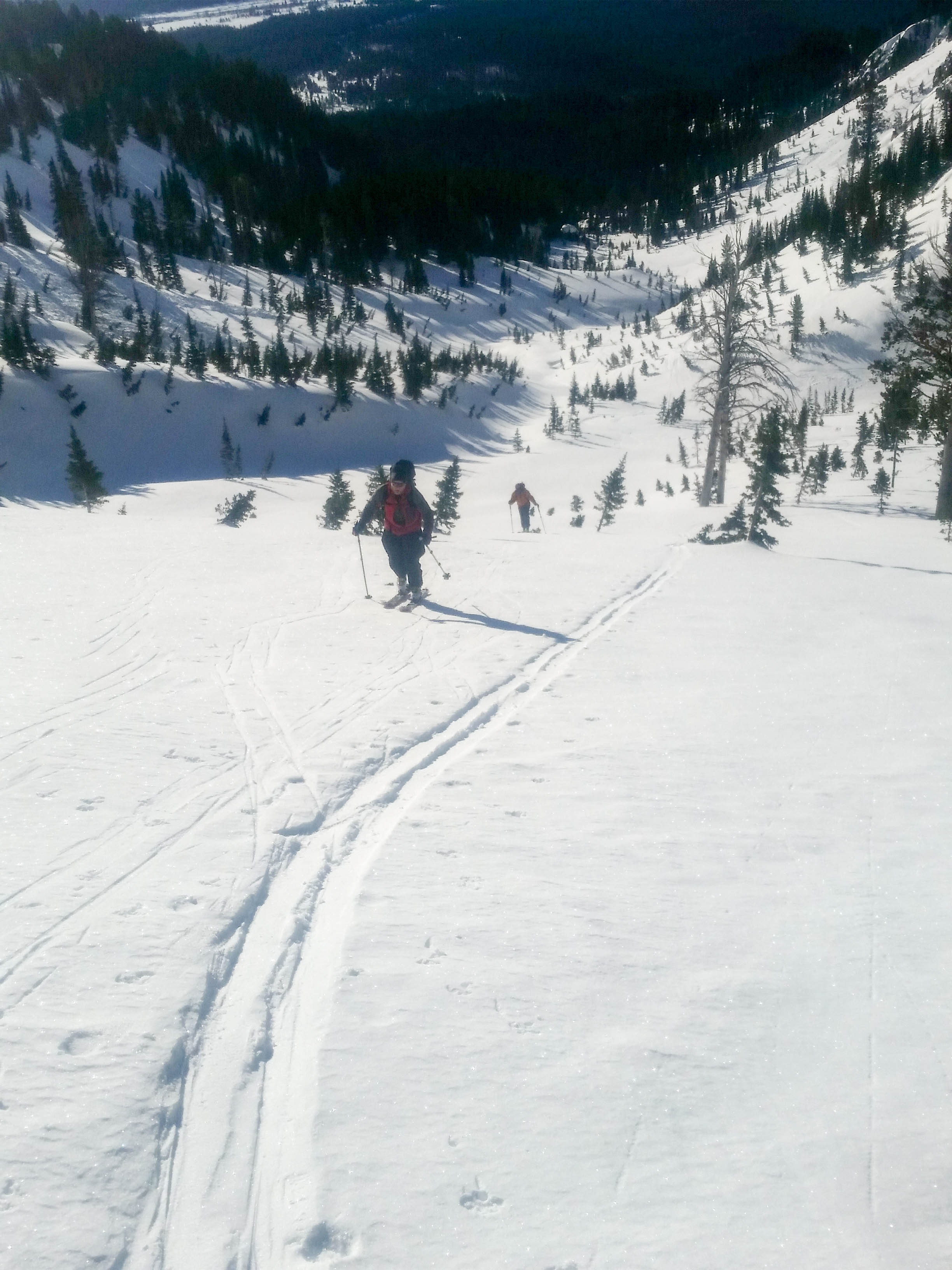
We slowly worked our way up to the start of the climb, hoping that the two groups would make quick work of the East Face and ski through before we got to the transition point.  Unfortunately, this did not happen.  We changed over to boot pack mode and waited 15 minutes in the shade, assuming that the skiers ahead of us would be coming down any minute.  Finally, we got cold and decided that the snow conditions did not warrant that we wait until the couloir was “open”, even if it may “taint” someones skiing zen.  As we predicted, about 2 minutes into the climb – the first group came skiing through.  We moved to the side and said hello as they skied through.  I asked if the second group was going to be coming down soon and the skier said it looked like they were about to ski.  So we worked our way up keeping an ear above for the remaining group, but didn’t see them until we hit the East Face.  They said hello and we continued to work our way up the face, wondering what had taken them so long, but not really concerned with it.

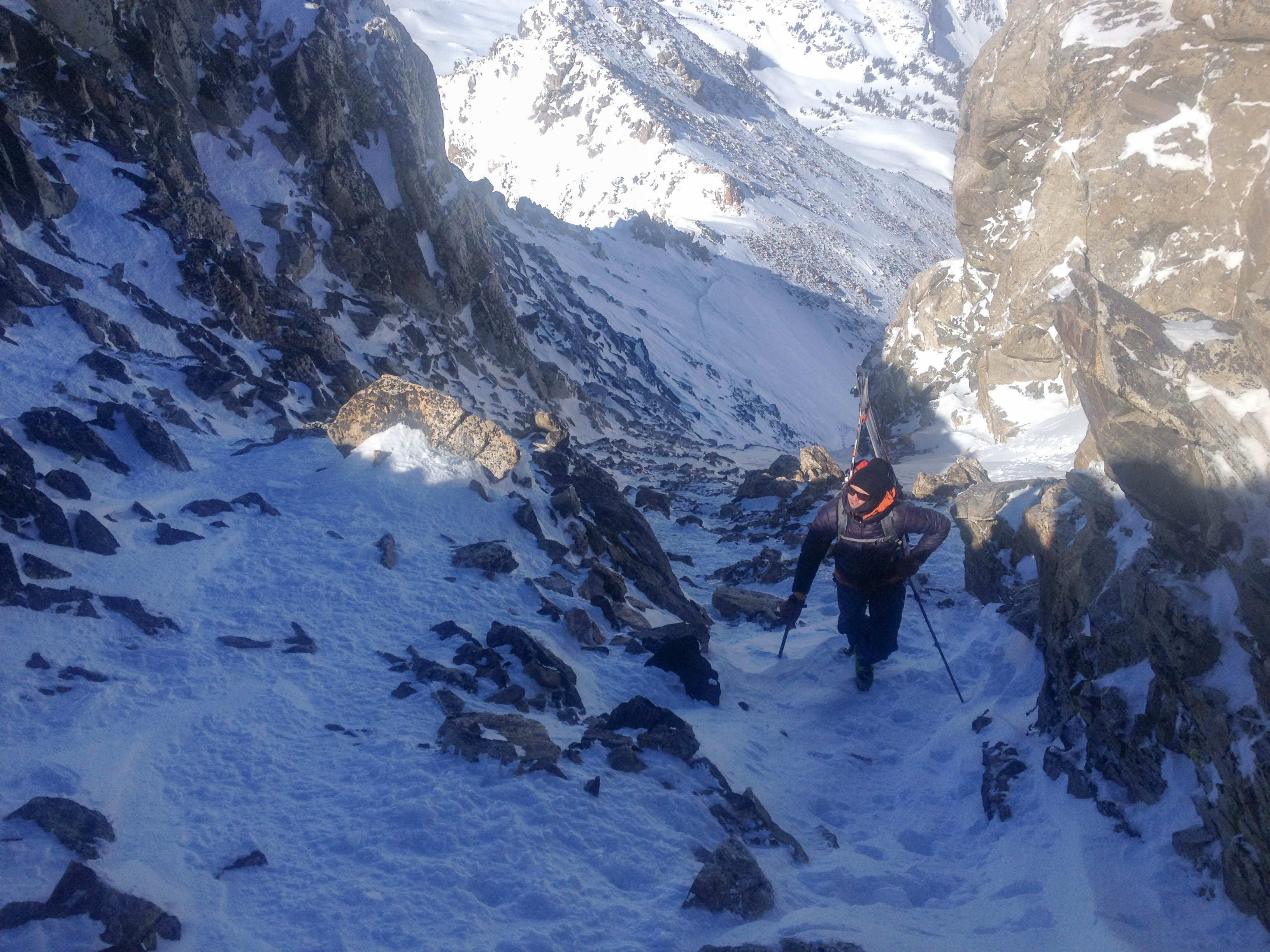
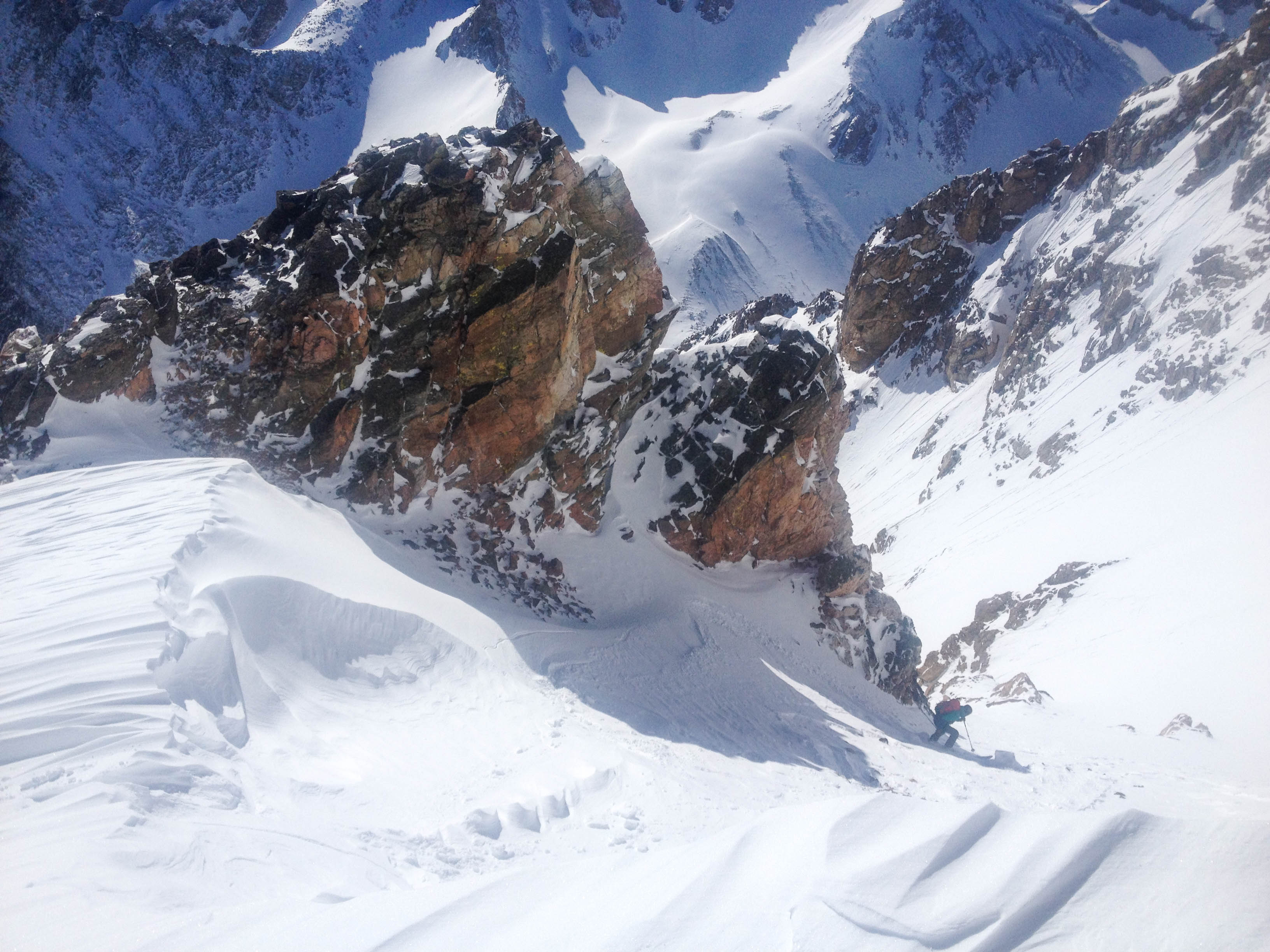
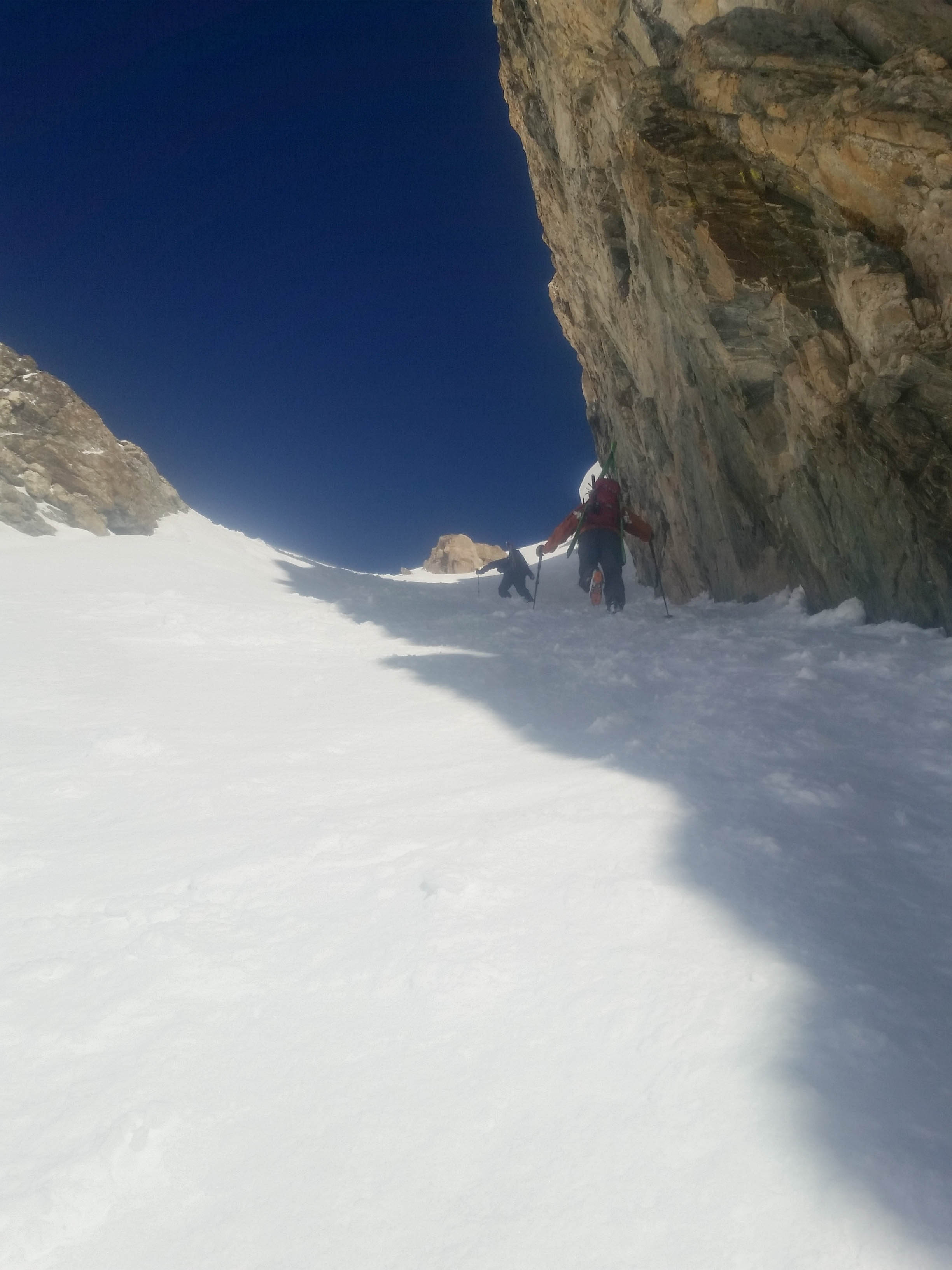
Working on the up. (Zelie really wanted to use the ice axe she brought, so she did)

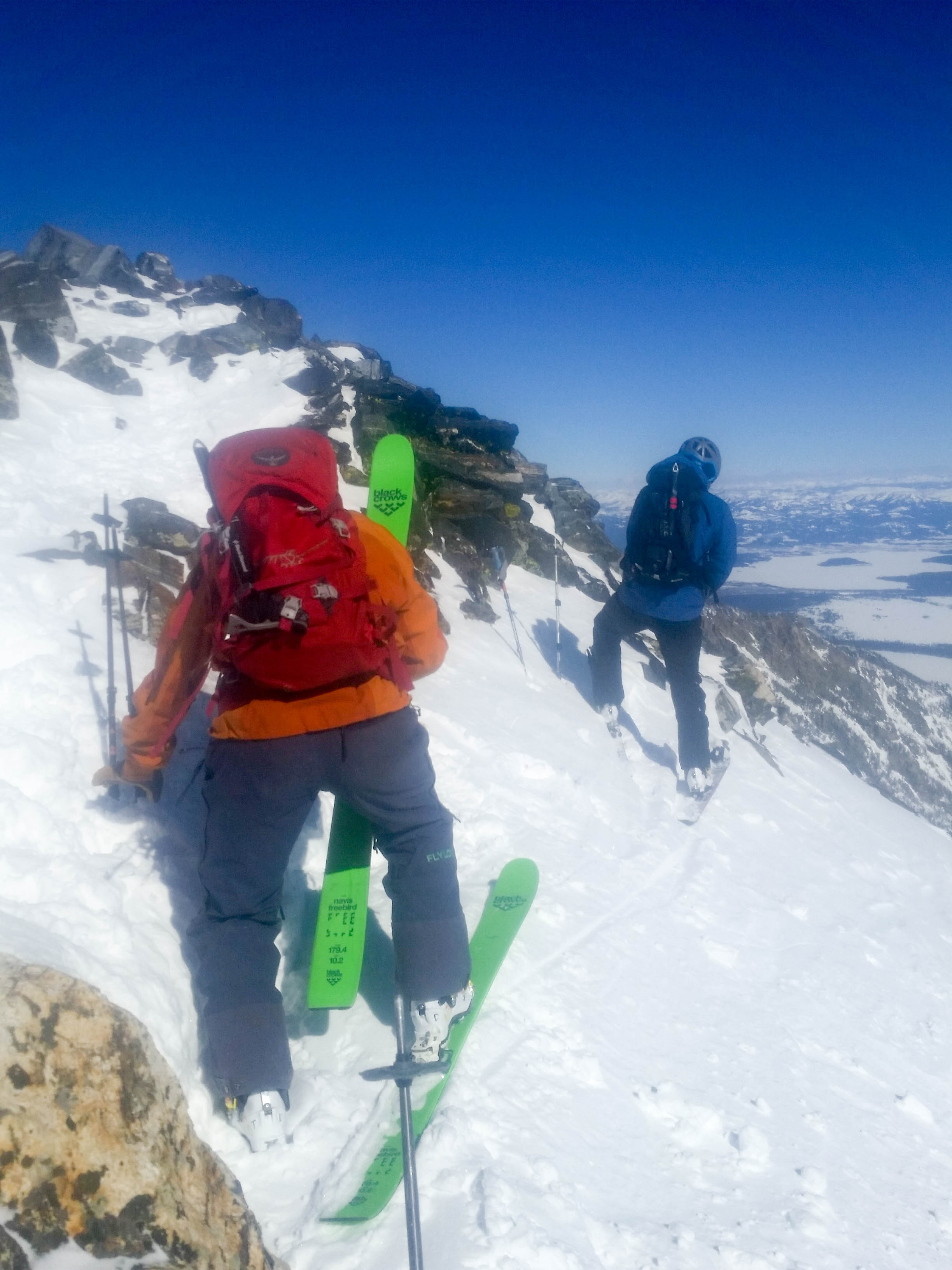
It was getting a little late, so the summit of Disappointment was not in the cards for the day, but we climbed until it turned rocky and got ready for the ski.  With the temperature just right and the wind calm, we soaked in some rays and took in the views from this beautiful perch in the park.
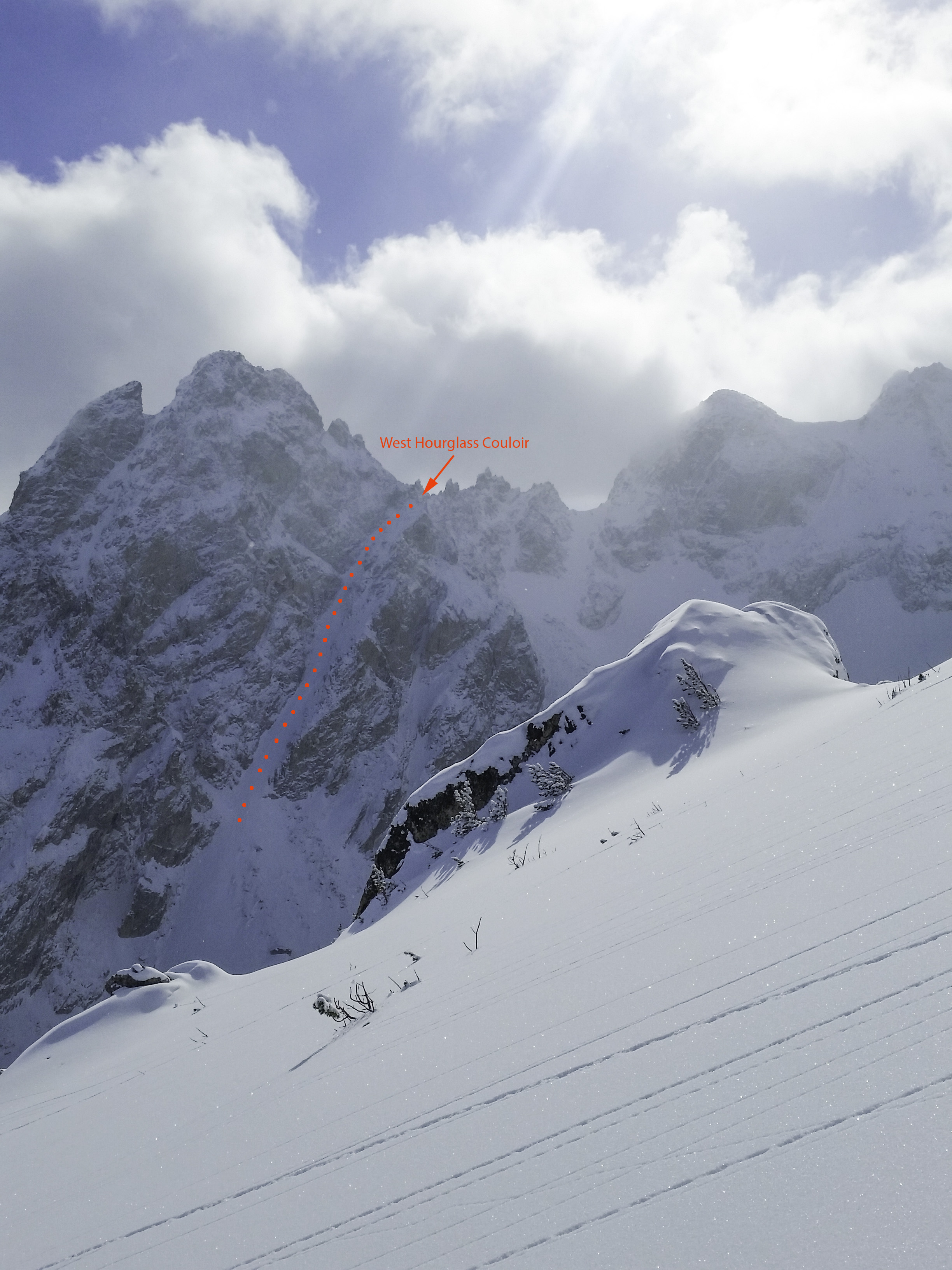
West Hourglass Couloir.
Beautiful. (photo: Zelie)

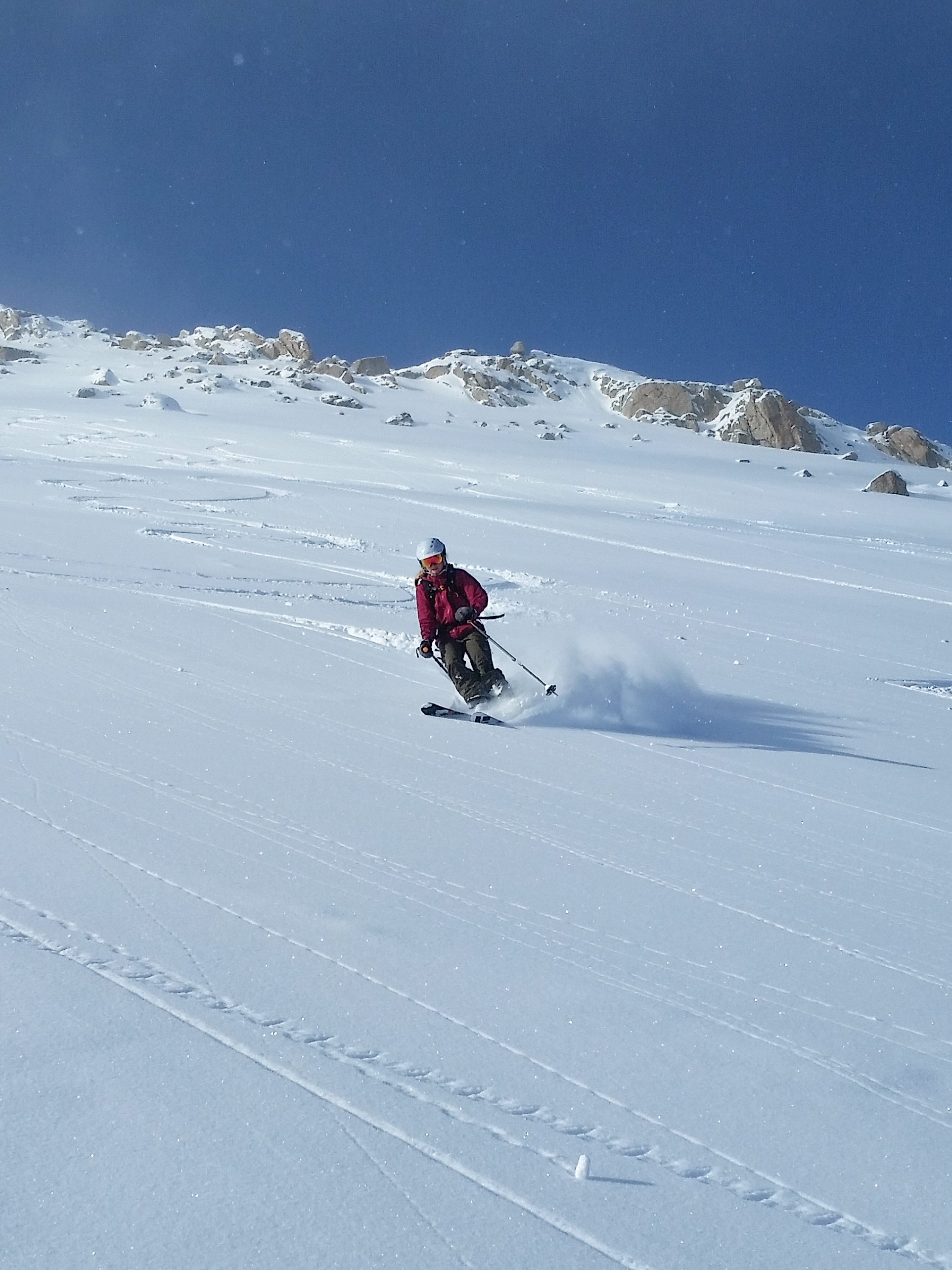
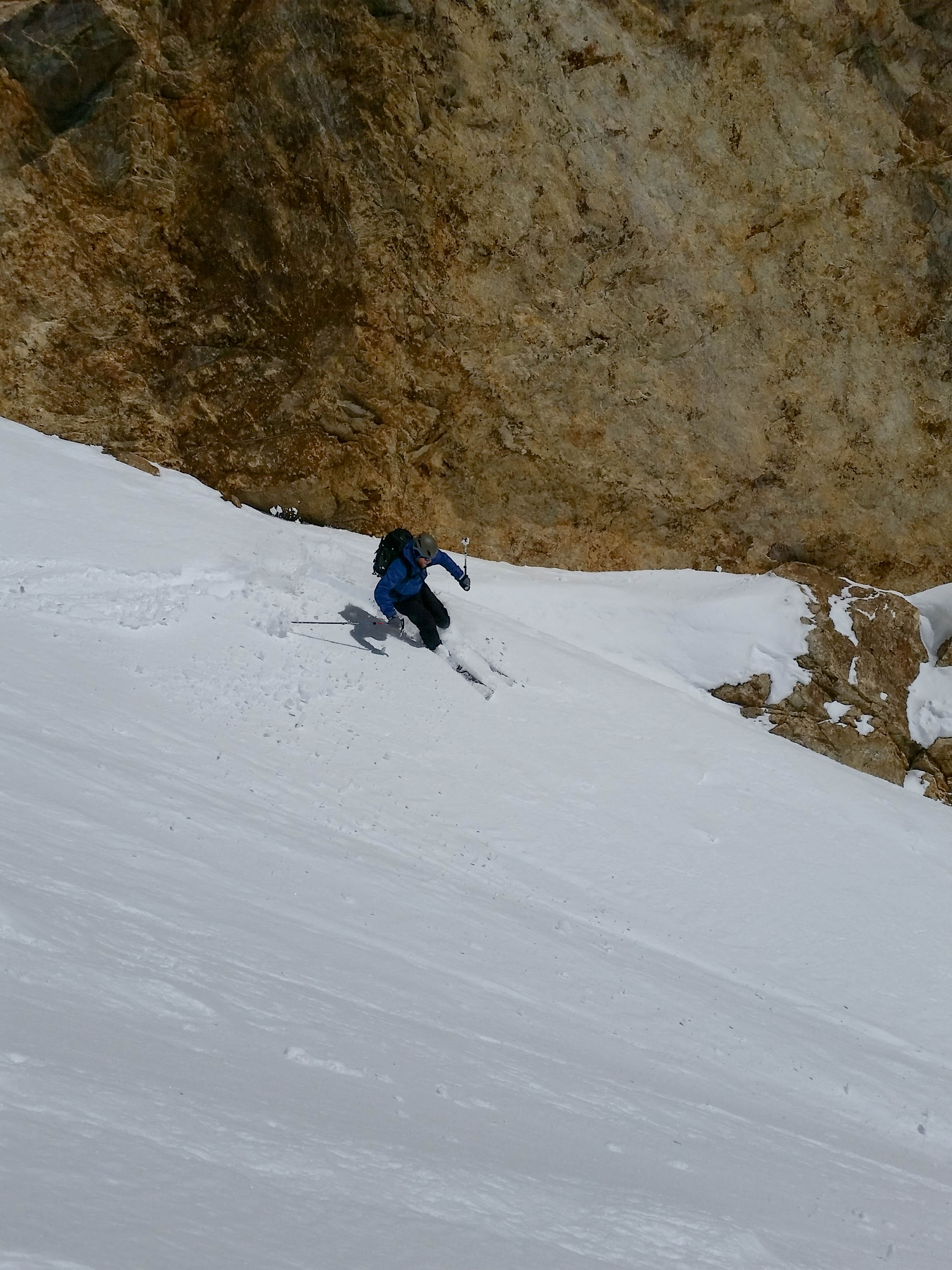
After a short while, we decided to do what we came to do….ski some powder and took it down the East Face.
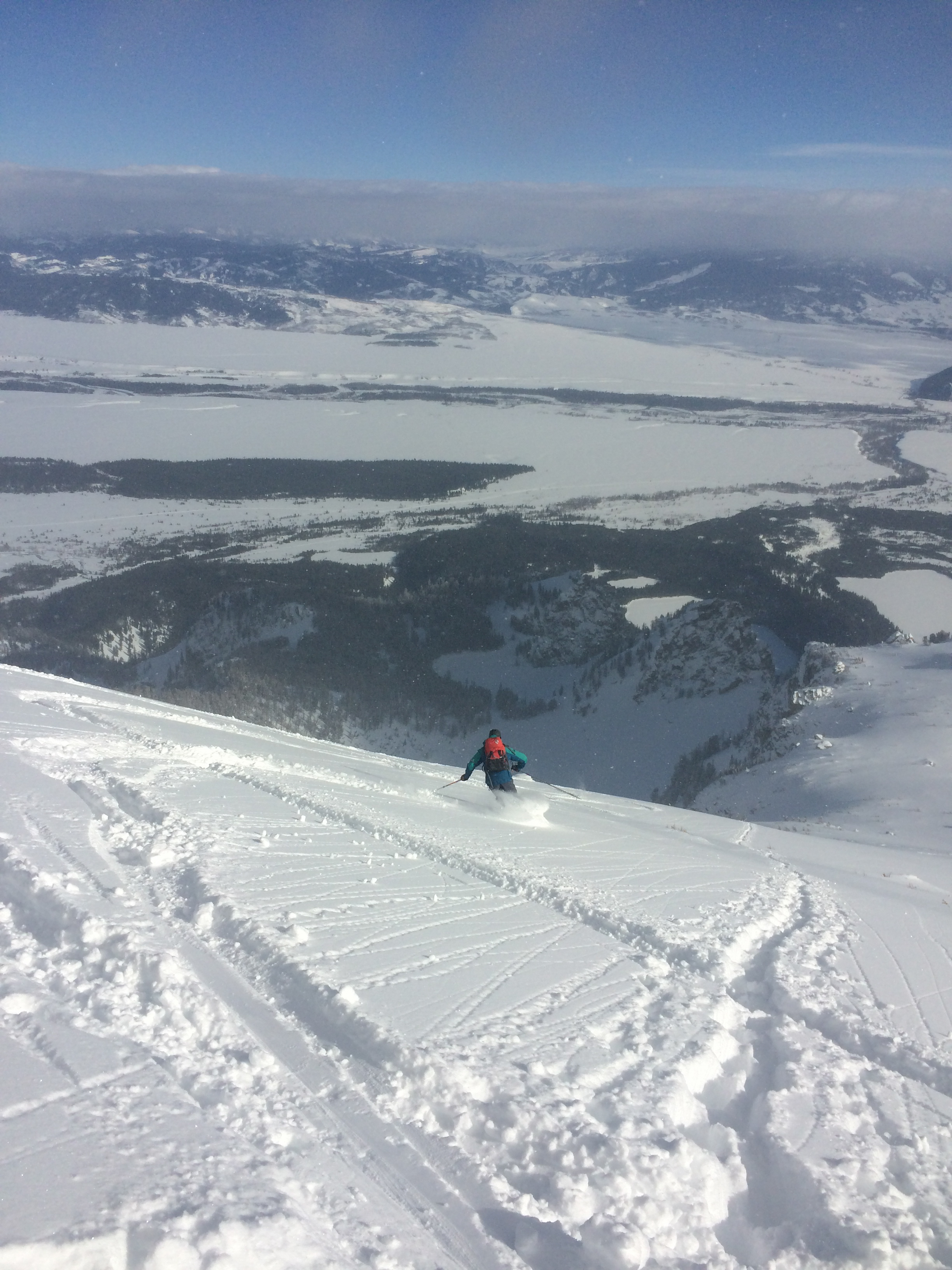
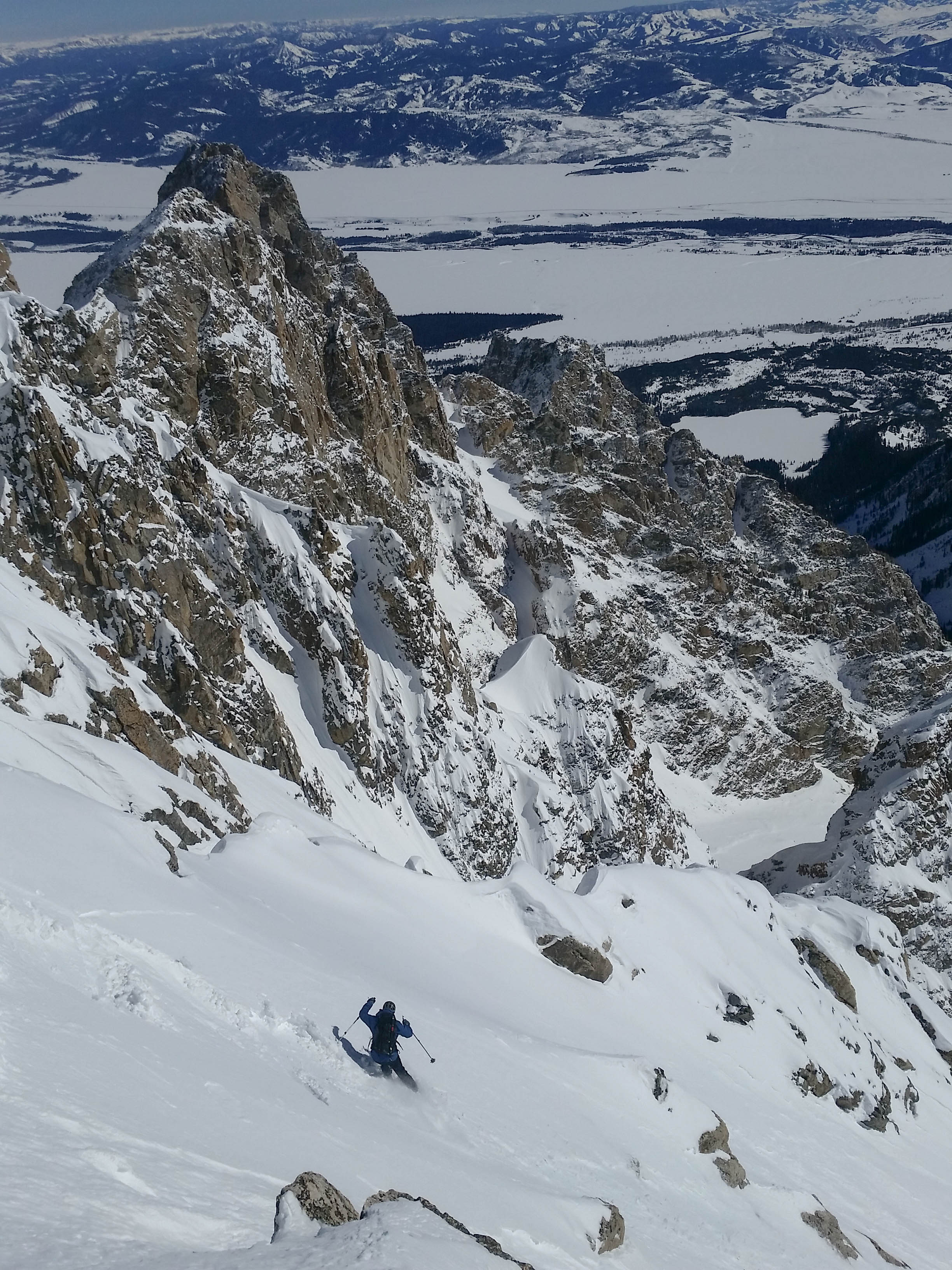
Making some turns on the East Face. (photo: Zelie)
Dreamy.
Dreamy.
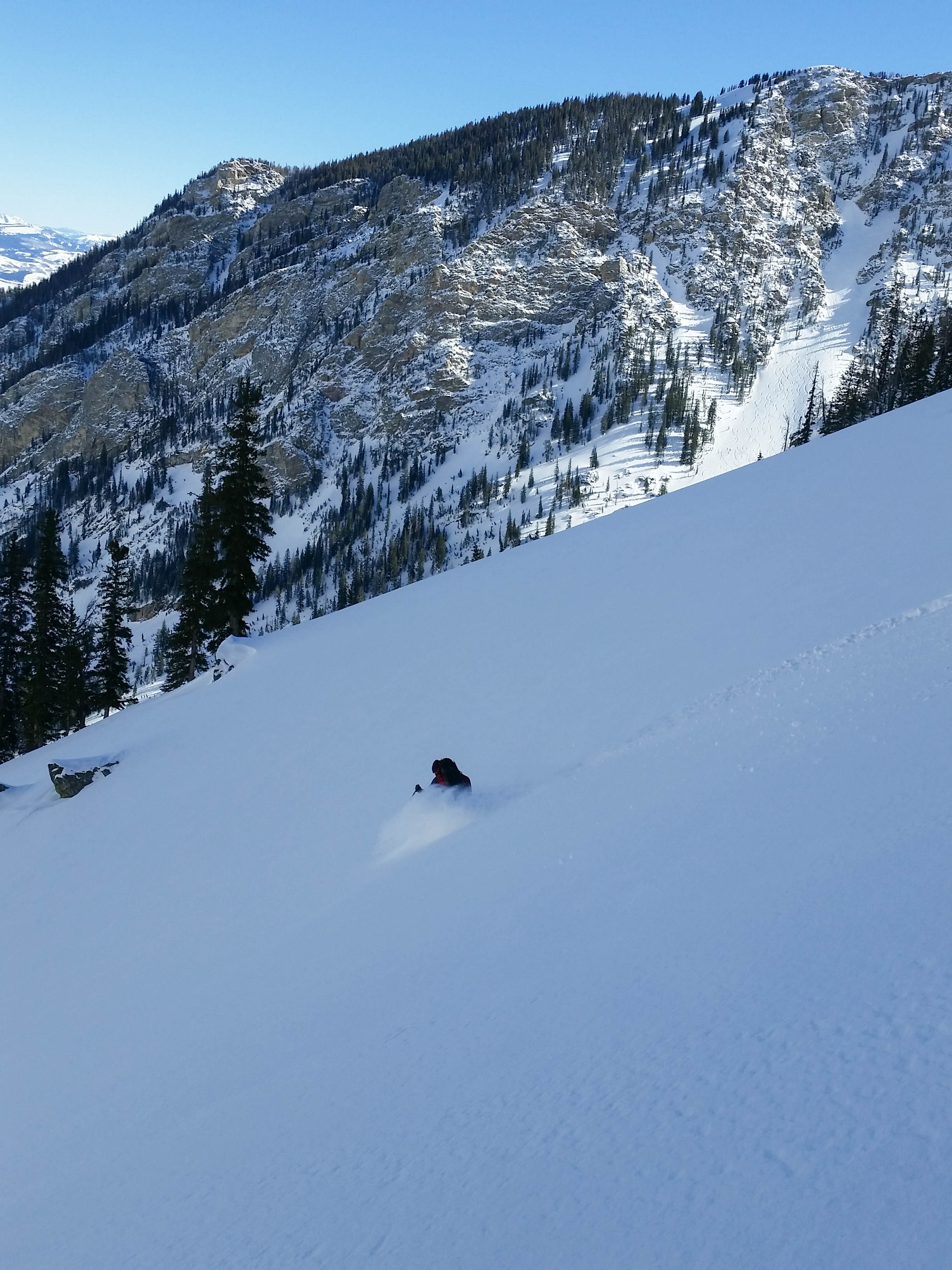
Powdah.
Powdah skiing.

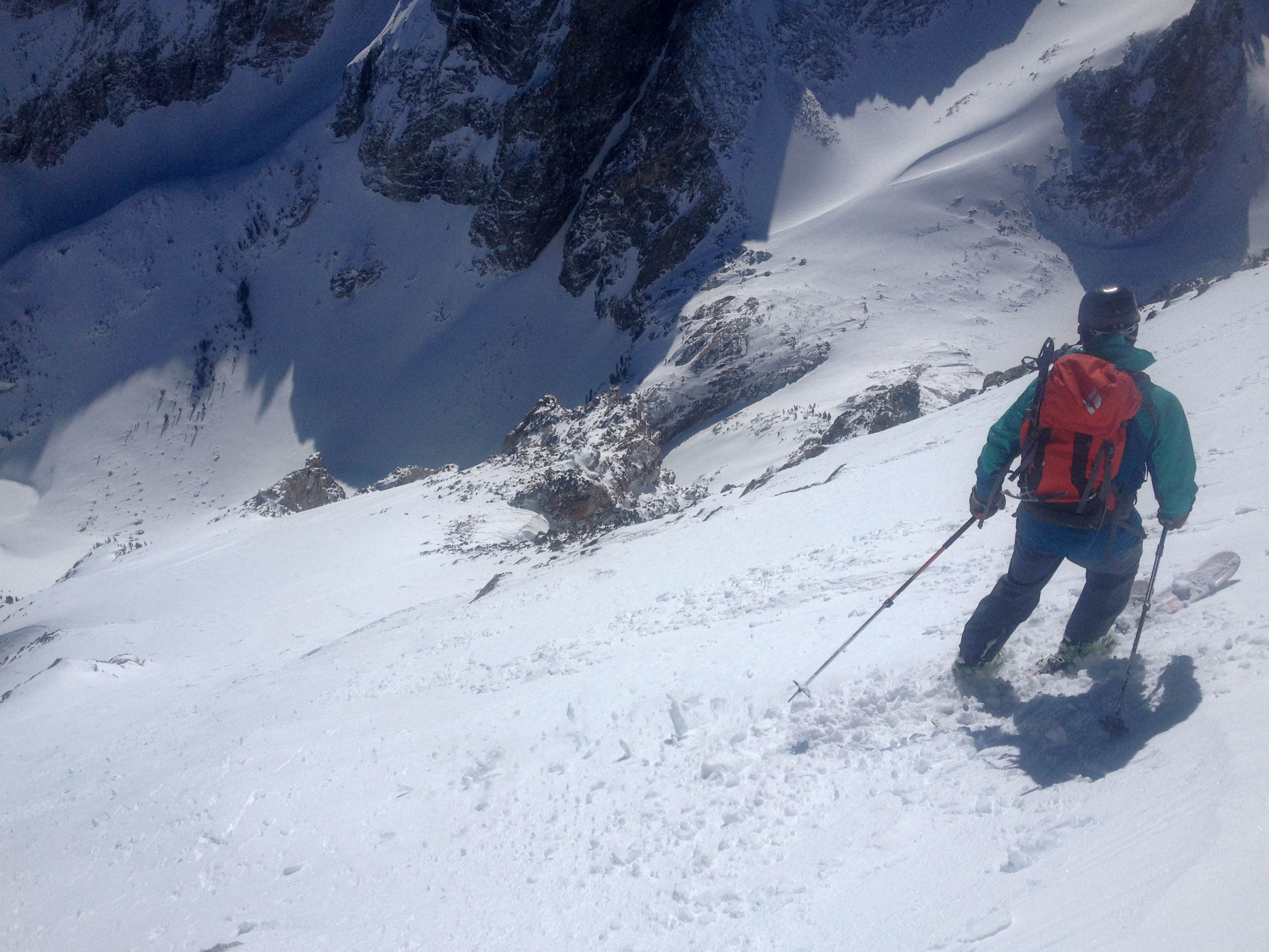
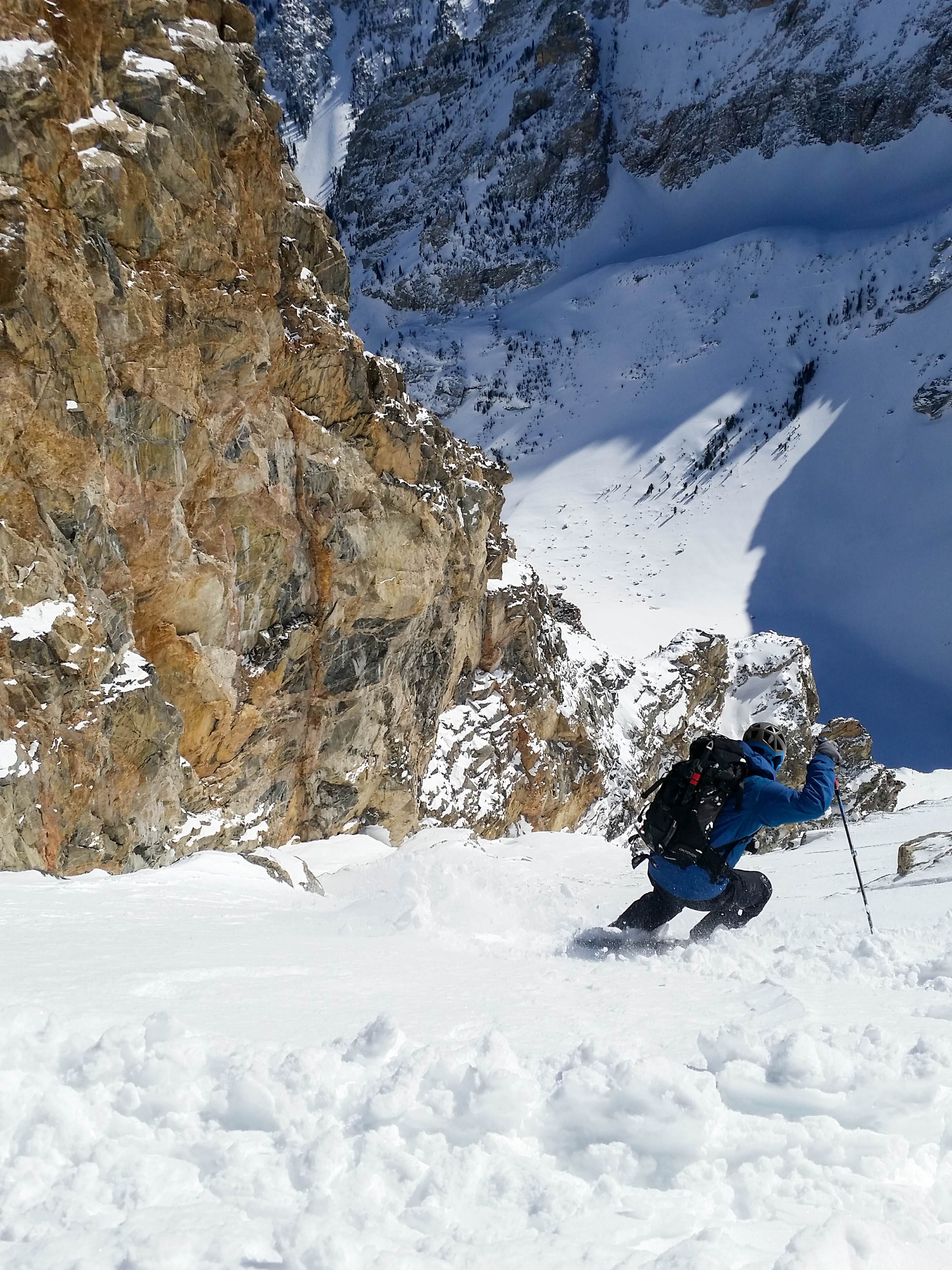
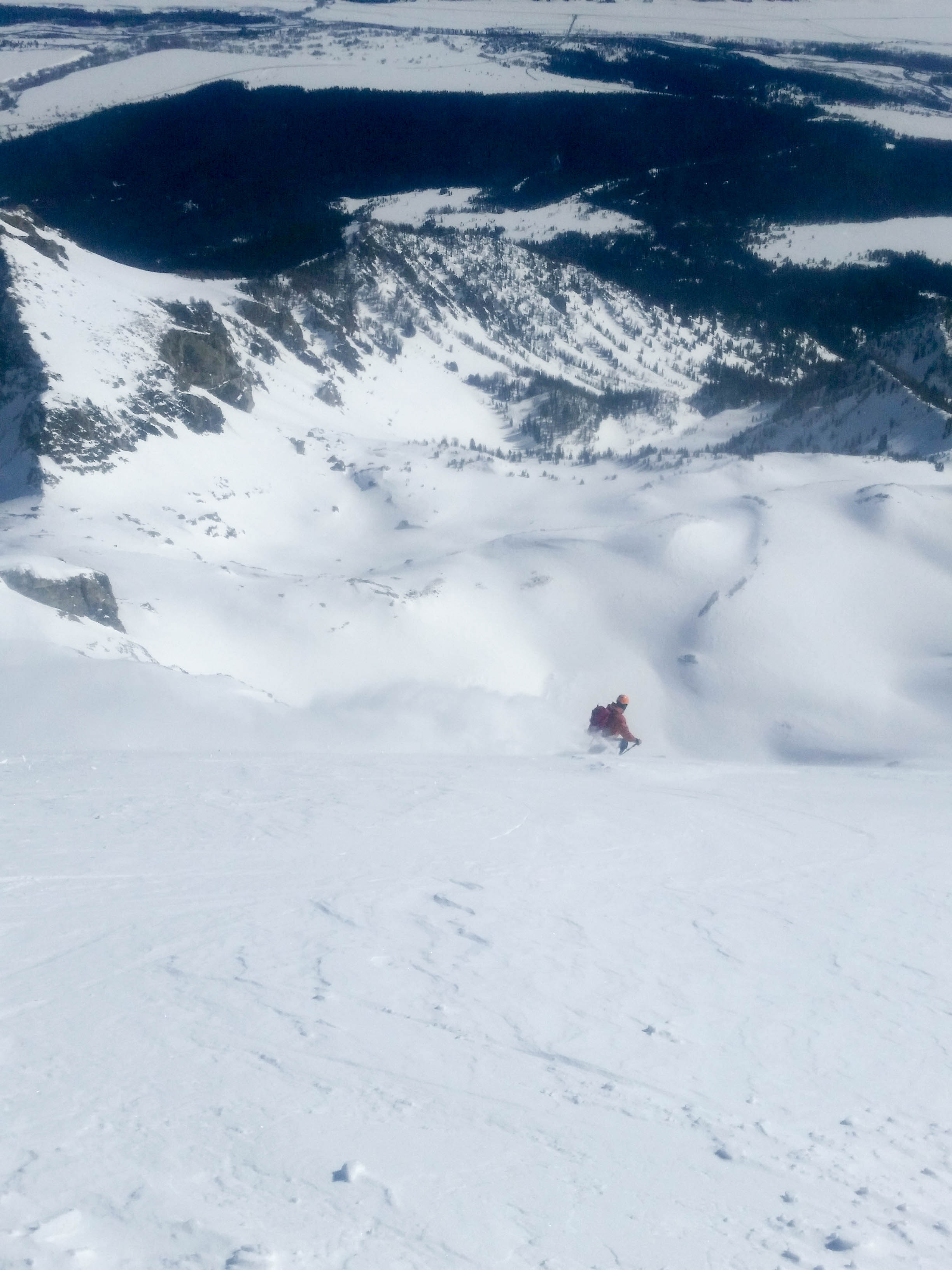
After skiing the face, we worked our way down to the entrance of the couloir.  Based on the snow conditions, I opted to enter from the middle, over the rollover, while Zelie came in from the right.  The few steep turns I got in this section were definitely the best of the day and I had a blast skiing into the Spoon from the top!
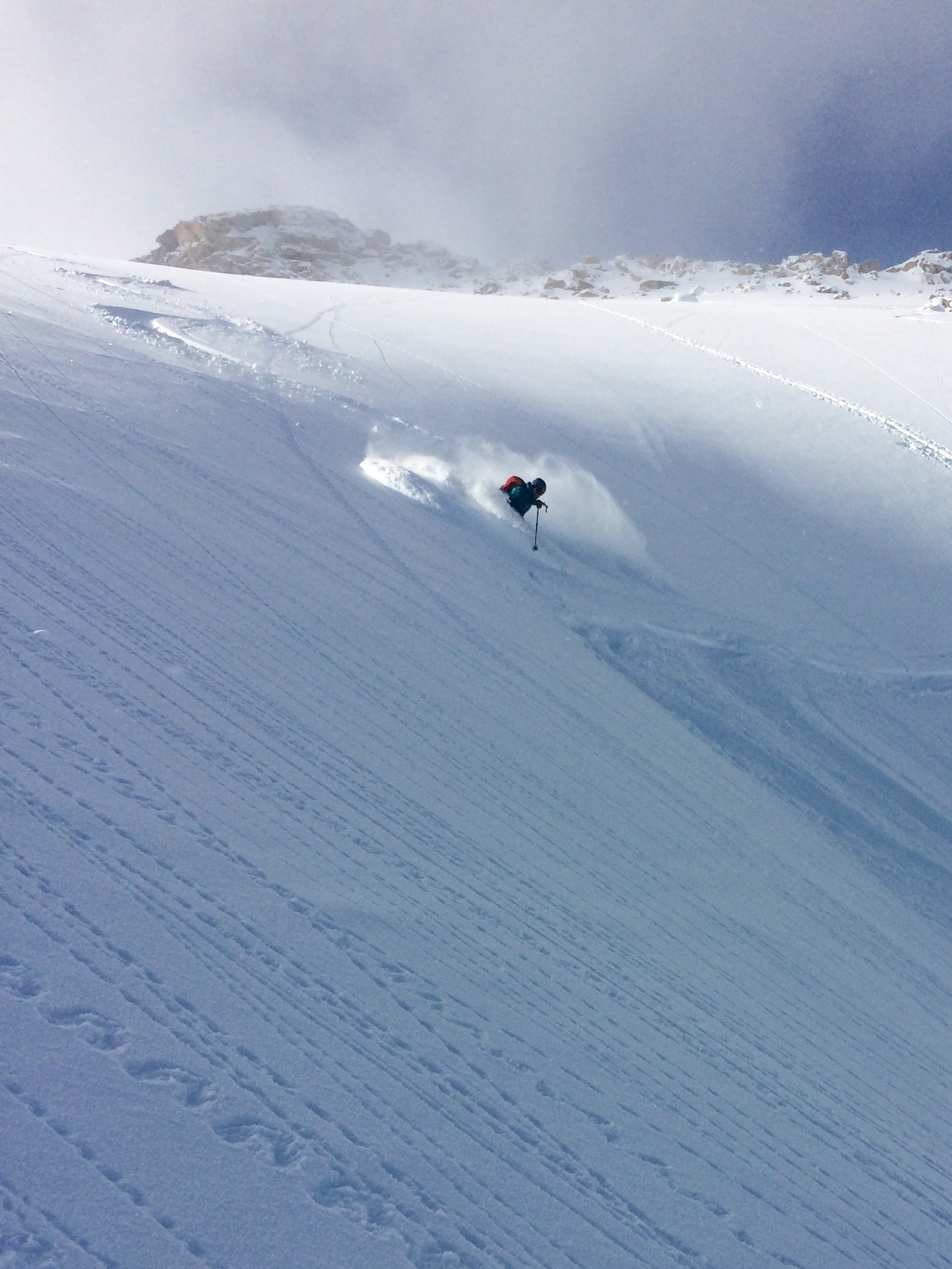
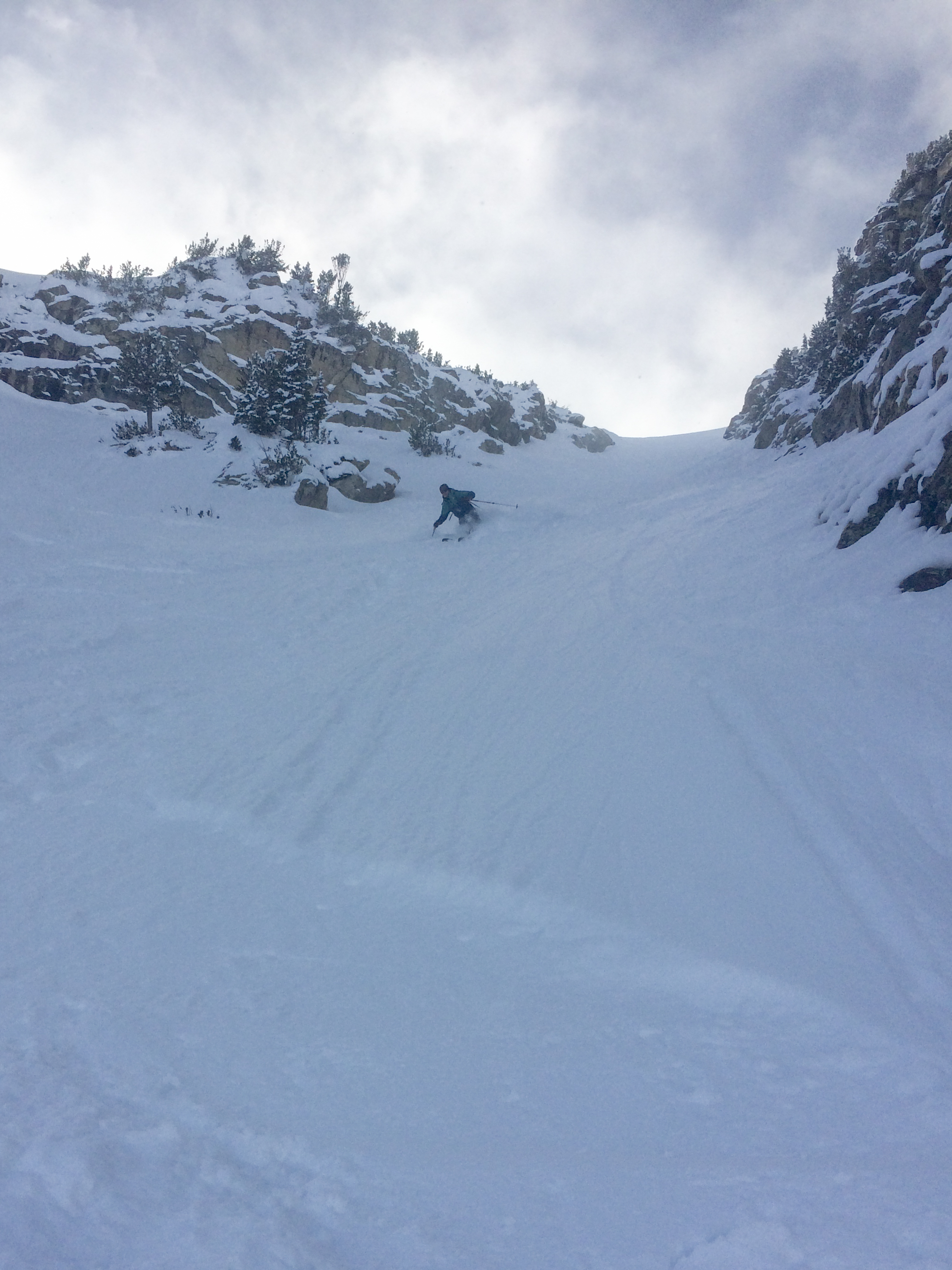
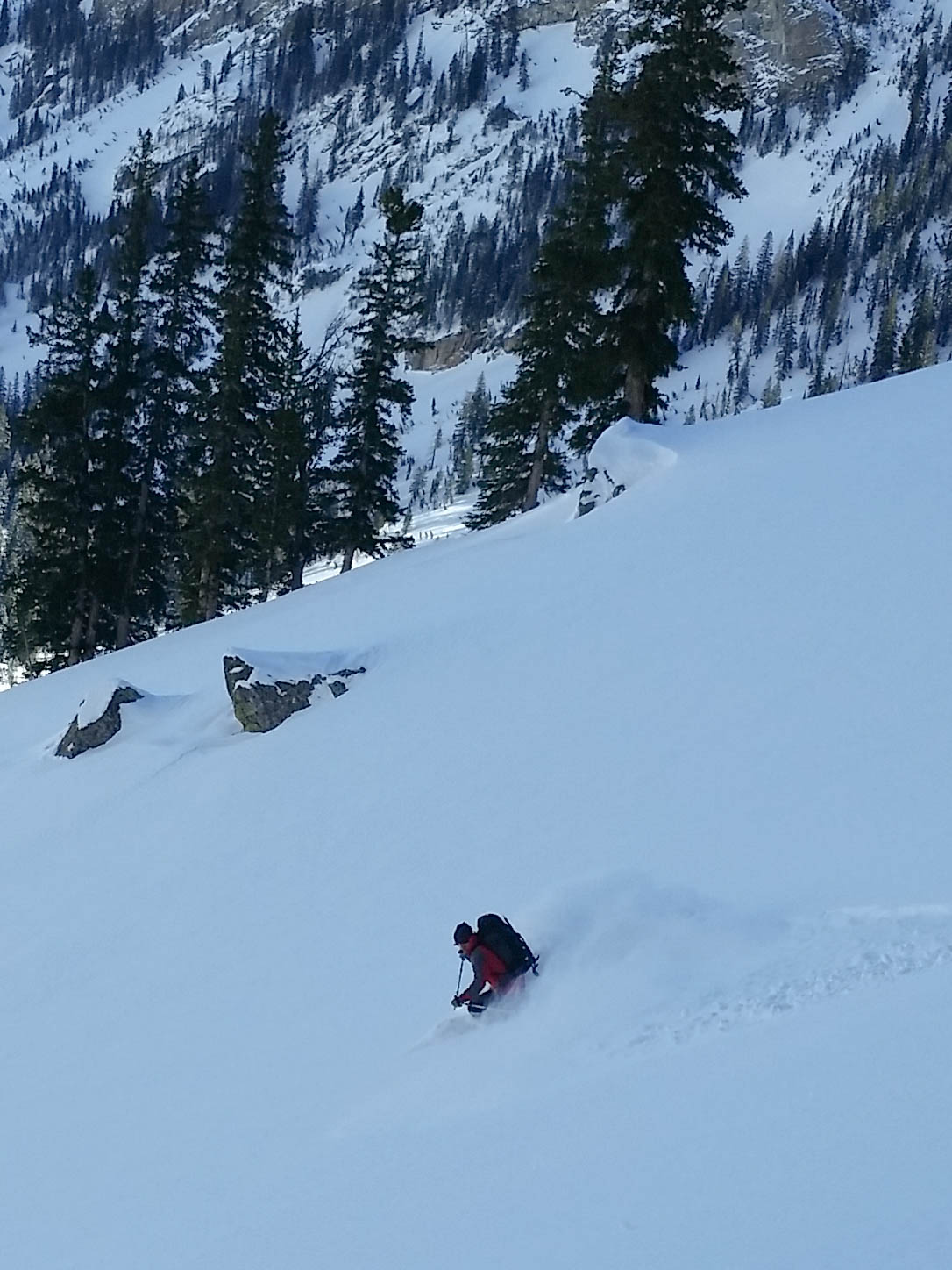
Deep turns in the Spoon Couloir.
Deep turns in the Spoon Couloir. (photo: Zelie)

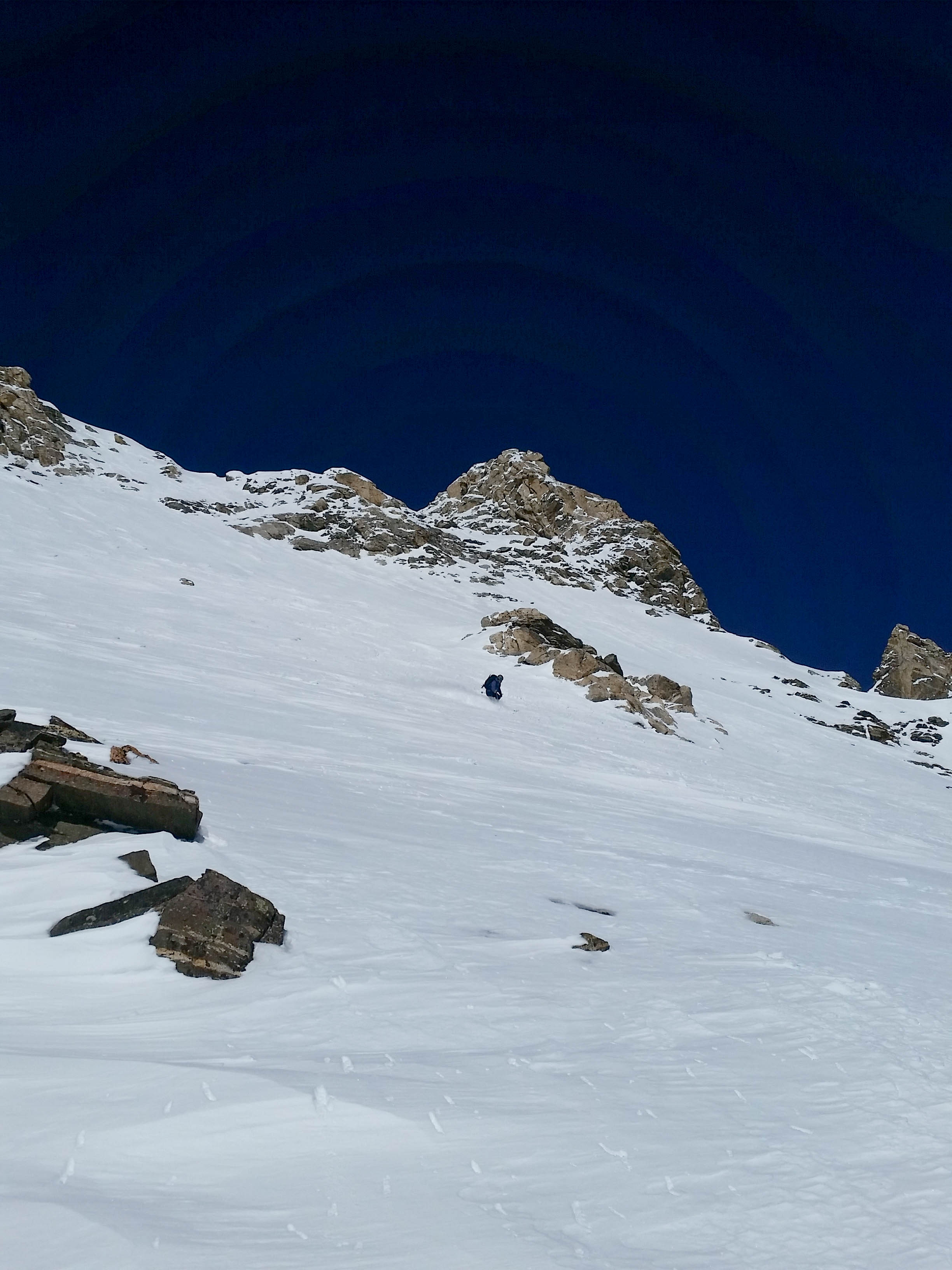
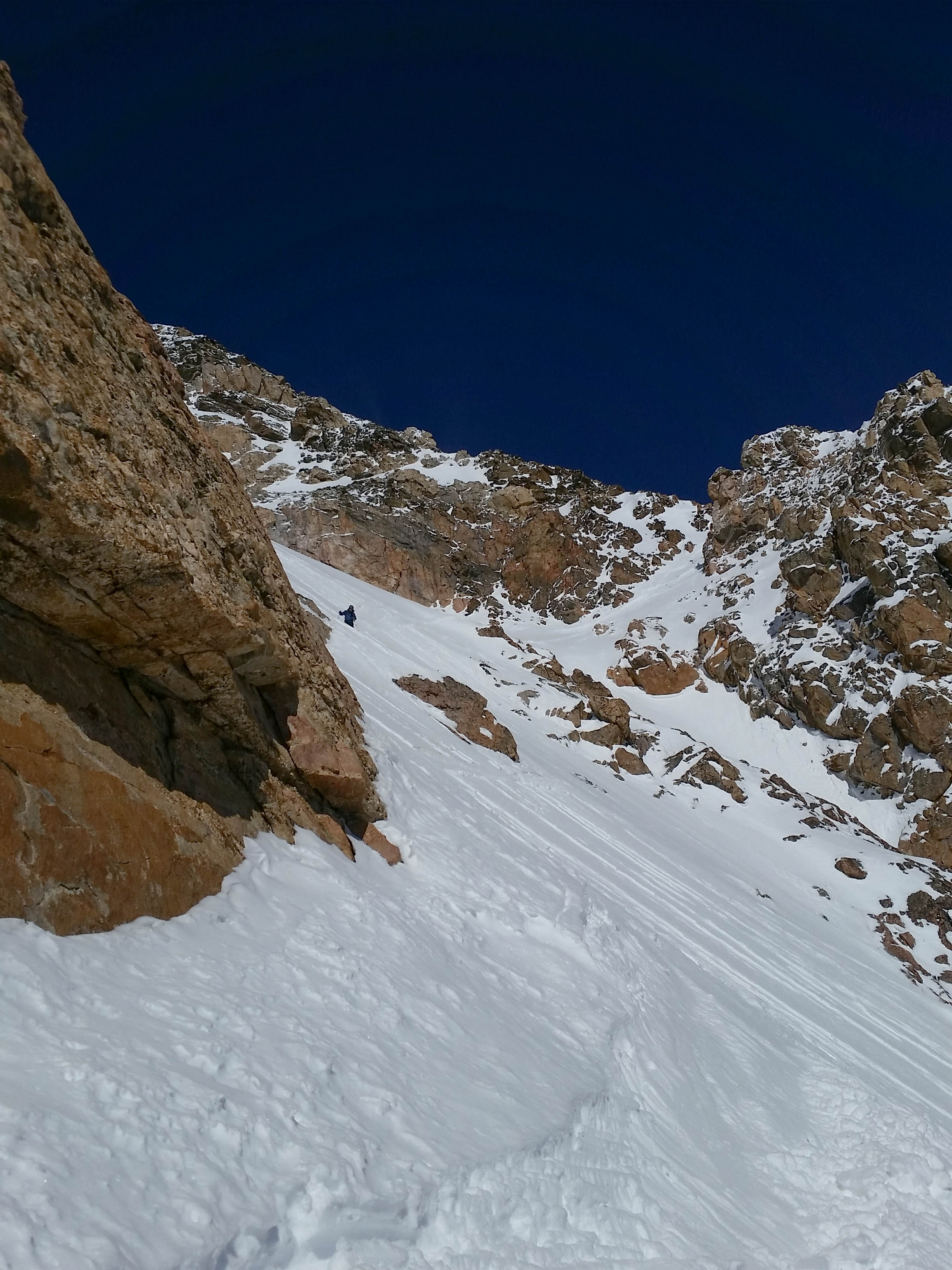
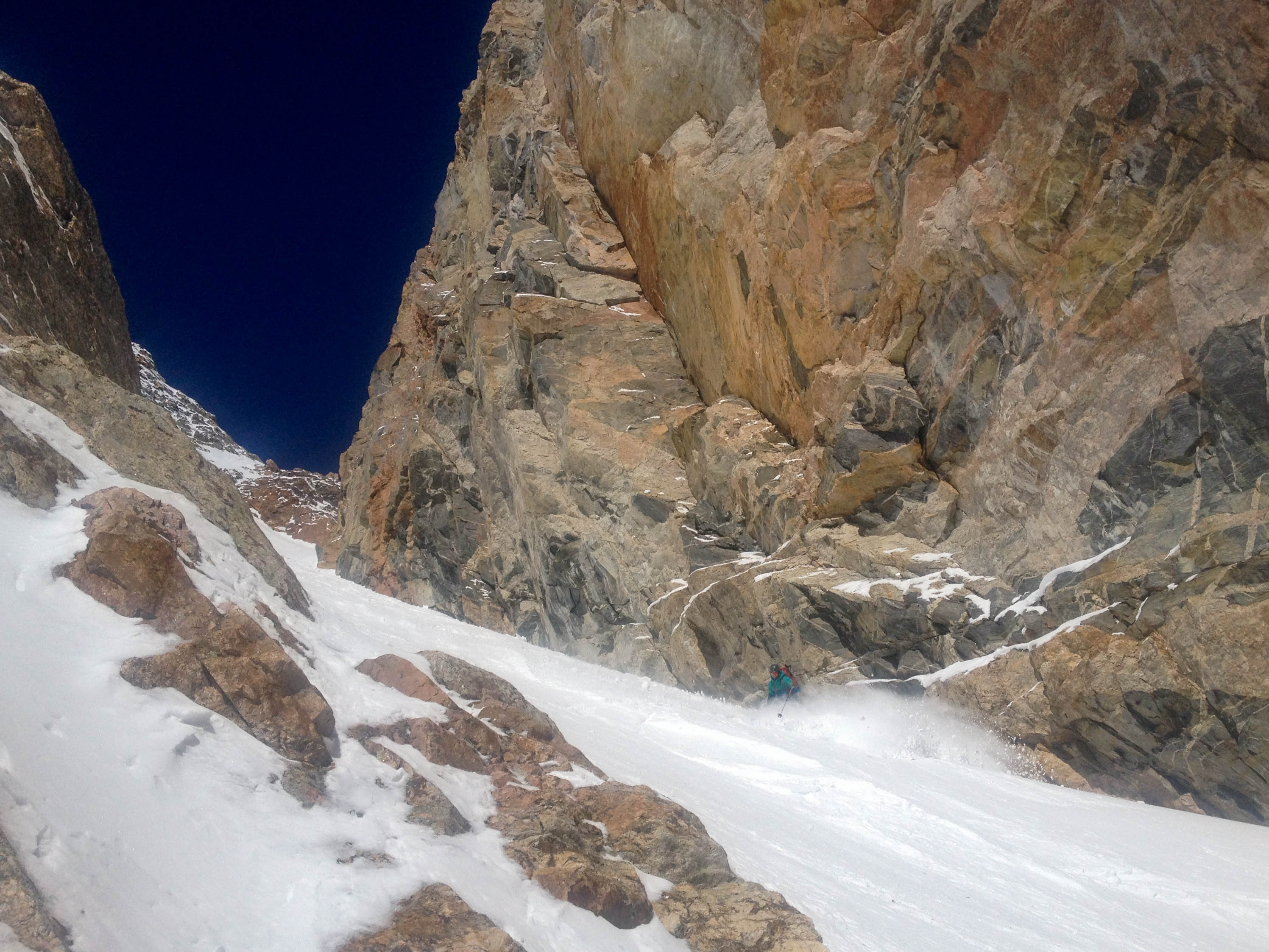
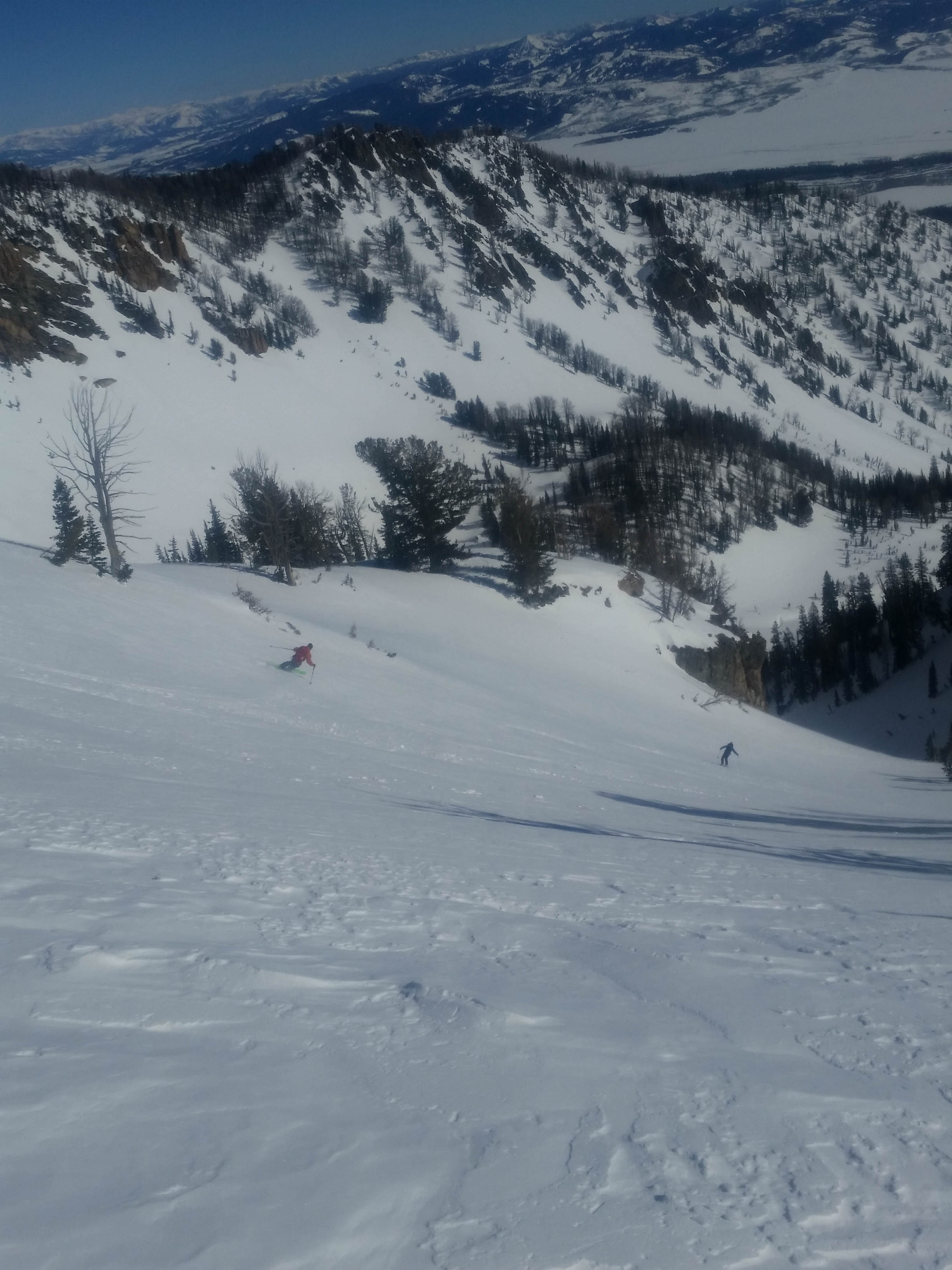
I pulled out about 300′ down on the right and let Zelie ski the entire couloir in one push.  The snow was deep and stable, not sluffing or moving at all the entire time we were in the chute.
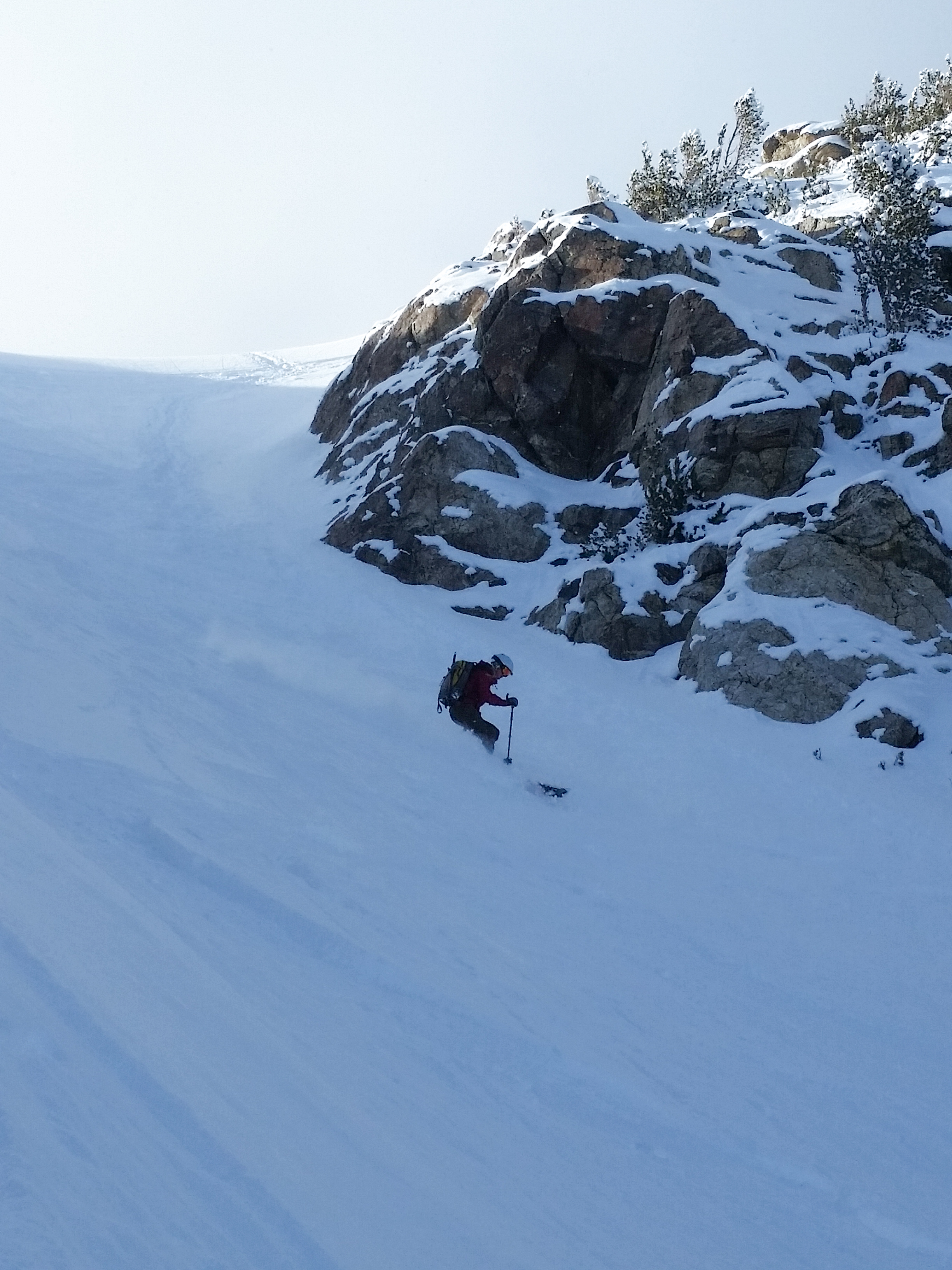
Zelie making some turns in the upper section.
Finding the goods. (photo: Zelie)

After making it through the couloir, we made some powder turns down to Amphitheater Lake.  After crossing the lake, we contoured left to a little shot that drops you into Delta Lake and Glacier Gulch.  I am not sure if it has a broname, but I have looked at it a few times while crossing the Delta Lake and thought it would be a fun variation to the run.  The snow in this north facing chute was great and we milked the turns all the way down to Delta Lake.
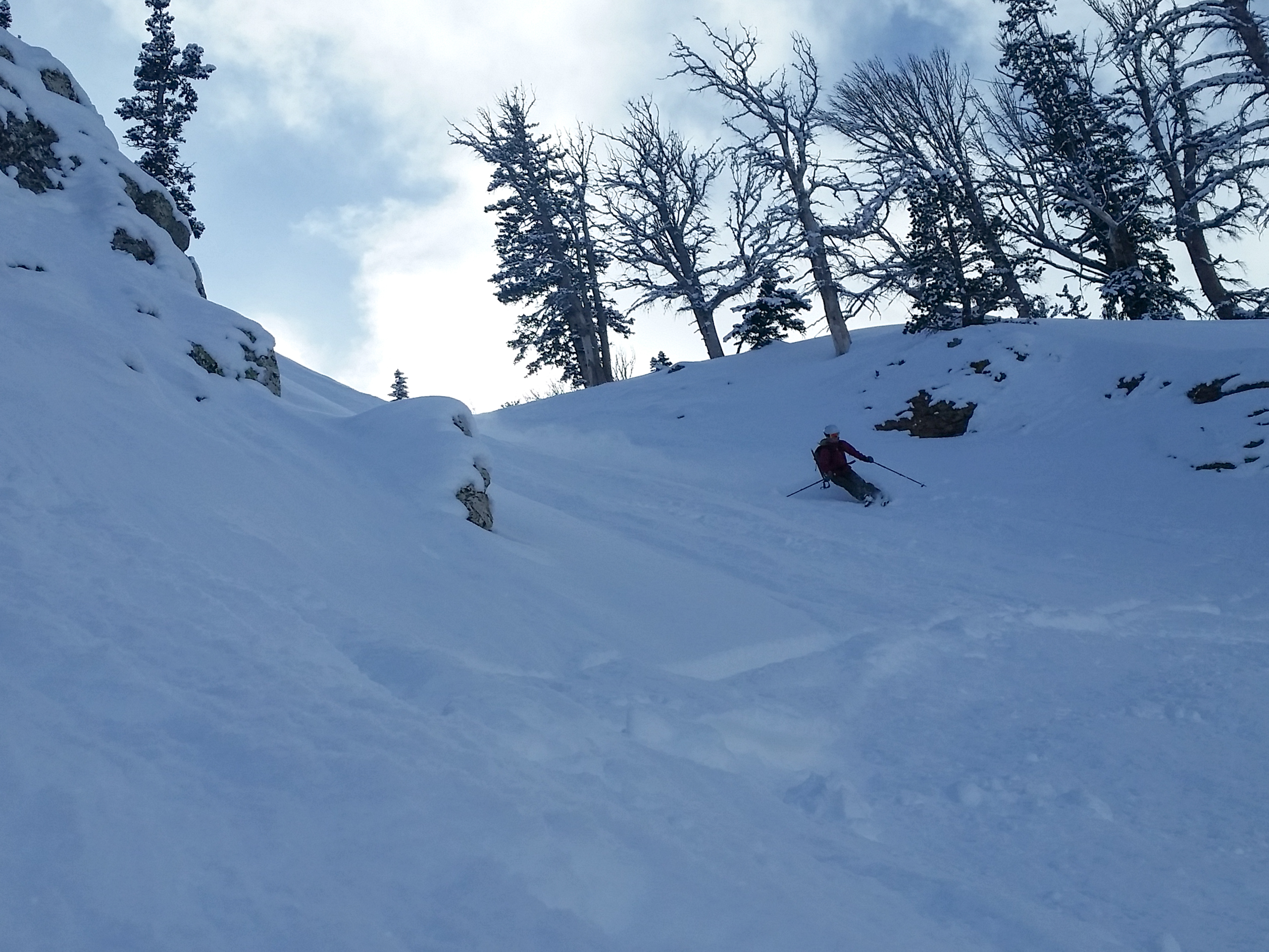
Pretty setting for a ski.
Zelie, in her element.
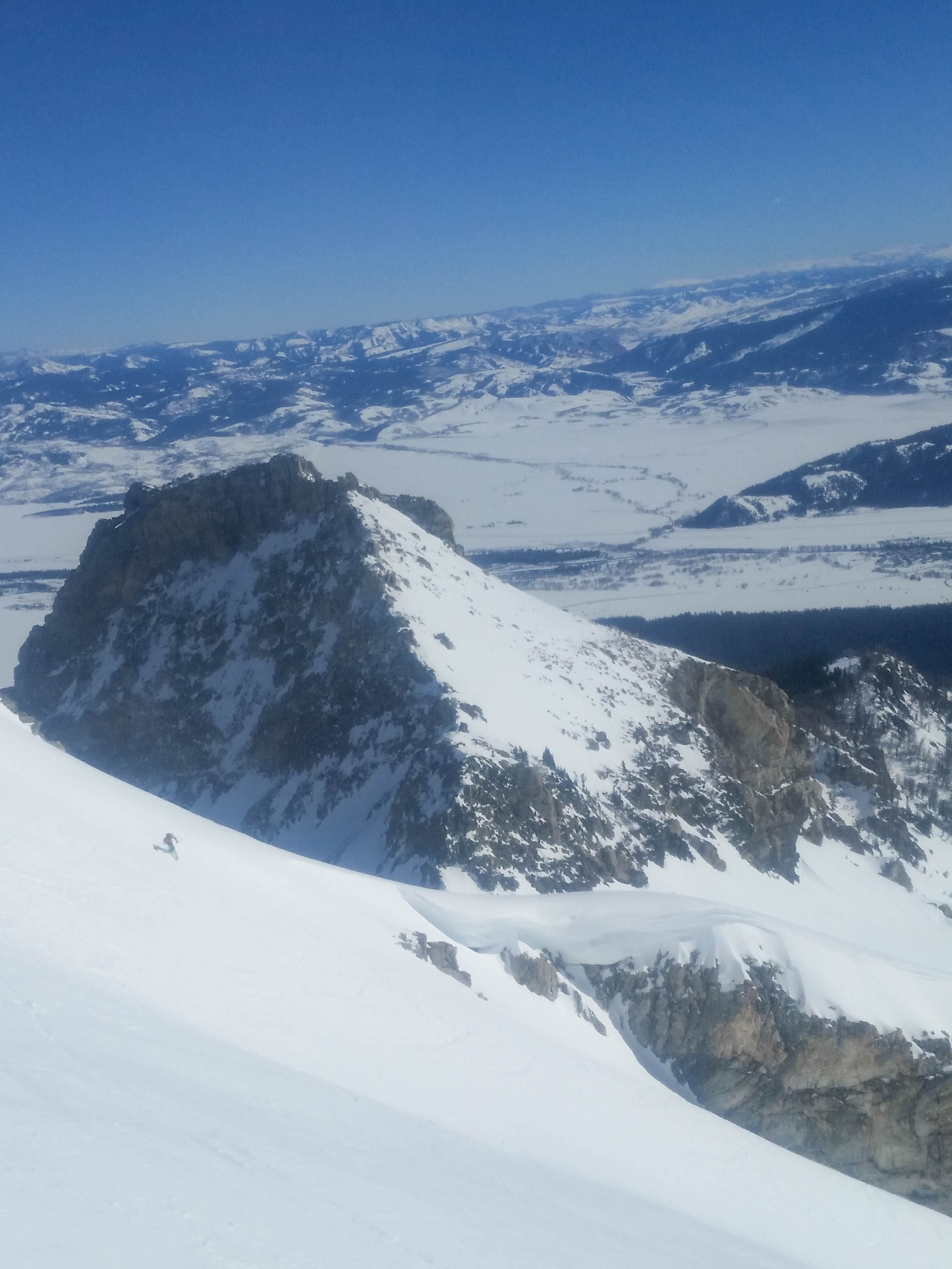
Little skier below a huge rock wall.

From here, we worked our way down Glacier Gulch, finding some good snow, but also noticing it change over to a breakable crust around 7800′.  Instead of traversing right to Bradley Lake like I have always done, we decided to check out the out from Glacier Gulch for a change.  This proved to take a lot more time and effort then traversing, but I suppose if the conditions are right you can get another 800′ of skiing, which might be worth the extra effort.  Regardless, we skated back on the groomed Teton Park Road and back to the truck in around 7 hours.  It was an excellent day and great opportunity to get the lady into a zone she had not skied.  It also was an opportunity for me to scout the conditions for a trip that I was planning to the northern end of the park.  More on that later…..

Mayan Apocalypse

Location: GTNP, Death Canyon, Prospector Mountain, Mayan Apocalypse
Elevation, Gain/Loss: 10,491’, 5,351’ gain/loss
Distance: 12 miles RT
Difficulty: 4 stars
Time:  7-9 hours

Trip Report:

Date: 02/24/2015
Snow Conditions: Packed powder, powder, sun crust, wind crust.  A strong northerly wind over the past few days created variable conditions on this north facing slope.

After a great day skiing off the South Teton Monday, Dane and I decided to head back to the park Tuesday and tackle a couloir we had heard a lot about this year.  The “Mayan Apocalypse” is a north facing shot up Death Canyon a little past the patrol cabin.  With northerly aspects skiing great the day before, we decided it was a worthy objective for the day.  We left the Death Canyon trailhead around 8:30am and worked our way along the track at a brisk pace.  After skiing down from Phelps Lake Overlook, we were quickly back skinning below the apron of the Apocalypse Couloir and into Death Canyon.  We got to the patrol cabin in around 2hrs and took a little break to take in the views.  Death Canyon offers enough ski runs for an entire season and we were pretty excited about the potential the zone offered.  After the break, we worked our way up canyon (to the left) and found ourselves staring at the access to Rimrock Lake.  There, directly to the left is the “Mayan Apocalypse”.  It is hidden by a steep treed slope and a rocky chute that is in effect the couloirs drainage.  We worked our way up around the impassable bulge of rock and eventually were looking at a tight gully above the rocky chute.  We transferred over to boot pack mode and made our way into a large opening directly below the couloir proper.  We worked our way up the steep couloir, noticing some soft avalanche debris in spots and firm crust where the slide had washed the snow out of the couloir.  We came to the middle of the couloir, initially thinking this was the end, only to find that a much steeper portion of the couloir was still waiting for us.  We worked our way up and to the right, finding some very firm, steep sections of climbing along the way.  We eventually came to the end of the climbing on a very steep (50 degree) slope, just below a few cornices.  We gently kicked out a step for our skis and got geared up.  The top portion was very fun on the left side, where the wind had deposited a good amount of snow.  Once into the upper middle section, the snow became firm and each turn was pretty spicy, but we made it through some rocks and into the lower section without issue.  Here, the slide had washed out half the couloir, but the half with soft snow remaining was very fun.  We also found the debris piles to be very soft and fun to surf on for a turn or two.  We made it out of the couloir proper and found some fun turns on the upper apron before the couloir pinched into the gully leading to the rocky chute.  We made a few turns in the gully, then exited to our left and found some soft powder turns to the traverse out of Death Canyon.  We quickly worked our way back to the truck in just over 7hrs 30min and were pleased with the adventure and the gnarly couloir we had just skied.

Amor a Vida Couloir

Location: GTNP, Garnet Canyon, South Teton, Amor a Vida Couloir
Elevation: Gain/Loss: 12,514’, 6,360’ gain/loss
Distance: 15 miles RT
Difficulty: 4 stars
Time:  7-9 hours

Trip Report:

Date: 02/23/2015
Snow Conditions: Powder, sun crust, warm/dense snow, wind crust

With a small storming dropping a few inches on us recently and a weather window opening, Dane and I decided to tackle a larger line off the South Teton.  Amor a Vida, meaning Love Life in Spanish, is a beautiful couloir off of the South Teton.  I had booted up it a few years back, but with warming temperatures that day, did not connect the South Face of the South Teton to the couloir.  Dane and I got an early start, leaving Bradley-Taggart around 6:20am and made quick work of the skin into the Meadows.

Tetons.
Tetons.
Not a bad way to start the day.
The Middle, watching over Garnet Canyon.

We worked our way up to the left and into the South Fork of Garnet Canyon, very surprised that the track was in great shape and the wind was calm.  As we came up below the Ellingwood and Chouinard Couloirs, we noticed a few guys slowly making progress up the Ellingwood.  The snow looked deep, so we were hopeful that pour couloir was holding some similar snow.

Chouinard (left) and Ellingwood (right) Couloirs off the Middle Teton.
A look down Garnet Canyon.

We proceeded up canyon, making our way through the mine field of rocks that litter the South Fork.  There is enough coverage to skin through this section, which is great, but you have to be careful with each step.  We found ourselves below the North Face of the South Teton, with a ramp of snow leading us towards the ridge and the Northwest Couloir.

Dane, working his way up to the Northwest Couloir.
Dane, working his way up to the ridge and the Northwest Couloir.

Just below the ridge, we switched over to bootpack mode and quickly gained the ridge and made our way into the Northwest Couloir.  The snow was pretty consolidated, which made for a relatively easy climb up.

Dane, starting up the Northwest Couloir.
Almost into to the top. (photo: Dane Etter-Garrette)
Almost to the top. (photo: Dane Etter-Garrette)

Once out of the couloir, we were greeted with sunshine and a calm day in the high alpine.  We still had about 100′ of climbing until we were at the summit, but were excited to be in the sun.  We made our way through some deep snow and over a few rocks, until we were standing on top of the South Teton.  The weather was perfect and we both felt great about the climb and ski ahead.

The Middle and Grand.
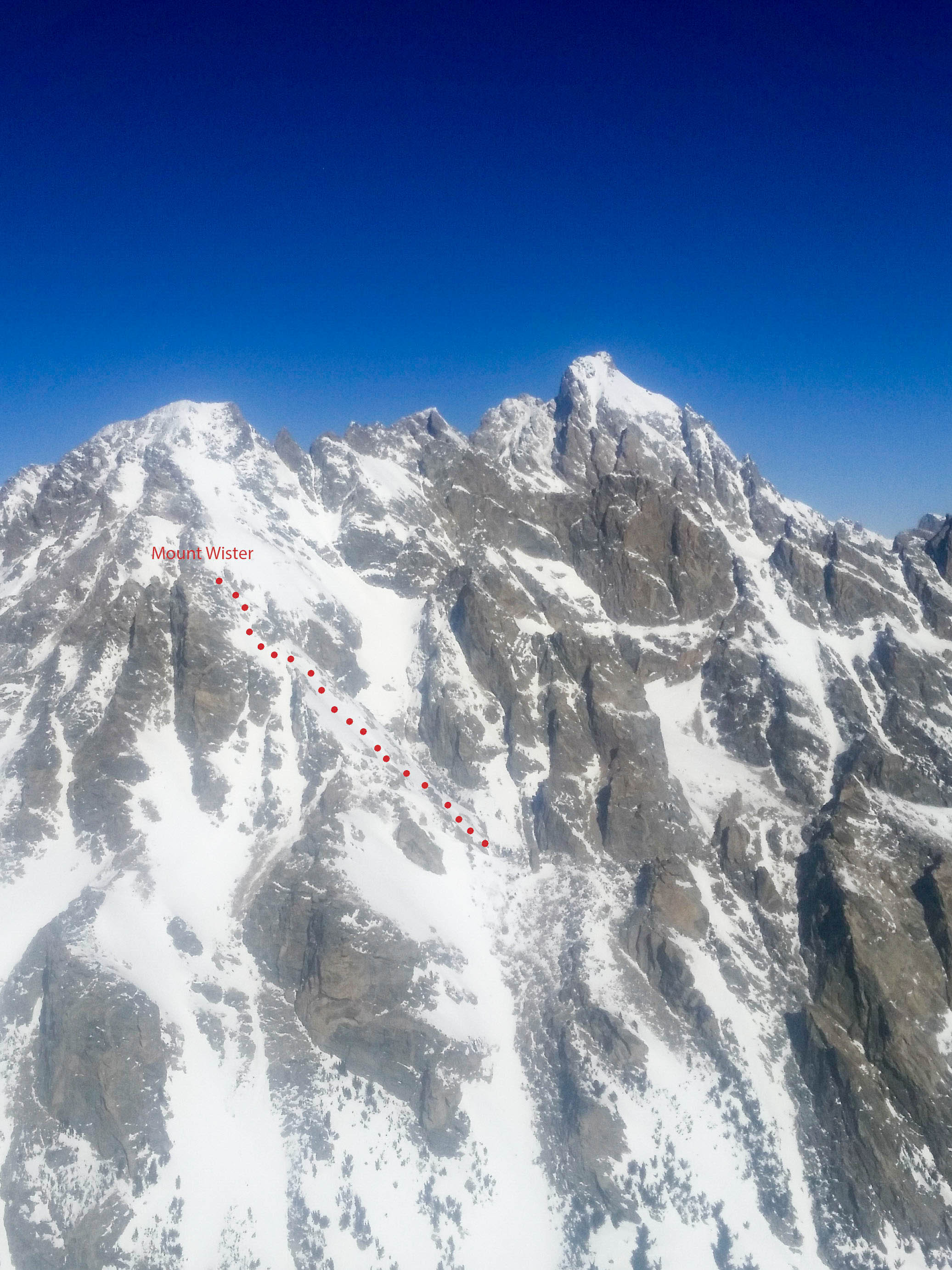
Mount Wister with Veiled Peak on the right.
Mount Wister, with Veiled Peak on the right and the North Face of Buck in the background.
Snowfield, skiers left of the summit (funnels into Southeast Couloir).

We geared up and discussed our options for getting to the South Face.  Dane had skied the Southeast Couloir last year and thought that we could ski the snowfield directly left of the summit down and then cut hard right to get onto the South Face.  We skied two turns down the snowfield to get a look and determined that the coverage was a little low for that entry onto the South Face.  We made our way back up to the summit and to the right of a rock bulge separating the snowfield and a scree field that lead to the South Face.  After making our way through the snow covered scree, we got a good look at the South Face and the lower entry to the Southeast Couloir.

A look into the Southeast Couloir.  It doesn't look to go through right now.
A look into the Southeast Couloir. It doesn’t look to go through right now.

The South Face looked skiable, but we could tell that the snow was going to be varied; sun crust, wind crust, breakable crust, and powder.  Dane skied onto the face and tested out the steep upper pitch with a quick ski cut, then made his way through some rock bands to a safe spot on the right.

First turns on the South Face.
Pretty.
“You’ve got a pretty face.”
Making my way through the upper rock bands (photo: Dane Etter-Garrette)

From here, we made some fun pow turns down the face and towards the entry to Amor a Vida.  Even with the avalanche danger low, the exposure (1000′ cliff) below the South Face makes you focus on your every move.

Staring down the South Face.
Staring down the South Face.  The entry to Amor a Vida is the first large rock outcropping on the right of the South Face. (photo: Dane Etter-Garrette)
Dane, making is way to the entry of Amora Vida.
Dane, making his way to the entry of Amor a Vida.
Glad to be off the South Face.
Decent snow on the South Face.

We got to the entry, but had to double check that it was in fact the Amor a Vida Couloir.  After a quick check, we confirmed that we were in the right spot and worked our way down the rock filled entry.

The entry into the Amora Vida Couloir.
The entry into the Amor a Vida Couloir.

Once into the couloir, we tried to get a look at the tight upper section of the couloir proper (skiers left).  It looked like it went, but was barely a ski length wide, so we opted to cross right over a few rock bands and approach the couloir from the snowfields.  This exposed us to large hanging snowfields above, but we felt pretty good about the snow and quickly worked our way down through the rock bands.

Dane, cutting across and down the upper snowfield of the Amora Vida.
Dane, cutting across and down the upper snowfield of the Amor a Vida.

From here, we worked our way down and to our left into the main path of the couloir.  Amor a Vida is one of the most amazing couloirs in the Tetons, with massive overhanging rock walls, a great pitch and some fun skiing.  We had a blast getting down the run, taking it in numerous sections to ensure we were taking it all in.  The couloir was predominately powder in the main path, with a few pockets of crust, but overall it was amazing skiing!

Working down into the main path of the Amora Vida.
Working our way down to the left, into the main path of the Amor a Vida.
The Amora Vida was skiing good!
The Amor a Vida was skiing good!
Beautiful couloir. (photo: Dane Etter-Garrette)
Slash.
Slash.
Dane, towards the middle of Amora Vida.
Dane, towards the middle of the couloir.
Making my way down.. (photo: Dane Etter-Garrette)
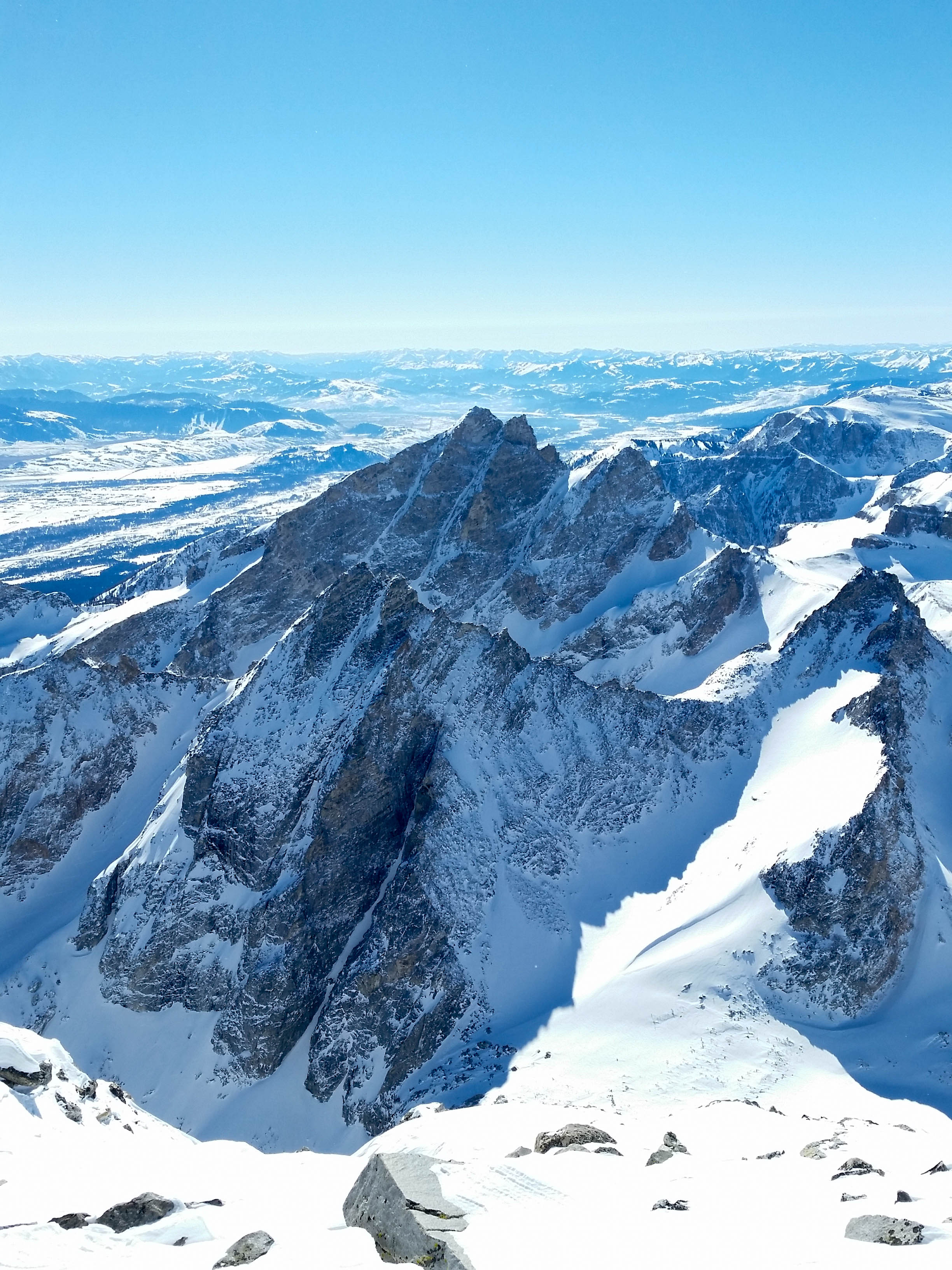
Dane, nearing the bottom of the couloir.

After making it down the 1600′ couloir safe, we still had about 2500′ of skiing until we hit the Avalanche Canyon traverse.  We milked the turns and were just pumped to have skied such a fun run.  We made it back to the trailhead in 8hrs and were already looking forward to more adventures in this special place we call home.

Amora Vida Couloir
Amor a Vida Couloir
South Face of the South Teton.

2015-02-23 13.35.24 2015-02-23 13.51.59 2015-02-23 13.52.00

Skiing out Avalanche Canyon.

Turkey Chute, hacked!

West Hourglass

IMG_5165
The Dawn of pow

Location: GTNP, Garnet Canyon, Nez Perce, West Hourglass Couloir
Elevation, gain/loss: 11,132’, 5,287’ gain/loss
Distance: 8 miles RT
Difficulty: 3 stars
Time:  6-7 hours

Trip Report:

Date: 02/20/2015
Snow Conditions: Powder, some sun crust under 6″-10″ of new light density snow.

The return of snow! The feeling of fresh snow returned to us on Friday with the onslaught of fresh snow falling on the Tetons once again. Tristan and I decided last Thursday night to head into the park to try and get some powder turns and a little storm skiing. Leaving the trailhead at 7am we cruised up into the Meadows area in around 2 hours.

IMG_5169
It’s Snowing!
IMG_5180
Tristan and a view of the lower section of the West and East Hourglass

Working our way through the Meadows and into the apron of West and East Hourglass, we made good progress through the spitting snow. There was a persistent crust and some wind packed rollers that became very slick with the new snow. On the way down this made for some interesting / tentative skiing. Switching over to the boot pack, we opted for crampons and soon were knee to waist deep in newly deposited snow in the lower half of the West Hourglass.

IMG_5184
Lower section
IMG_5190
Almost to the top

The middle and top sections were a bit rocky, but to the skiers left, there was plenty of snow for some good skiing. We were happy to be dropping into a storm filled couloir once again. It was a great climb up, and with the return of snow and wind we felt lucky to be there.

IMG_5197
Dropping in!
IMG_5217
Skiing the pow

On the lower section, right at the roll over, I managed to kick off a small soft slap that went roughly 400 feet down into the apron. I had plenty of speed to ski off to the right and get out of the way. It was a reminder that with only a few inches and the right wind, things can get serious pretty quickly. But we were good and happy.

IMG_5228
Fracture line right below the roll over.
IMG_5242
Back in the white room.

Buck Mountain, East Face

Location: GTNP, Death Canyon Trailhead, Stewart Draw
Elevation, Gain/Loss: 11,938’, 5,652’ gain/loss
Distance: 11 miles RT
Difficulty: 4 stars
Time:  6-8 hours

Trip Report:

Date: 2/17/2015
Snow Condition: Hard sun crust, wind blown pockets of dense snow, some sun warmed “corn” like snow, dense powder on north facing aspects with a mild breakable crust.

As everyone around the Jackson area knows, the weather has been warm and dry lately.  Despite that, we still have a deep snowpack and a low avalanche danger.  These combine for primetime opportunities to ski some big lines, if you can get over the fact that more than likely you are not going to be skiing anything resembling powder.  So, with this in mind: Dane, Tristan and I chatted Monday night about what to ski the following day.  We threw out a bunch of options, but settled on the East Face of Buck Mountain.  I have skied it once and attempted to ski it twice, being turned around last spring due to warm snow conditions.  We met at 6am and departed for the Death Canyon Trailhead.  We were moving at 6:40am and worked our way up the track and towards the turnoff for Whimpys Knob and Albright Peak.

Alpenglow on Buck's East Face.
Alpenglow on Buck’s East Face.

We climbed up the field in front of Whimpys for about 300 vertical feet, before veering right towards the open field beyond a small stand of trees and some large rocks.  This is the summer “climbers trail” to Buck Mountain.  We sidehilled across the field and began to contour into Stewart Draw.  Be sure to go far right, because if you go up too fast, you will be in Static Draw instead.  Once in the “canyon”, we began the slow climb up towards Buck.  It is a frustrating skin, because you are constantly sidehill climbing, which can be a little annoying.  Both Dane and Tristan had some ski crampons, which seemed to help with the firm snow conditions, but I just battled it out with the firm snow.  We made it up to the base of the East Face as an ungodly wind began whipping out of the northwest in about 3.5hrs.

The constant sidehill up Stewart Draw.
The constant sidehill skinning up Stewart Draw.
Dane, just below the start of the climb.
Dane, just below the start of the East Face.

We geared up with crampons and stashed our skins in the rocks to the right of the entry “couloir”.  At this point, I was beginning to wonder if I should have brought my ice axe.  I had a whippet, but with the wind howling at a solid 30mph, with gusts up to 50mph, I was a bit concerned with the decision to climb the East Ridge.  I had anticipated we would just boot up the face, but with a bootpack already in on the ridge, the group decided the East Ridge made the most sense.  So, we started up towards the East Ridge and the summit of Buck Mountain.

North Bowl of Static Peak.  Yummy!
North Bowl of Static Peak. Yummy!
Working our way up the "entry" couloir on Buck's East Face.
Working our way up the “entry” couloir on Buck’s East Face.

We cruised up and onto the ridge in no time, stopping once to discus if the ridge was in fact the route we wanted to proceed up.  Once on the ridge, the wind was definitely going to be a factor, but it seemed manageable.  We began climbing up, trying not to look to our right where the ridge dropped off 1200′ at points.

Tristen, making his way up the beginnings of the East Ridge.
Tristan, making his way up the beginnings of the East Ridge.
Dane, enjoying the exposure.

We were making pretty good time until we got to the more challenging ridge climbing.  Here, I definitely missed my ice axe.  At times, I was being blown off balance while staring down the 1200′ drop into the South Fork of Avalanche Canyon.  I made the most of it my ramming my crampons in lower then the set bootpack and punching my whippet into the snow, but it was still not ideal.  We slowly worked our way along a few exposed areas, eventually finding our way off the ridge to the steep upper East Face.

Dane, cruising up the ridge.
Some spicy climbing.
Yup, it drops off a bit here...
Yup, it drops off a bit here…
Views north, the East Face of Wister looks to be skiable.

It is not often that the climb up to the skiing proves to be the most memorable, enjoyable part of a ski adventure, but that was the case with the East Ridge.  It proved to be fun, challenging and most of all spicy.  We worked our way up the upper East Face as winds whipped us from the right, a couple times knocking me off balance, but in no time we were standing on the summit.

Tristen battling the wind on the summit.
Tristan battling the wind on the summit.
Tristen contemplating life.
Tristan contemplating life.

We took some time to look around and enjoy the scenery, snapping a few reconnaissance photos of lines in Death Canyon, then geared up for the skiing.

Getting ready for the rip.

The upper portion of the East Face is pretty steep (45 degrees plus) and rolls over about 200′ down, so we made some cautions turns on the firm surface, testing out the snow and our edges.  We did find some half decent snow just below the summit, firm snow with a slight crust and made our way down to the left, below the major cliff band on the East Face.

Tristen, skiing of the summit.
Tristan, skiing off the summit.
Approaching the rollover.
Approaching the rollover, skiing into eternity.

After joining up below the cliff band, we worked left and down the fun, low angle “belly” of the East Face.  The snow was decent here, not quite corn, but soft and fast with a little crust to keep you honest.  After I skied down to a point above the “entry” couloir, Dane and Tristan decided to ski that section “Canadian Style” and put in some powder 8’s on the face.  While not recommended, the snow conditions allowed us to have some fun!

Powder 8's on the East Face.
Powder 8’s on the East Face.
Some fun turns in the "belly".
Some fun turns in the “belly”.

From here, Tristan worked his way down and through the “entry” couloir while Dane and I waited for his hoot to signal he was through.  After that, we both worked our way down and through the couloir, being careful not to catch a ski on the many frozen chicken heads littering the zone.

Tristen, skiing down to the "entry" couloir.
Tristan, skiing down to the “entry” couloir.
Dane making a few last turns on the East Face.

After making it down safe, we gathered our skins and had a quick rest before skiing out of Stewart Draw.  In past trips up to this zone, I have always enjoyed the out.  There are many options for playful skiing and a couple fun north facing slopes to make some turns on.  While the snow was not great, we did find some decent wind blown pockets to make some powder turns in and cruised out of the lower fields; feeling like it was April, not February.

Working our way to the north facing shots.
A few powder turns were had.

We made it back to the skin track and cruised out to the truck in 6hrs 30min.  We were happy with the day and decision to summit a big peak.  With the weather looking to stay dry and warm, we may be trying to tackle some larger lines in the coming weeks.  More to come…